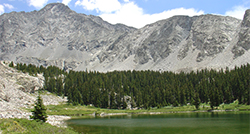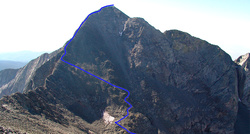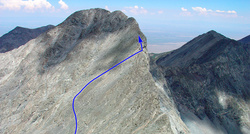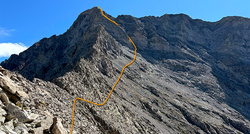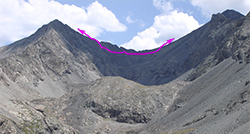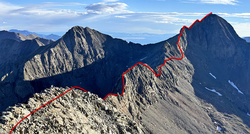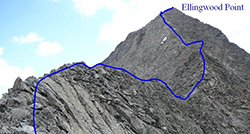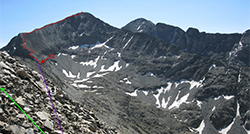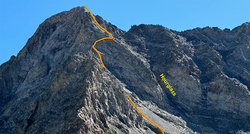


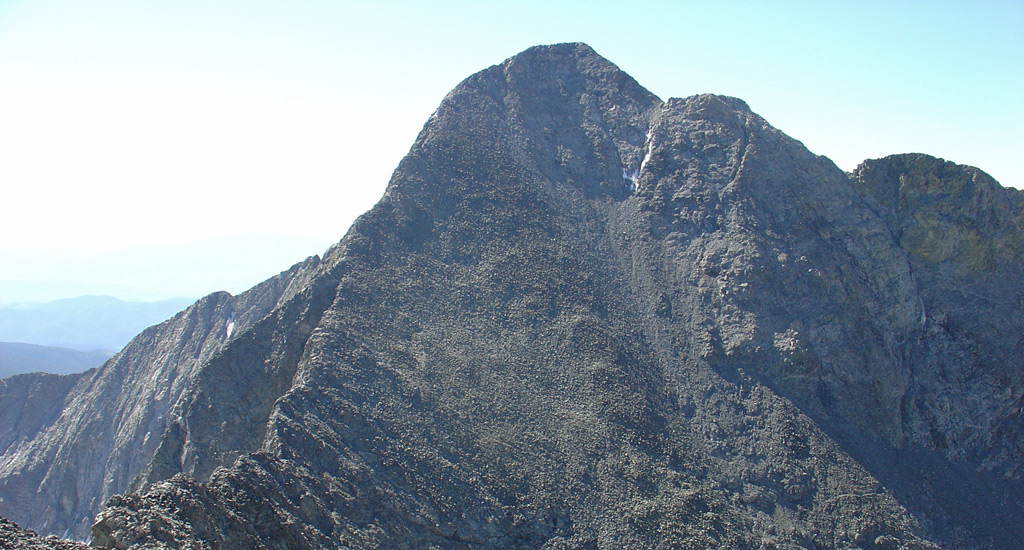


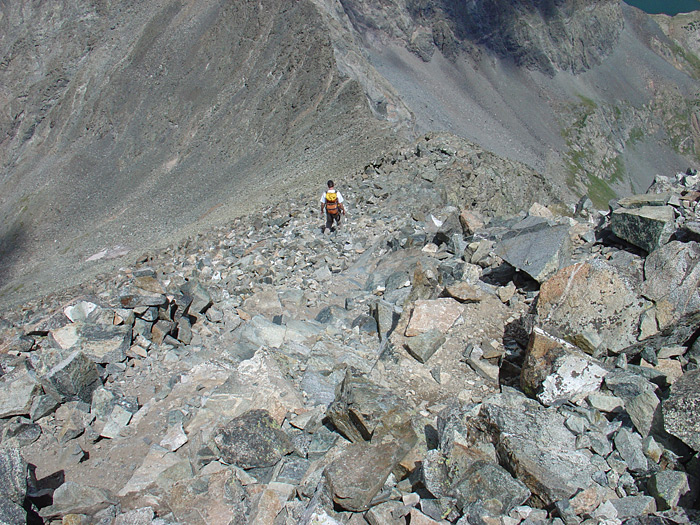


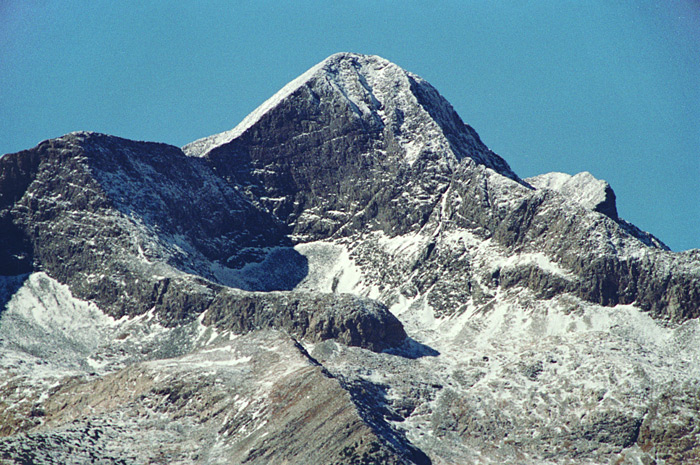


Lake Como Approach Difficulty: Class 1 Total Elevation Gain: 3,900' Round-trip Distance: 11 mi |
|
Blanca Peak - Northwest Ridge Standard Route Difficulty: Difficult Class 2 Total Elevation Gain: 6,500' Round-trip Distance: 17 mi |
|
Ellingwood Point - South Face Standard Route Difficulty: Difficult Class 2 Total Elevation Gain: 6,200' Round-trip Distance: 17 mi |
|
Little Bear Peak - West Ridge and Hourglass Standard Route Difficulty: Class 4 Total Elevation Gain: 6,200' Round-trip Distance: 14 mi |
|
Combo: Blanca and Ellingwood Difficulty: Class 3 Total Elevation Gain: 6,800' Round-trip Distance: 18 mi |
|
Combo: Little Bear + Blanca Traverse Difficulty: Class 5 Total Elevation Gain: 8,000' Round-trip Distance: 17 mi |
|
 |
Ellingwood Point - Southwest Ridge Difficulty: Class 3 Total Elevation Gain: 2,200' Round-trip Distance: 15 mi |
| |
Ellingwood Point - North Ridge via South Zapata Creek Difficulty: Easy Class 3 Total Elevation Gain: 5,200' Round-trip Distance: 12.5 mi |
| |
Little Bear Peak - West Ridge Indirect Difficulty: Class 4 Total Elevation Gain: 6,200' Round-trip Distance: 14 mi |
Lake Como Approach Difficulty: Class 1 Total Elevation Gain: 3,900' Round-trip Distance: 11 mi |
|
Blanca Peak - Northwest Ridge Standard Route Difficulty: Difficult Class 2 Total Elevation Gain: 6,500' Round-trip Distance: 17 mi |
|
Ellingwood Point - South Face Standard Route Difficulty: Difficult Class 2 Total Elevation Gain: 6,200' Round-trip Distance: 17 mi |
|
Little Bear Peak - West Ridge and Hourglass Standard Route Difficulty: Class 4 Total Elevation Gain: 6,200' Round-trip Distance: 14 mi |
|
Combo: Blanca and Ellingwood Difficulty: Class 3 Total Elevation Gain: 6,800' Round-trip Distance: 18 mi |
|
Combo: Little Bear + Blanca Traverse Difficulty: Class 5 Total Elevation Gain: 8,000' Round-trip Distance: 17 mi |
|
| |
Ellingwood Point - Southwest Ridge Difficulty: Class 3 Total Elevation Gain: 2,200' Round-trip Distance: 15 mi |
| |
Ellingwood Point - North Ridge via South Zapata Creek Difficulty: Easy Class 3 Total Elevation Gain: 5,200' Round-trip Distance: 12.5 mi |
| |
Little Bear Peak - West Ridge Indirect Difficulty: Class 4 Total Elevation Gain: 6,200' Round-trip Distance: 14 mi |

 Little Bear Peak
 Ellingwood Point