Frequently Asked Questions about Maroon Peak
Are the Maroon Bells suitable for beginner 14er hikers?
Absolutely not. Both Maroon Peak and North Maroon Peak are exceptionally dangerous, highly technical Class 3 mountaineering routes that should never be attempted by beginners. These peaks are made of sedimentary mudstone and shale that is notoriously loose, rotten, and fractured. Handholds can unexpectedly blow out and entire ledges can collapse underfoot. The routes require advanced rock scrambling experience, flawless route-finding skills, a steady head for extreme vertical exposure, and a climbing helmet to survive unpredictable rockfall. Hike a bunch of other peaks, including some introductory Class 3 peaks like Wetterhorn, Sneffels or Kit Carson before planning a climb on one or both of the Bells.
Can I easily traverse from Maroon Peak over to North Maroon Peak?
No. While the two summits sit less than a mile apart, the connecting Maroon Bells Traverse is a legendary, high-consequence Class 4/5 mountaineering line that is widely feared for its rotten rock and vertical exposure. Climbers must navigate knife-edge ridges of crumbling mudstone where a single slip or handhold failure could be fatal. Unless you are an experienced technical mountaineer, it is vastly safer to climb Maroon Peak and North Maroon Peak as entirely separate day trips.
Do I need a parking reservation or permit to reach the Maroon Peak Trailhead?
Yes. Due to extreme congestion at Maroon Lake, Aspen and the U.S. Forest Service require mandatory timed-entry parking or shuttle reservations during the summer and autumn months. If you drive a personal vehicle, you must book a highly competitive parking permit through Maroon Bells Reservations. Otherwise, you are strictly required to take the public shuttle bus departing from Aspen Highlands, and any overnight campers must also secure a Maroon Bells-Snowmass Wilderness permit.
Why are the Maroon Bells red and what makes their geology unique?
The striking maroon color of the peaks comes from a specific rock type called the Maroon Formation, which consists of prehistoric sedimentary siltstone, sandstone, and shale that are heavily enriched with iron-oxide minerals (essentially rust). Unlike the solid, interlocking granite that forms most Colorado 14ers, this sedimentary mudstone is highly layered and fractured. This unique geology gives the Bells their world-famous, jagged geometric appearance but also makes the rock incredibly weak and prone to catastrophic rockfall.
Additional Maroon Peak History



 Pyramid Peak
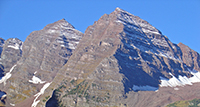 North Maroon Peak


