Log In 
Difficulty
 Class 4 
Risk Factors
ExposureHigh
RockfallHigh
Route-FindingHigh
CommitmentHigh
TrailheadMaroon Lake 9,590 feet
Summit14,022 feet
Elevation Gain4,600 ft
Length Round-TripRT9.25 mi
Peak Conditions203 reports
Downloadsgpx GPX  kml KML
Photo
Show More
Route Last Updated: Aug 2026
Parking Reservation Required
You must book in-advance to get an overnight parking permit at the Maroon Lake trailhead and there are a limited number available. They do have a "Midnight-to-Midnight" permit which allows you to drive to the trailhead between midnight and 8am and hike the same day, leaving by midnight. Please visit this page for more information. And don't forget to place your printed reservation on your dashboard when you park.
Camping Reservation Required
A reservation is required to pack in and camp near Crater Lake and permits are small in number. If you are lucky enough to get a wilderness camp permit, you still have to reserve overnight parking, or ride the shuttle between 8am-5pm, or get dropped off outside of the 8am-5pm window. If you are unable to get a camp permit, you'll have to day-hike and still deal with parking or get dropped off early in the morning. Check for wilderness camping permits at recreation.gov. For reference, check out the Overnight Permit Zone Map

Are You Ready For This?

North Maroon Peak is exceptionally dangerous, and one could easily justify calling this the most difficult and dangerous standard 14er route in Colorado. This climb demands serious preparation and should only be attempted by individuals with solid Class 3 and Class 4 climbing skills. Due to constant threats of loose rock, severe fall hazards, and complex route-finding, there is absolutely no room for error. Do not take this peak lightly, and never attempt it as an introduction to mountaineering or Class 4 climbing. If you are unsure whether you have the necessary skills or qualified partners, consider hiring a professional guide from Aspen Expeditions. Be cautious of individuals on social media claiming to be guides but lacking proper certifications or affiliation with a reputable guide company. Call the professionals.

Trailhead

Drive to Aspen and locate the start of the Maroon Creek road at a roundabout just west of town. Measuring mileage from there, drive 3.2 miles where you'll pass a ranch. At 4.7 miles, reach the U.S. Forest Service entrance station. Reach the trailhead at 9.5 miles. During summer, the road past the entrance station is closed to cars between 8am and 5pm so if you have a parking permit or getting dropped off, make sure it's outside these hours.

Route Description

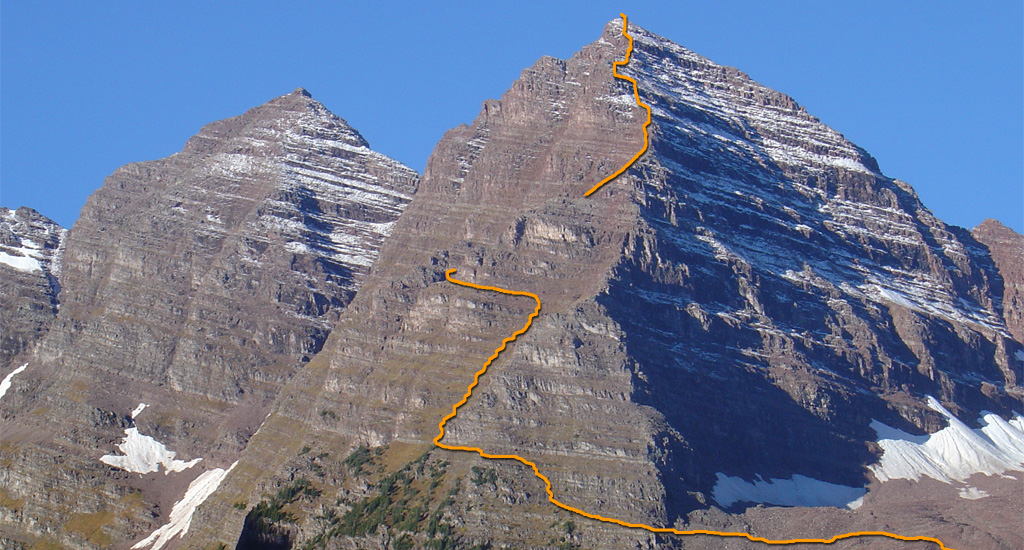
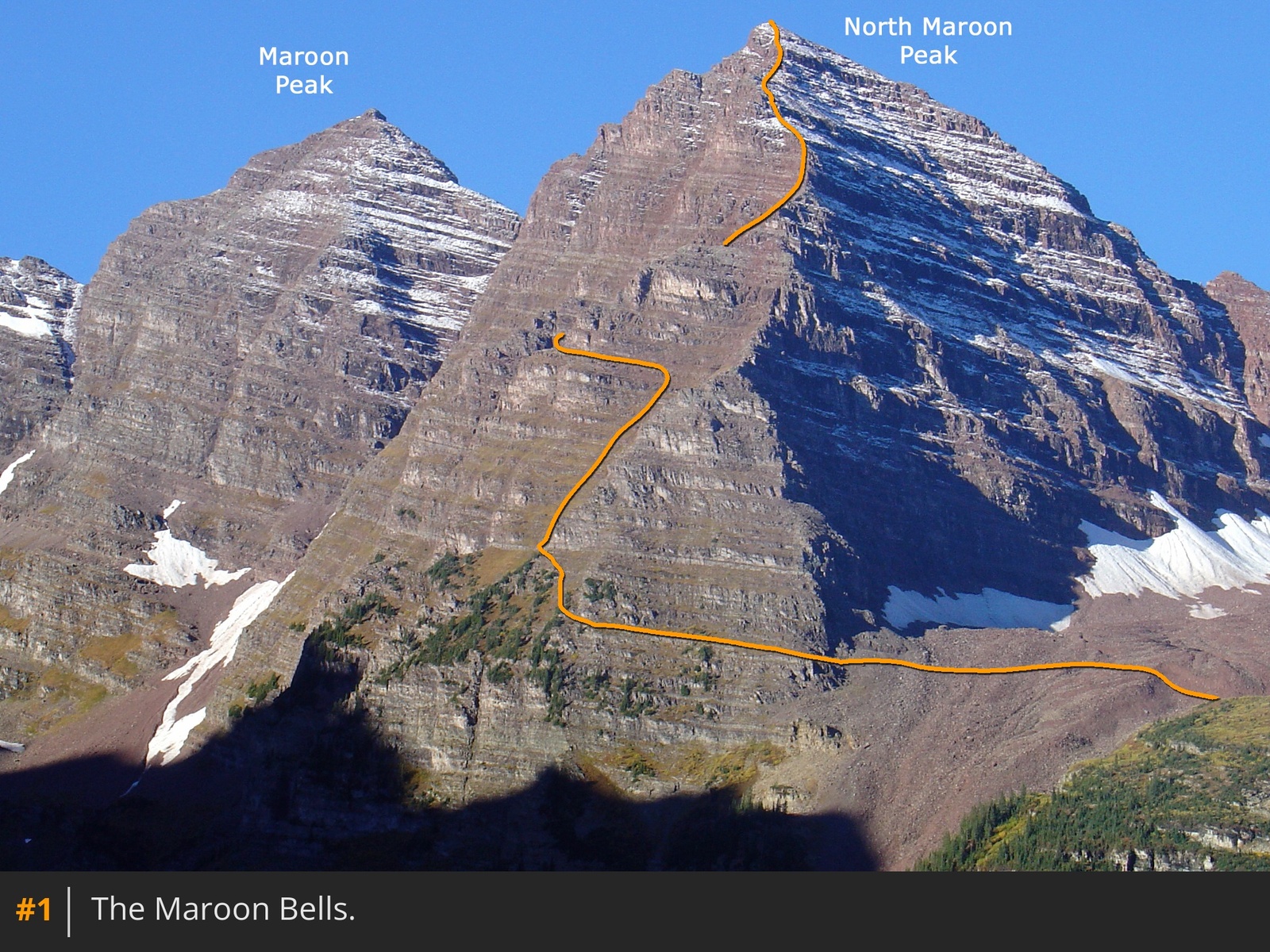
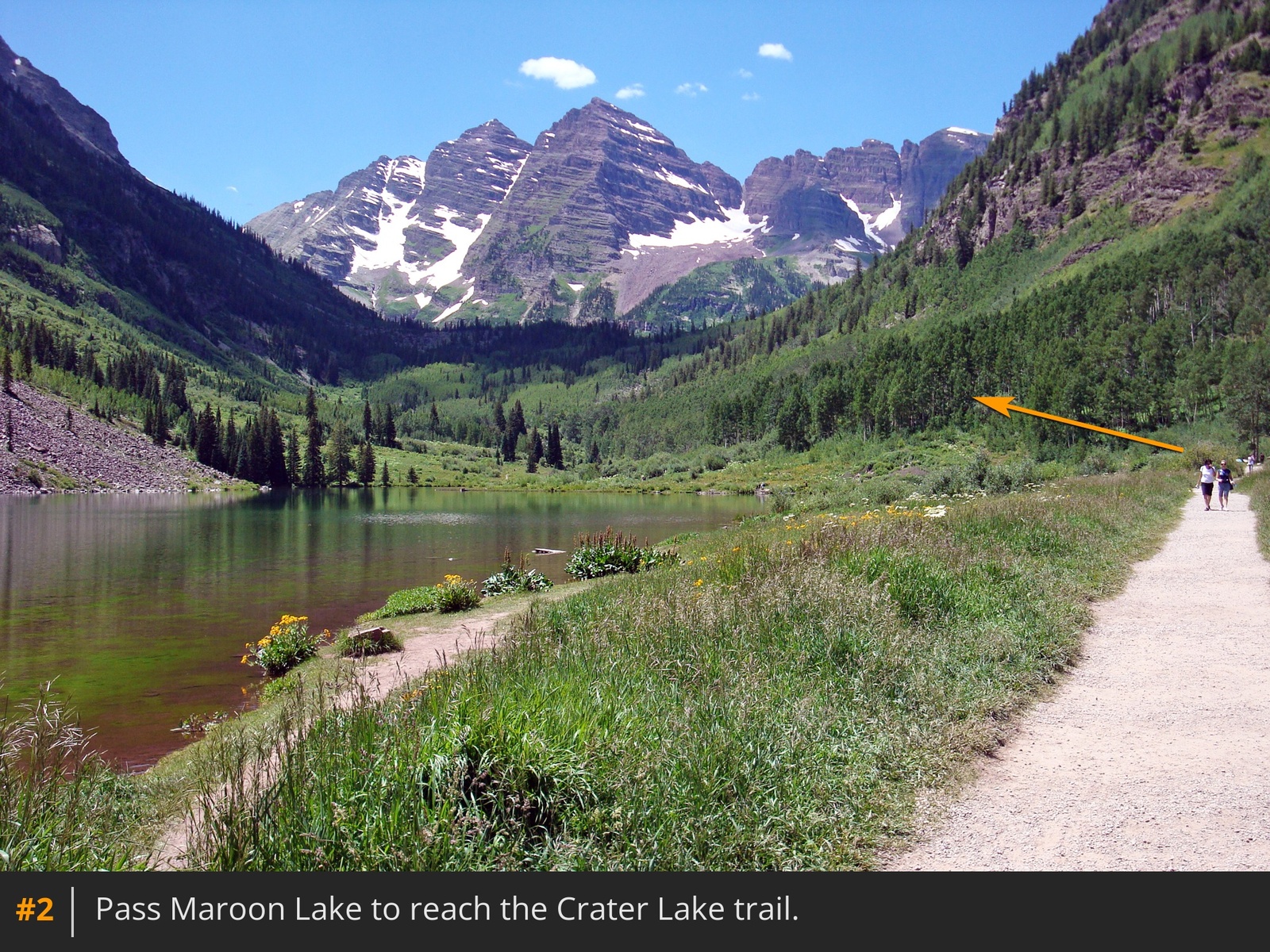
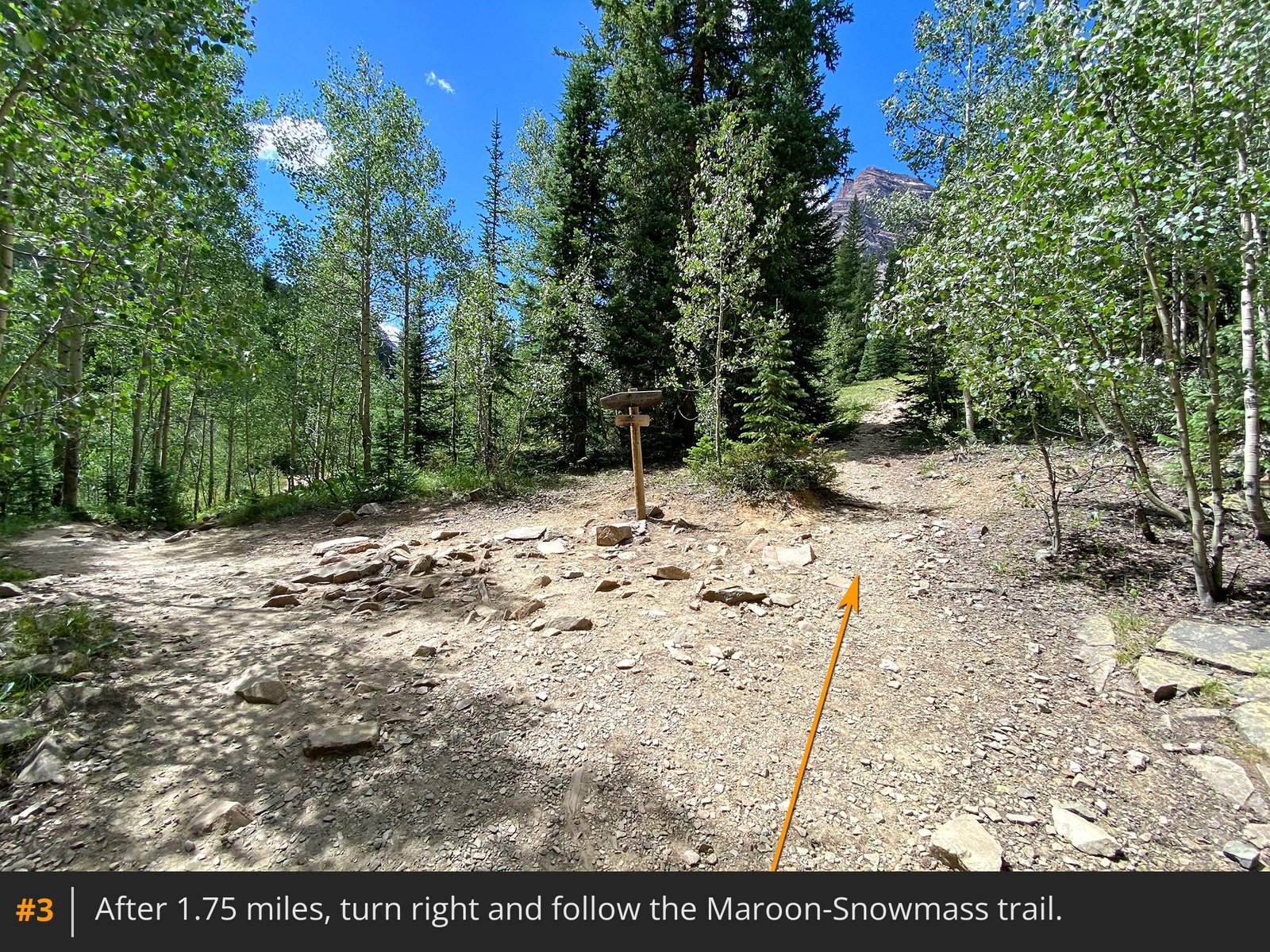
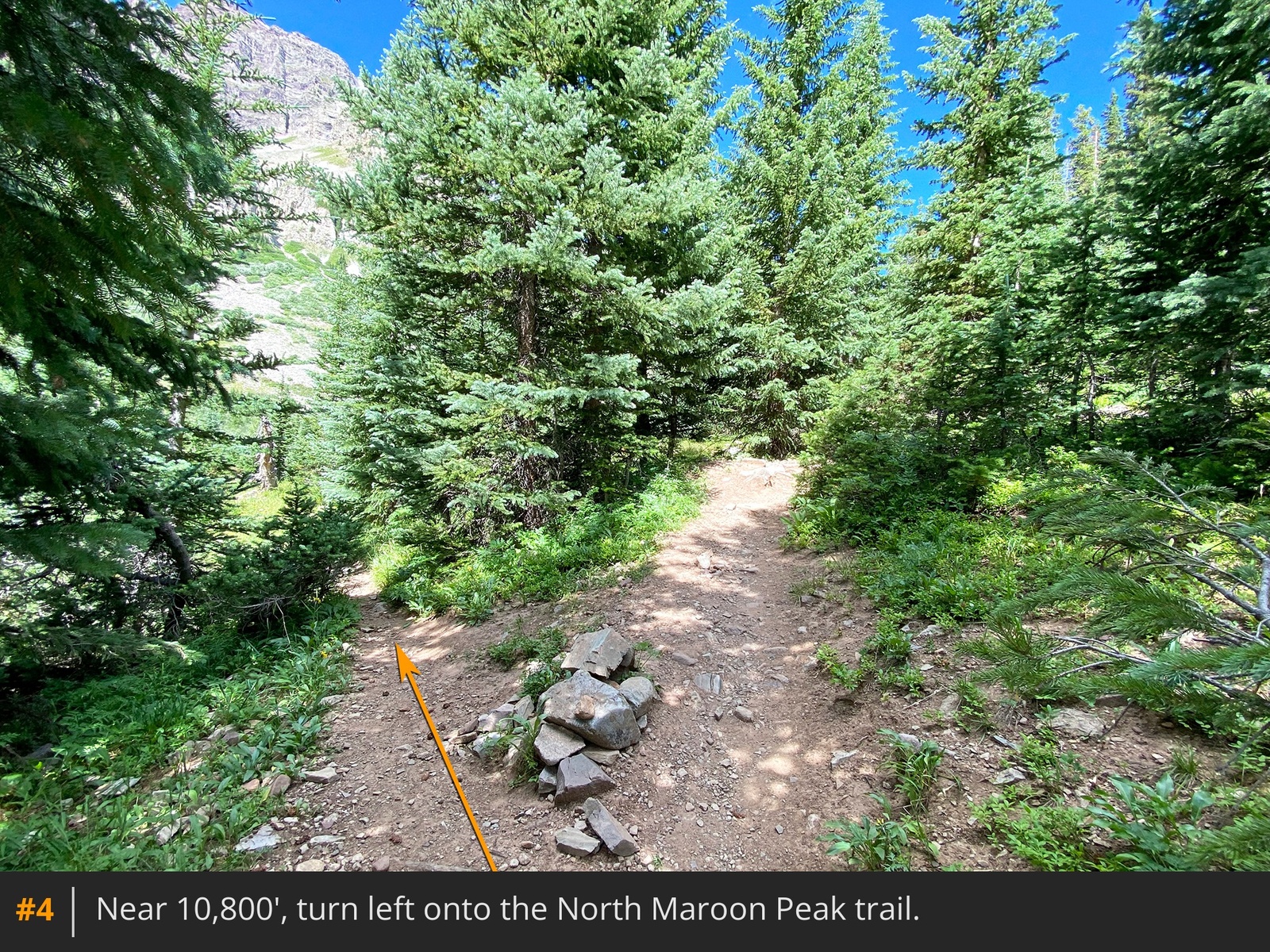
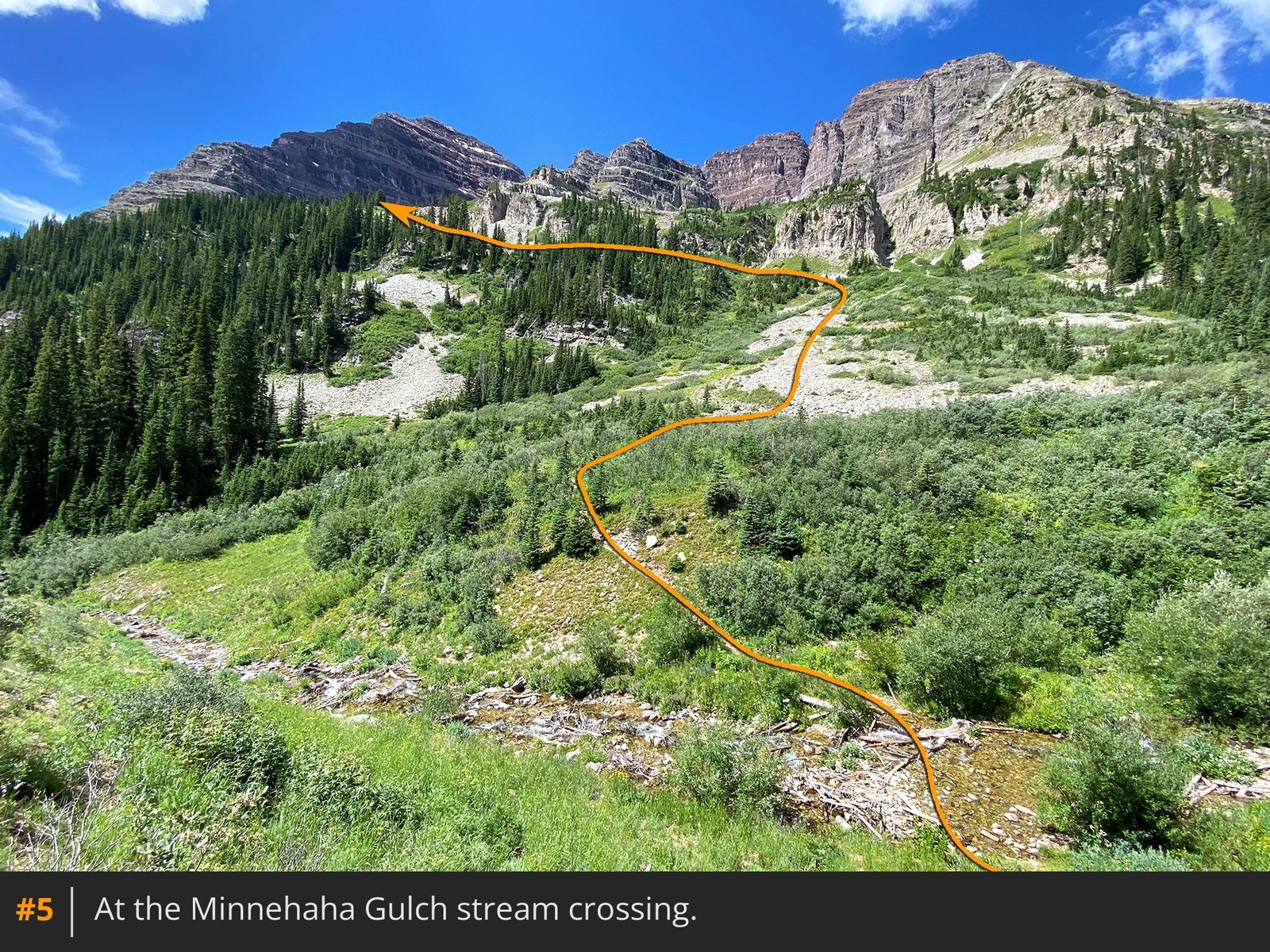
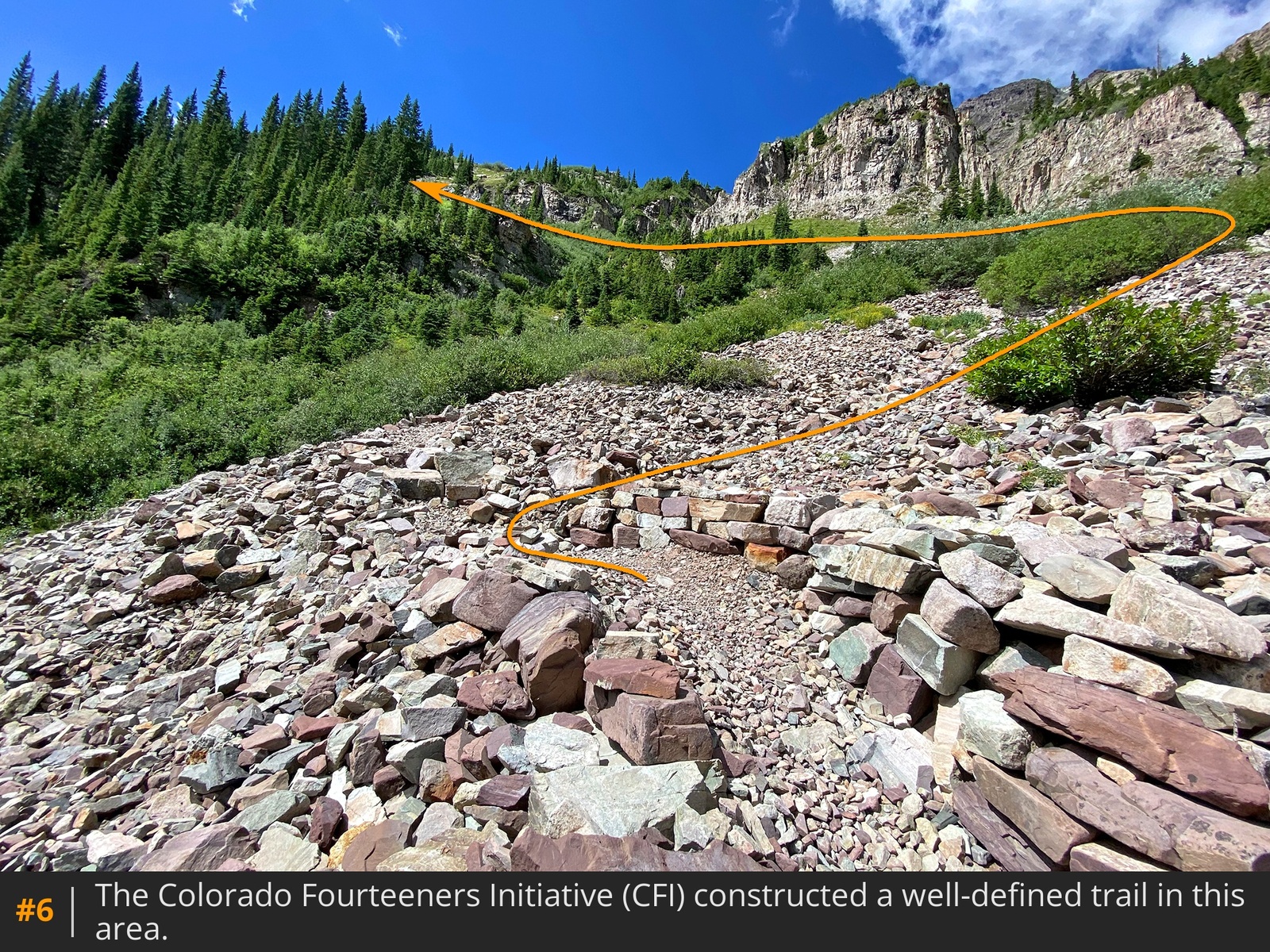
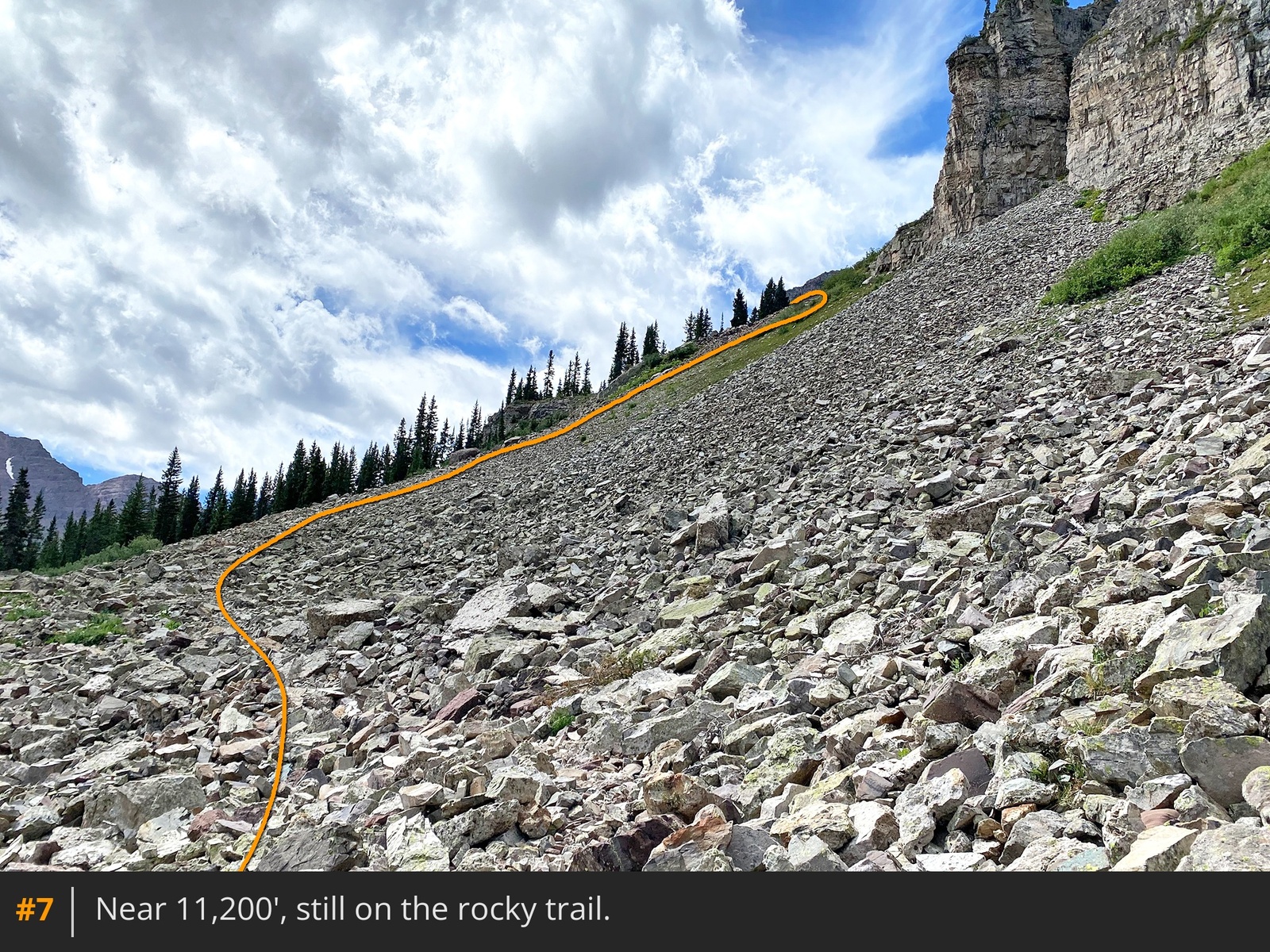
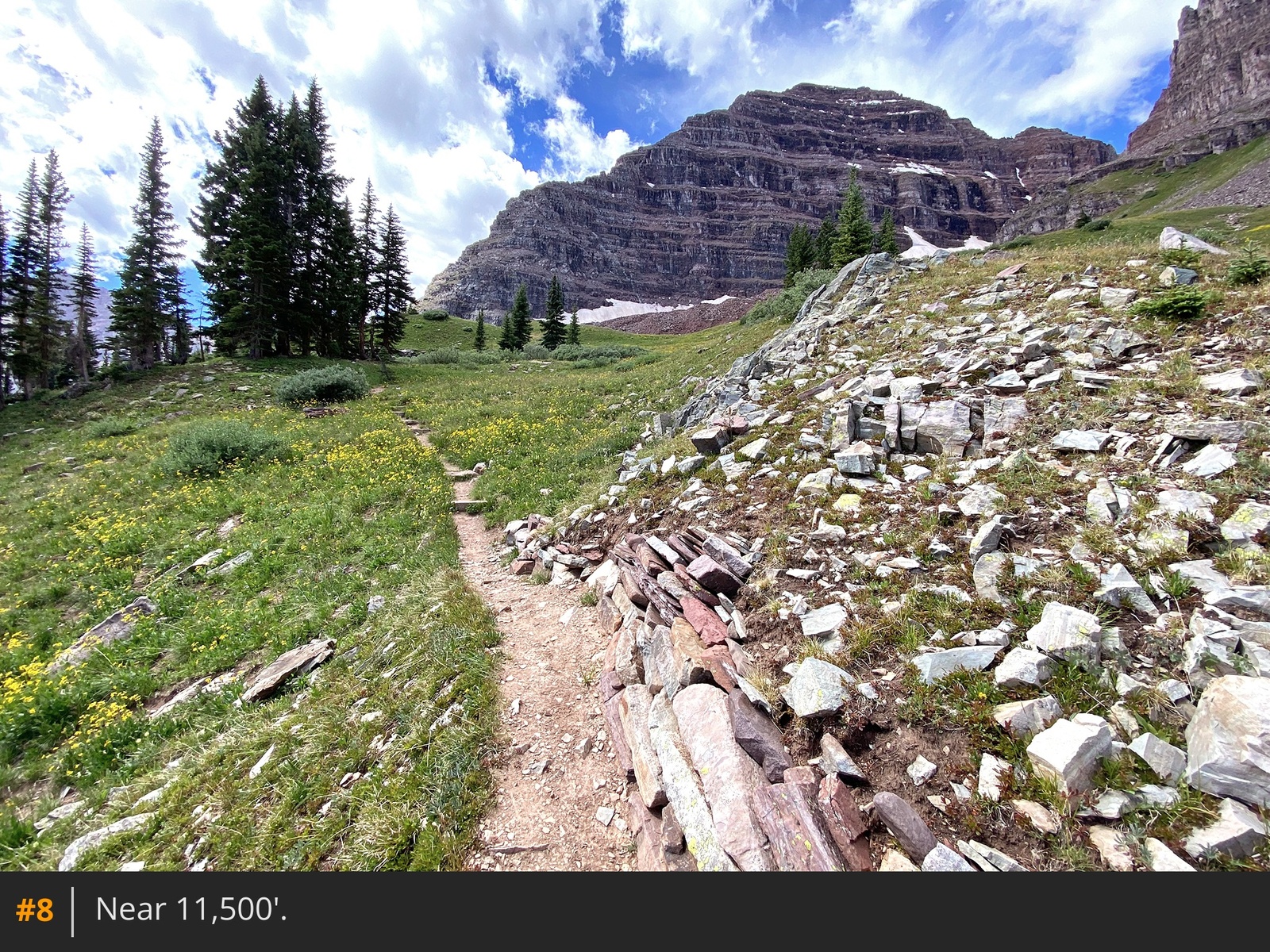
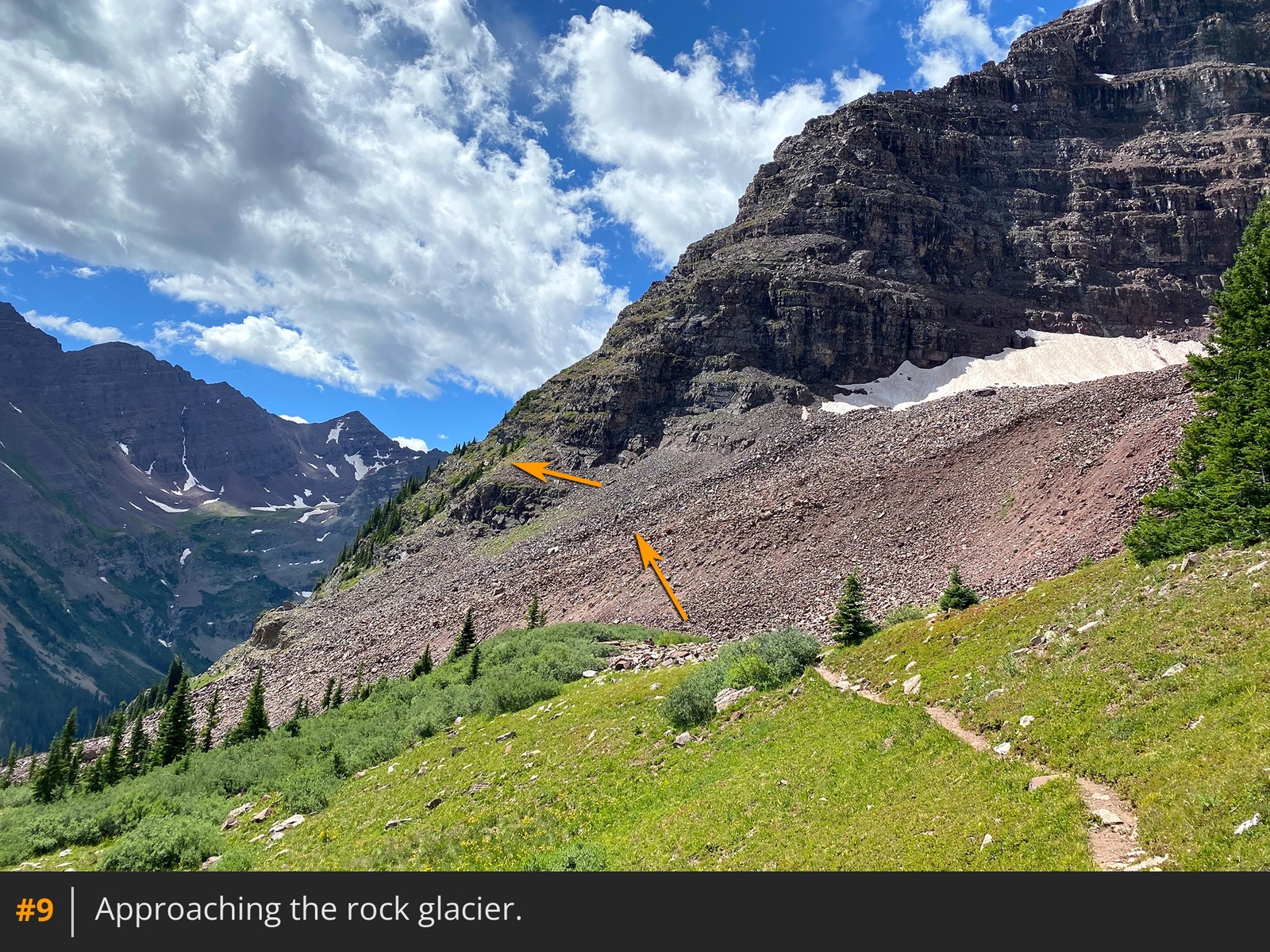
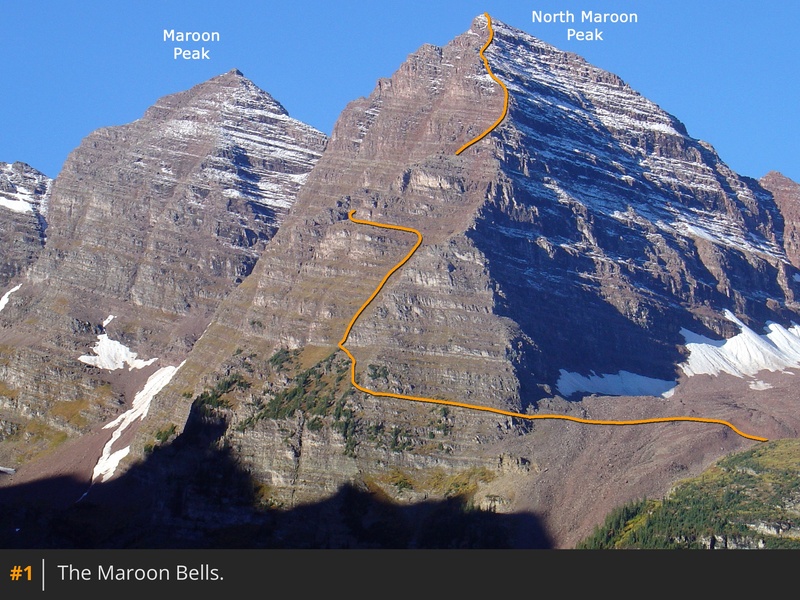
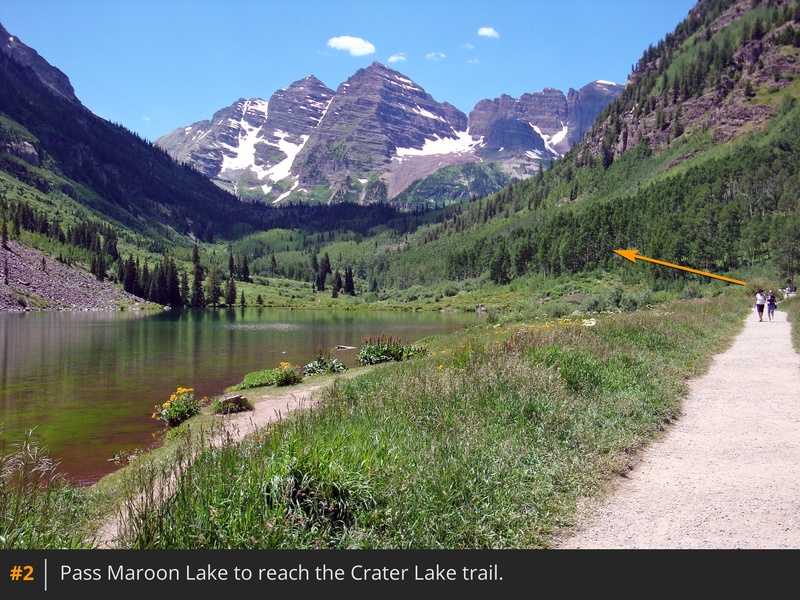
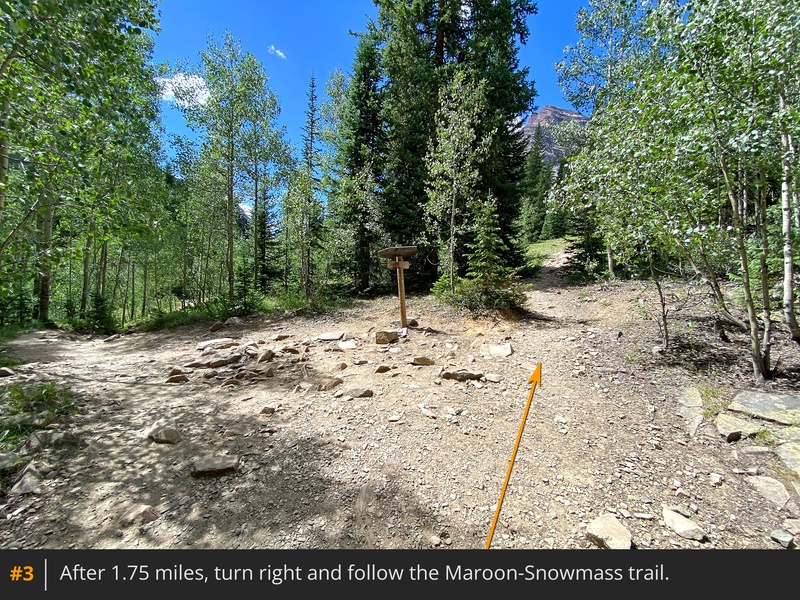
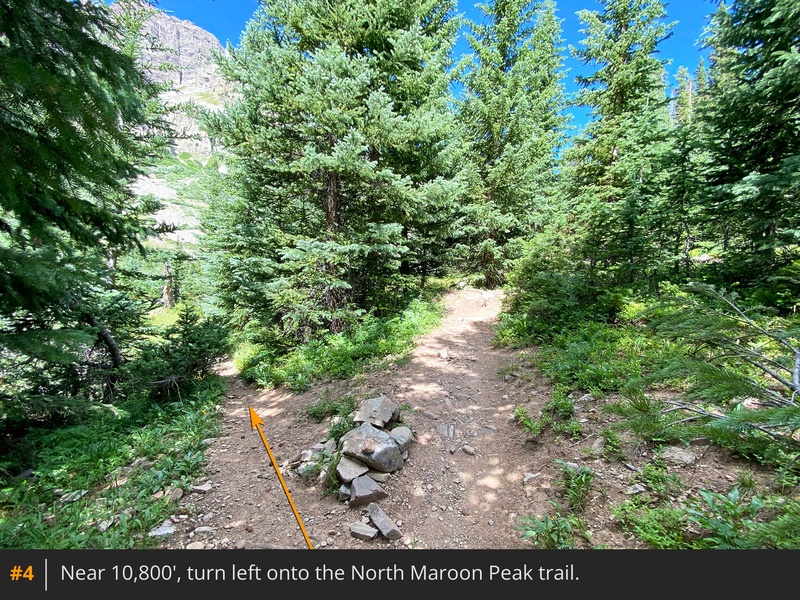
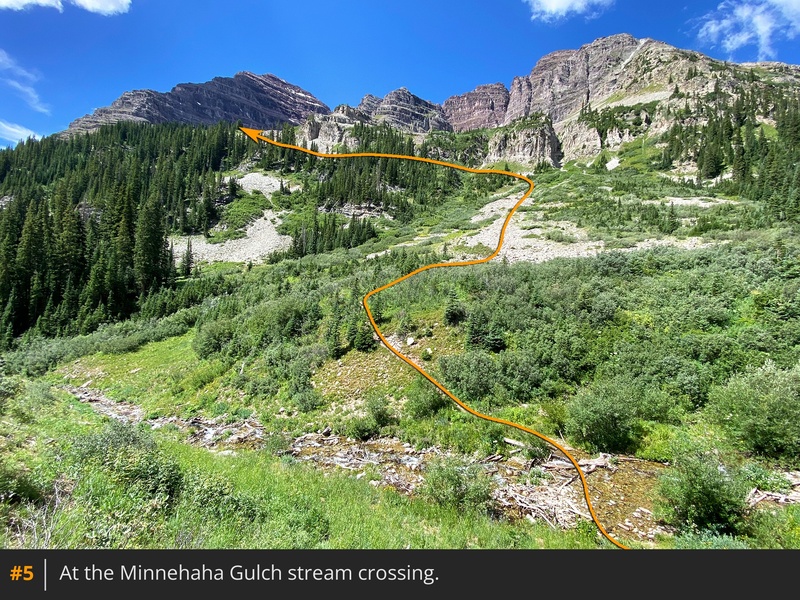
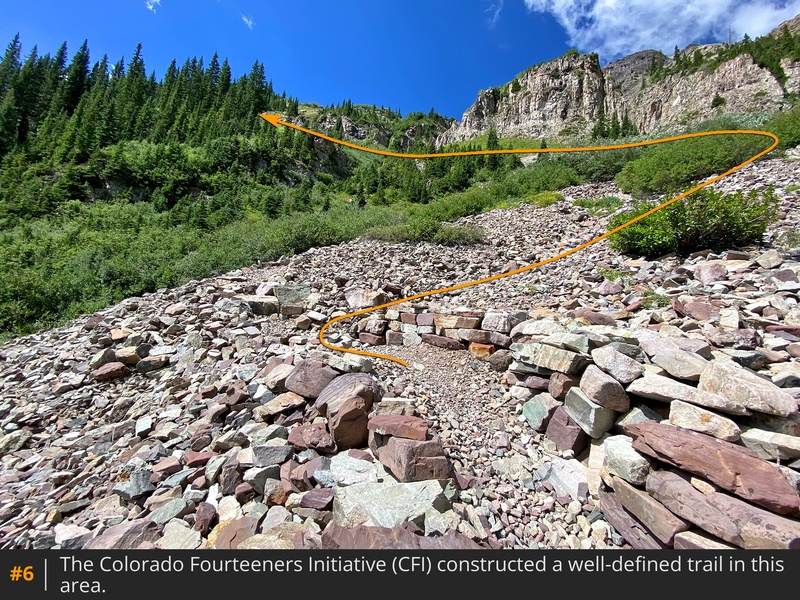
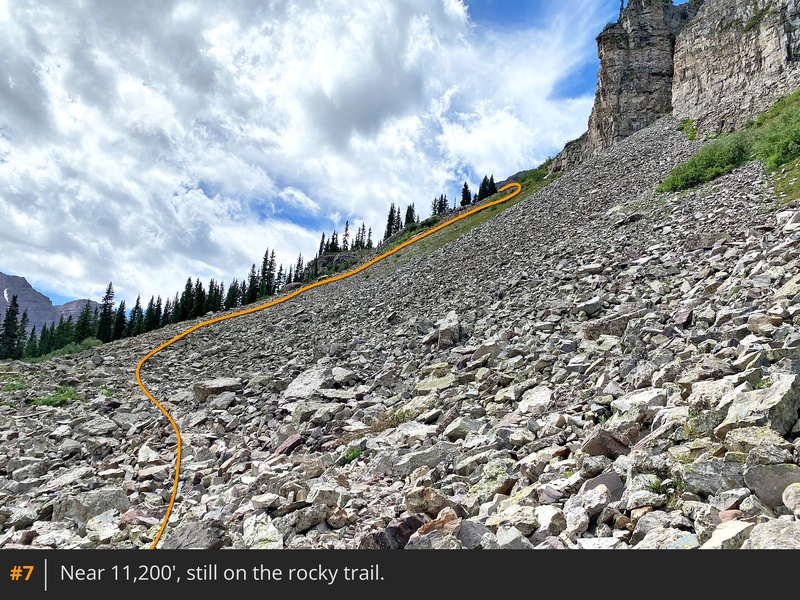
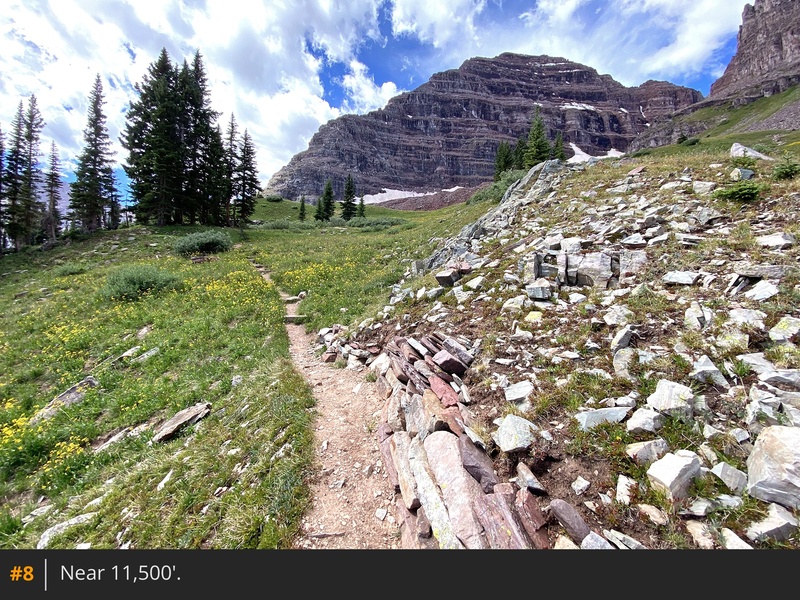
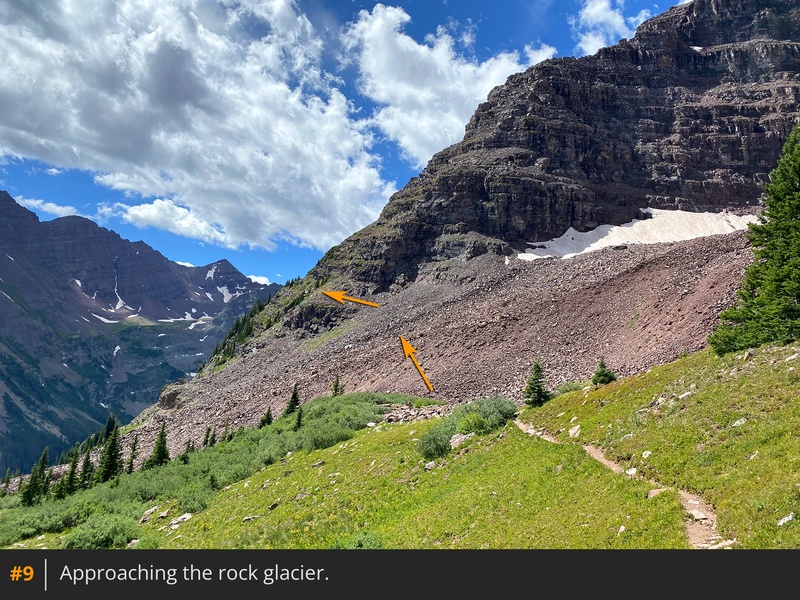
Much of the route up North Maroon can be seen from Maroon Lake  1. Start at the trailhead and follow the trail west along the edge of Maroon Lake  2. Pass the lake and ascend the Crater Lake trail for about 1.75 miles until you reach a trail junction  3. Turn right onto the Maroon-Snowmass trail and continue for another 0.75 miles to the trail junction for North Maroon  4. Turn left and descend into Minnehaha Gulch  5. Cross the creek and follow the well-defined trail as it zigzags through talus fields  6. Near 11,100', turn left beneath cliffs and continue to another talus field  7. Around 11,500', reach an open grassy area where North Maroon returns to view  8. Continue to the rock glacier at the base of the north face  9.

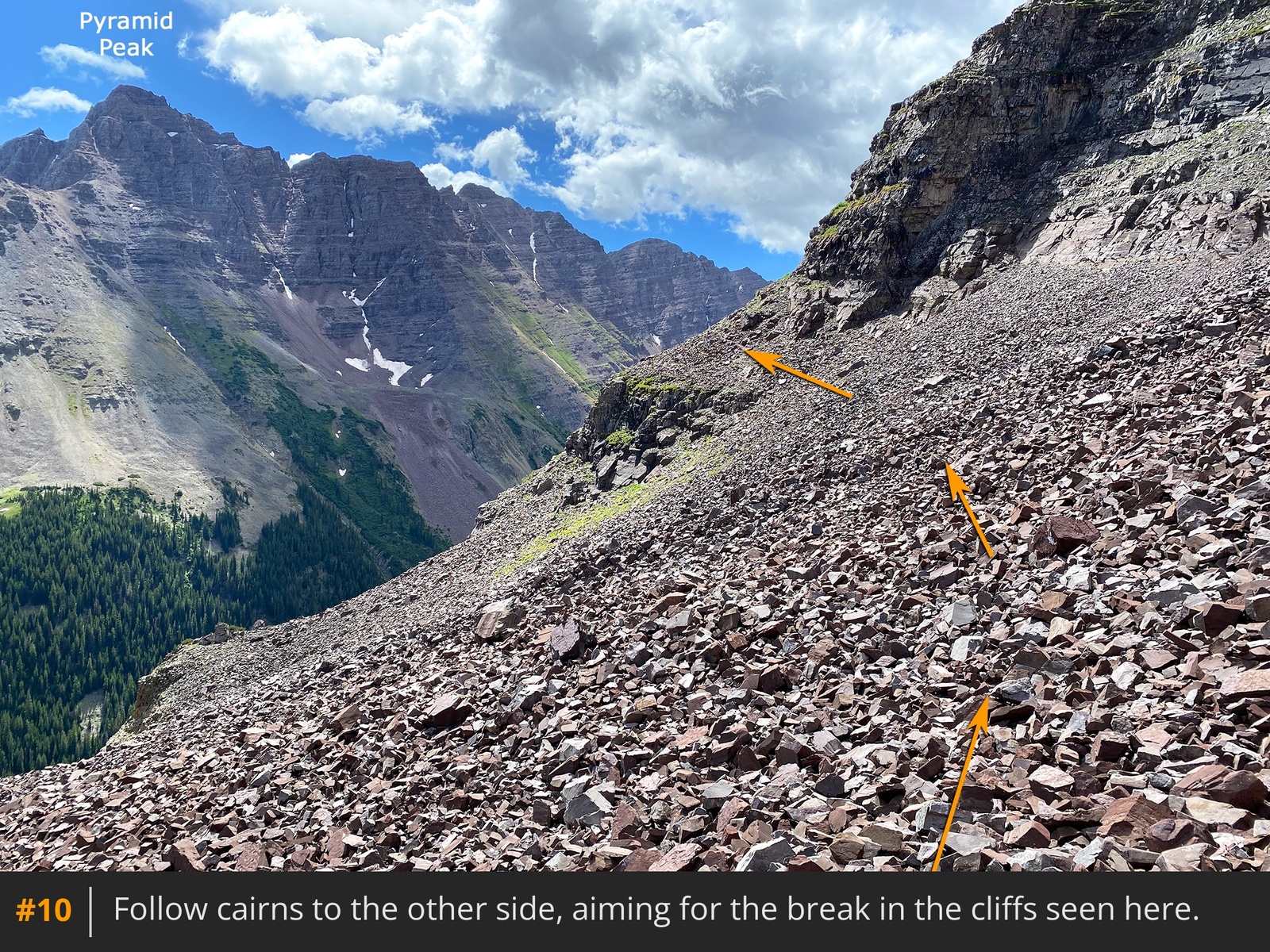
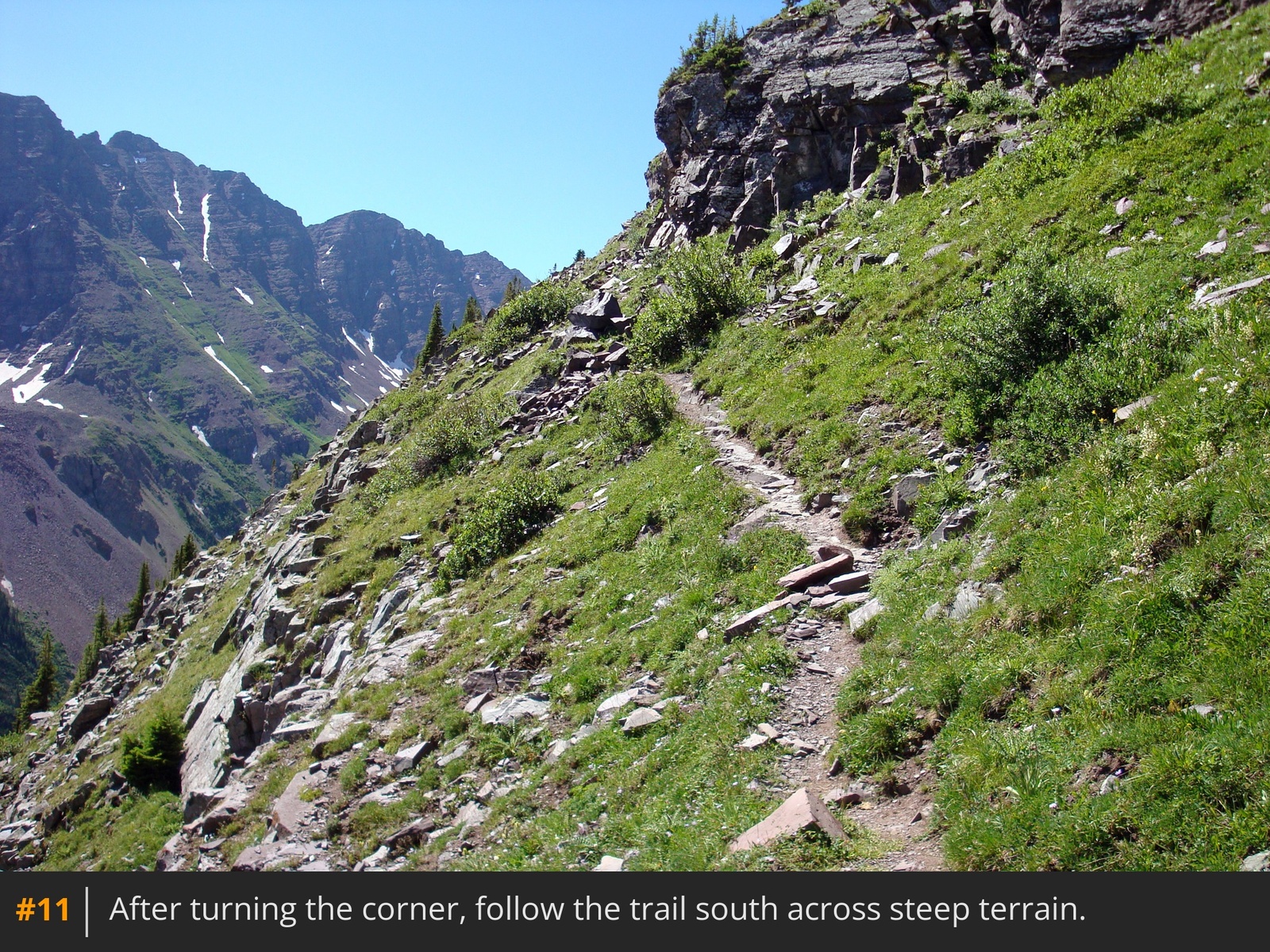
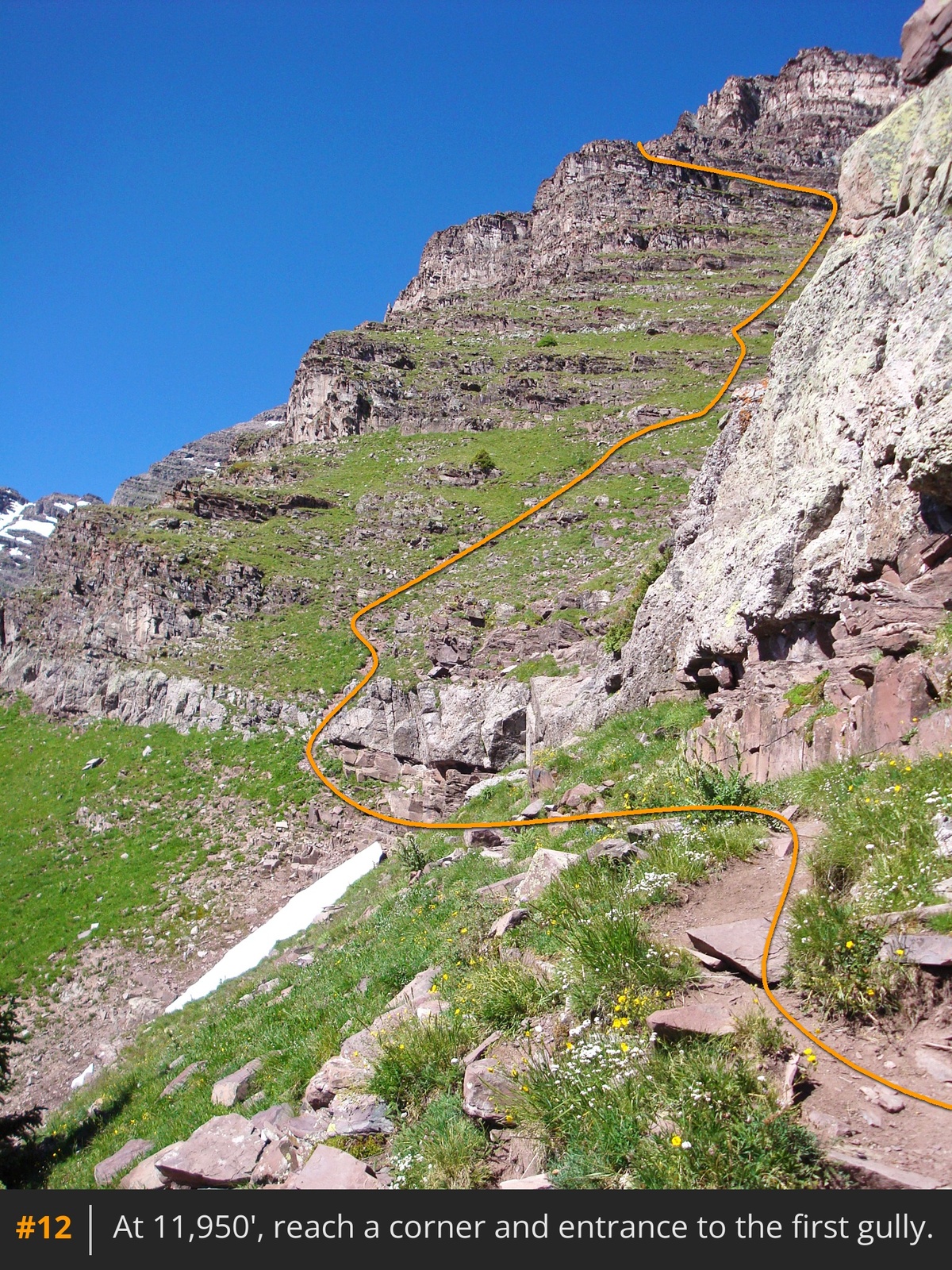
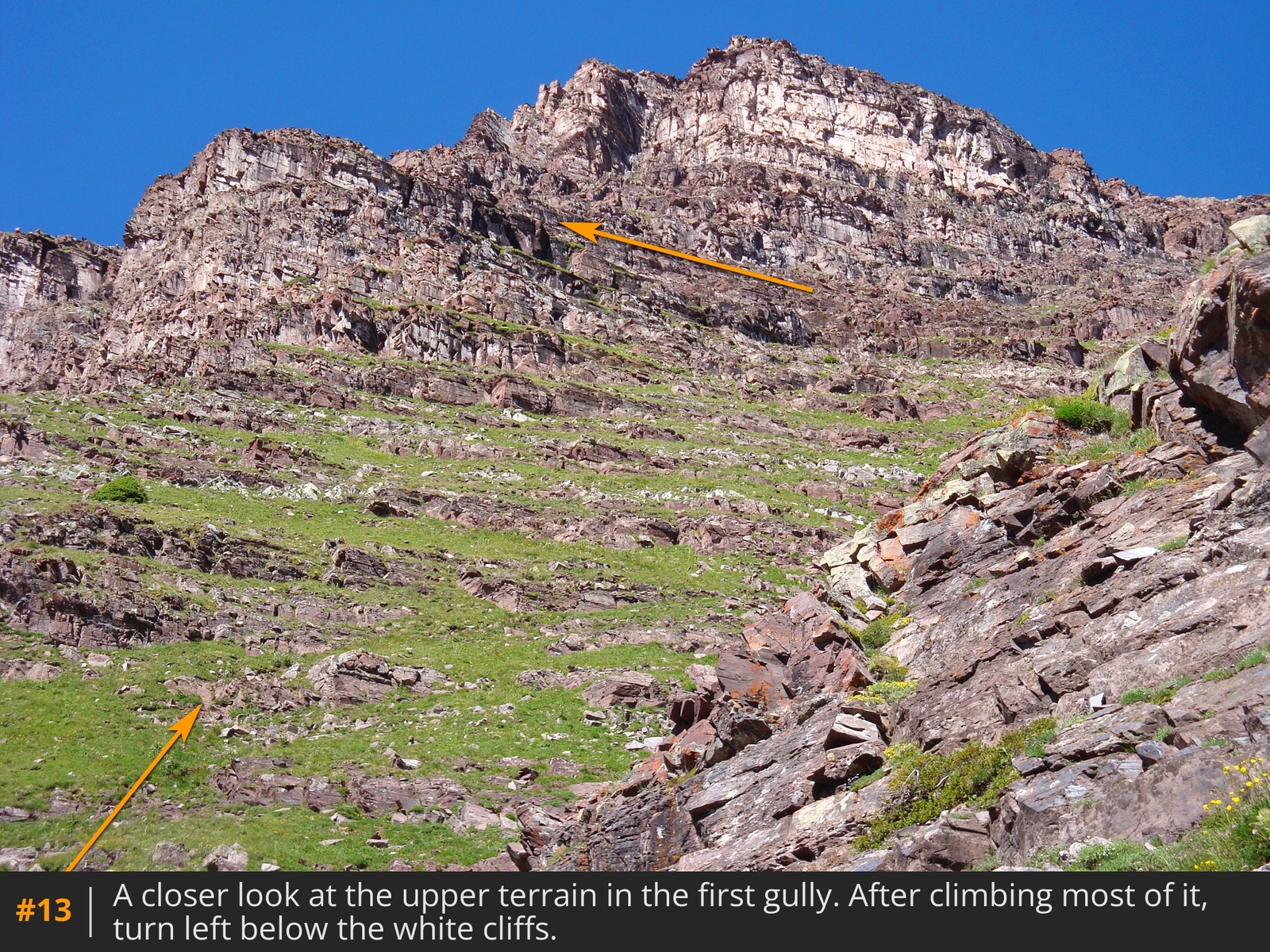
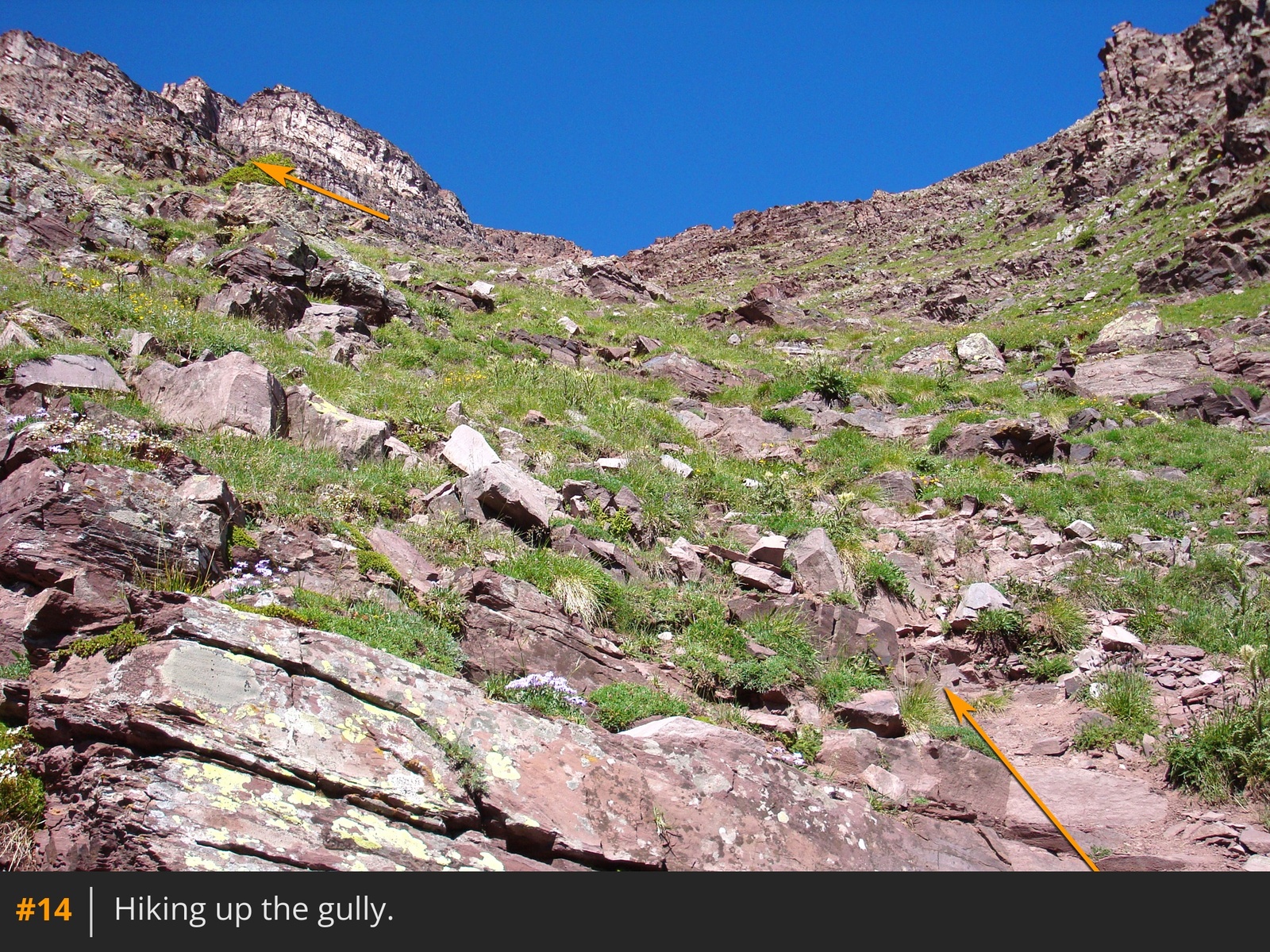
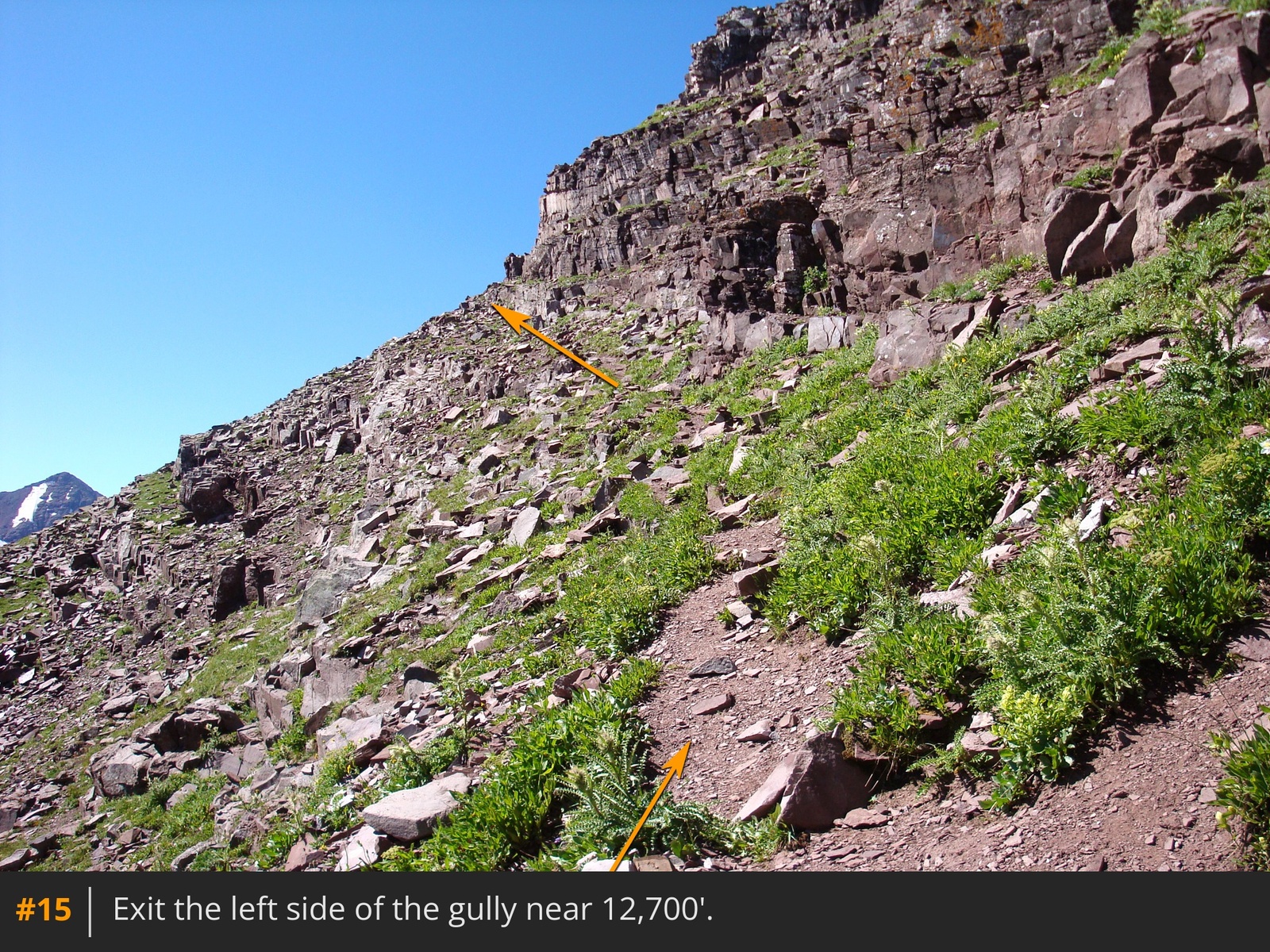
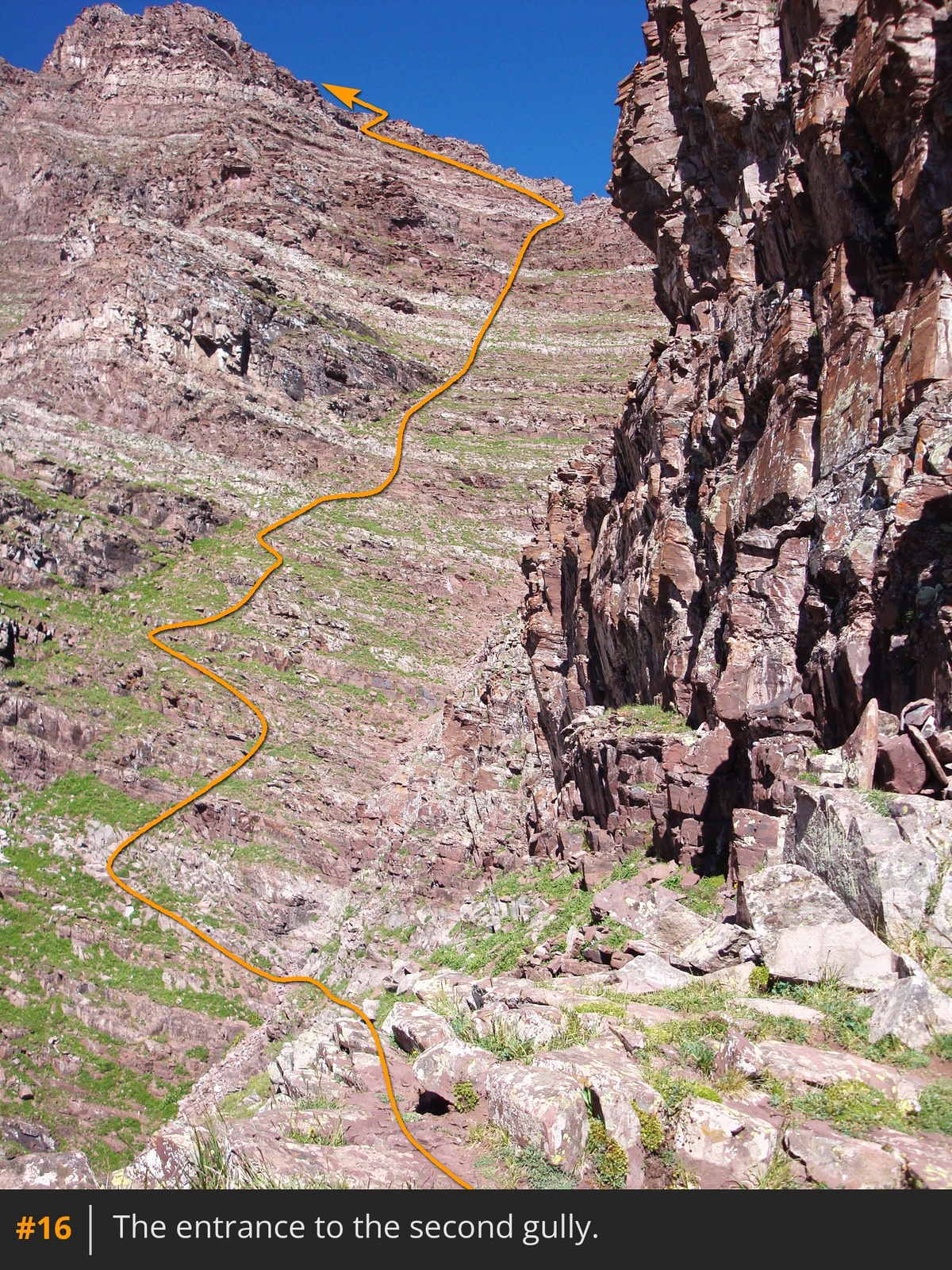
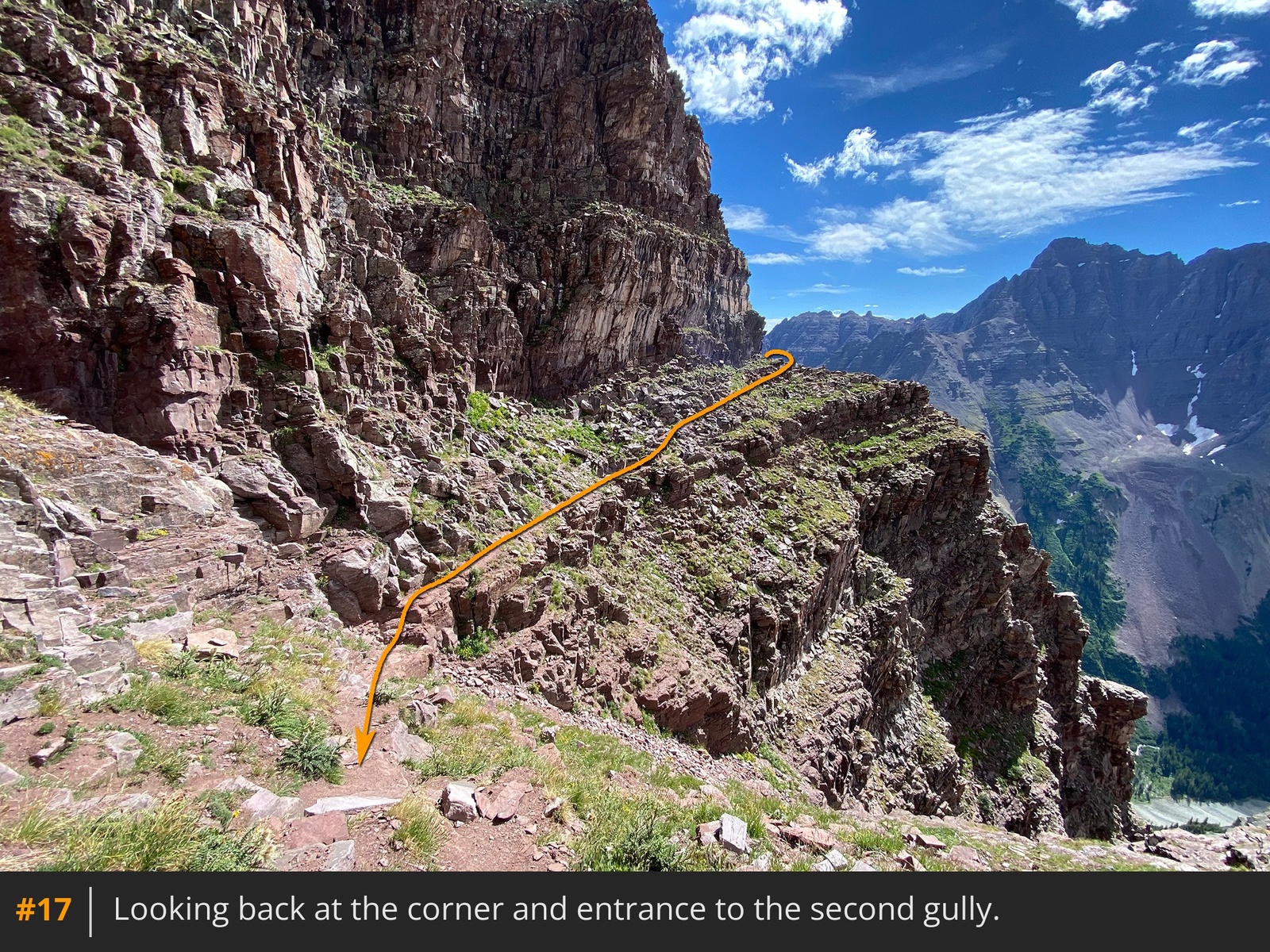
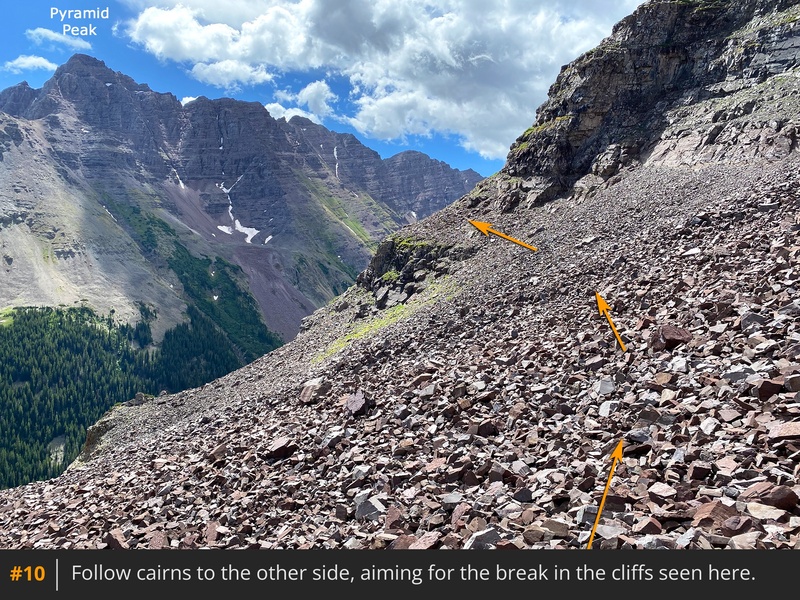
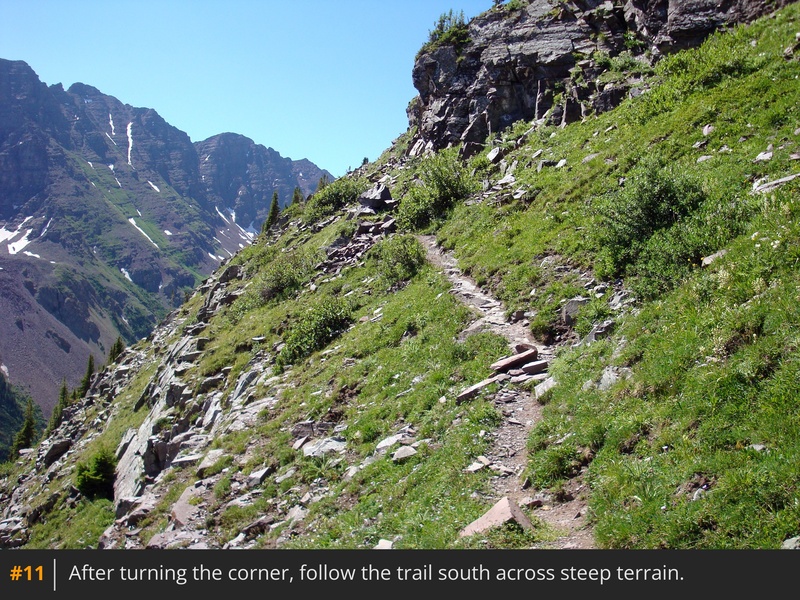
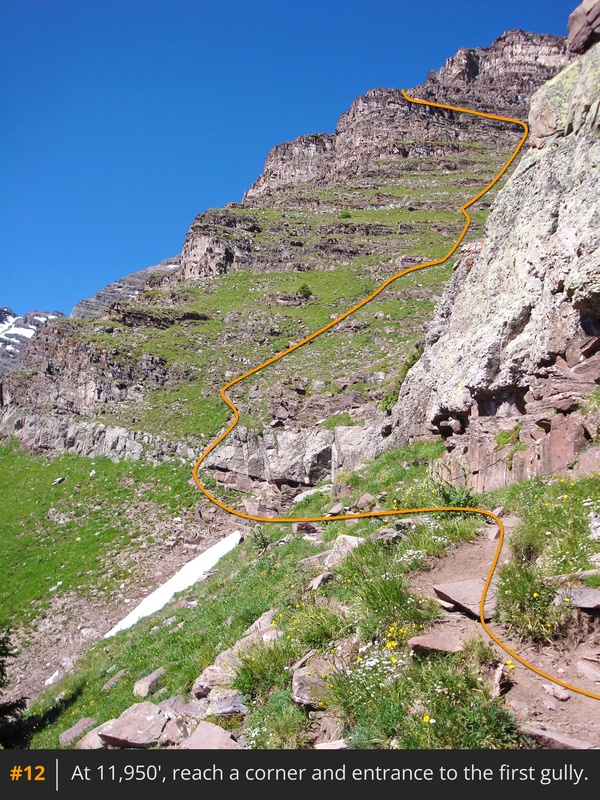
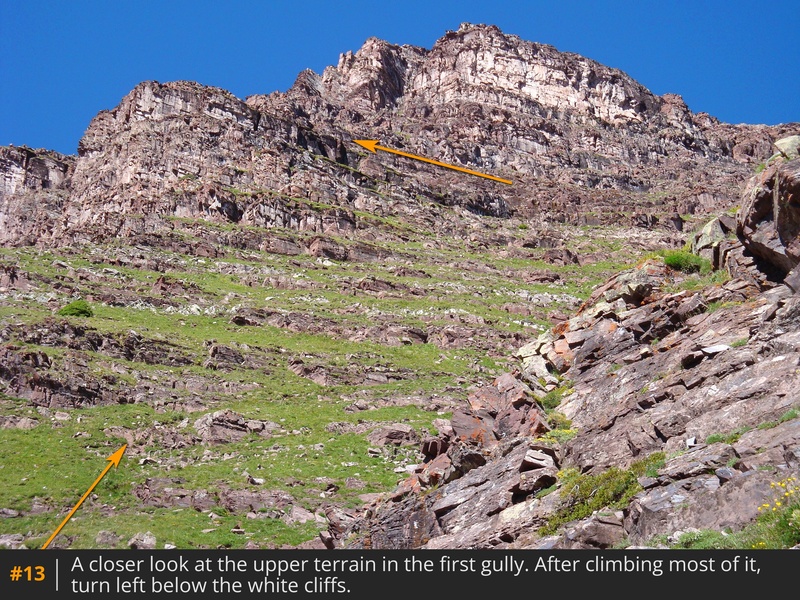
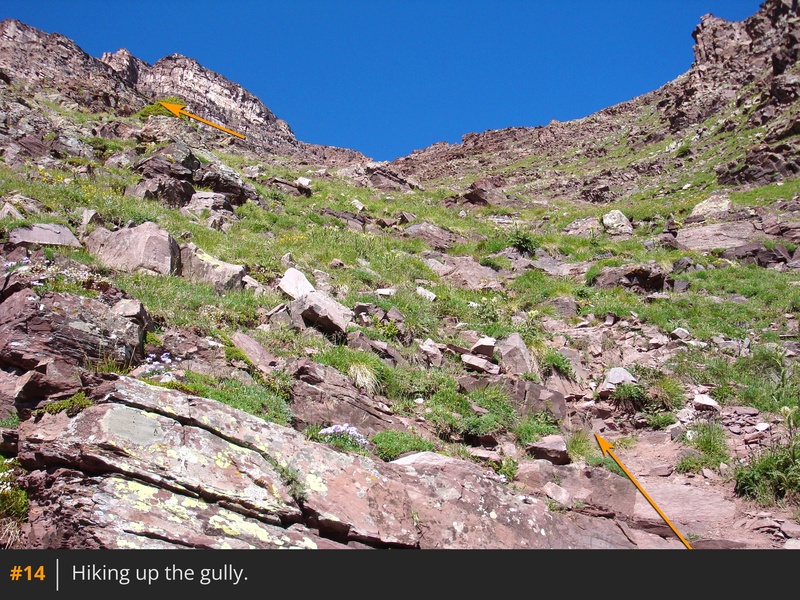
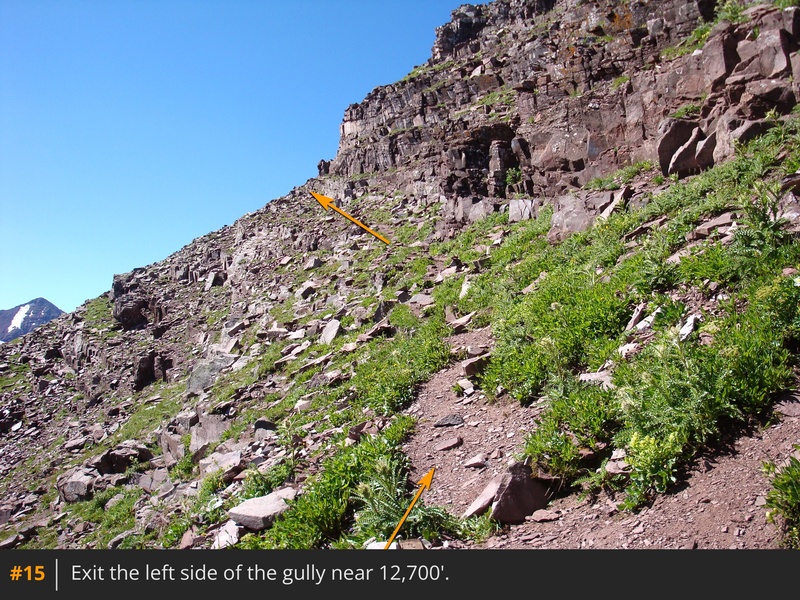
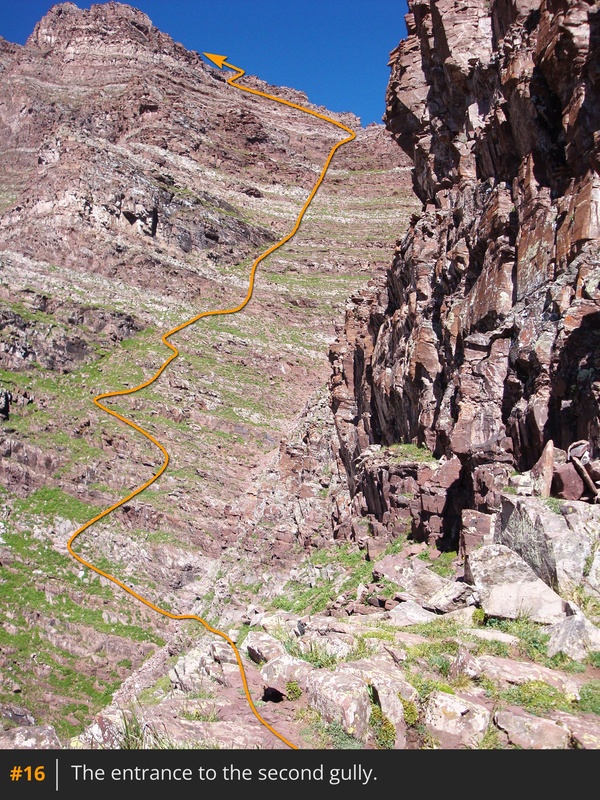
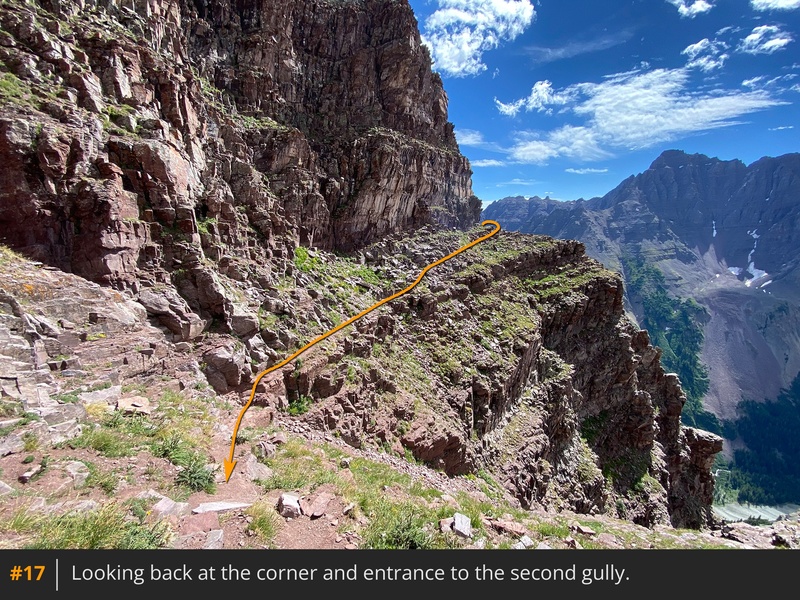
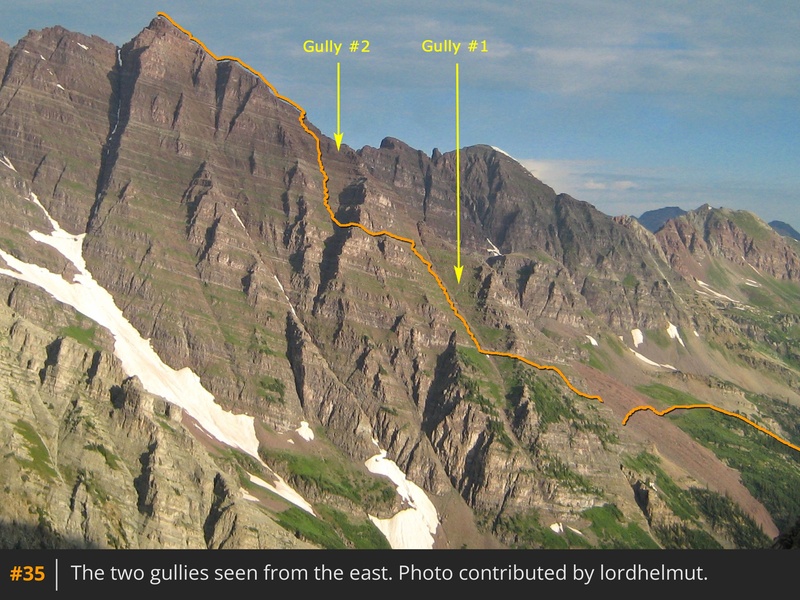
Follow cairns and trail segments onto the rock glacier, aiming for a break in the cliffs on the opposite side  10. As you cross, avoid significant elevation changes while following cairns. Beyond the rock glacier, locate a more-defined trail and follow it south around a corner  11. Shortly after, turn right and climb 200 feet below cliffs. At 11,950', reach a corner where you can see the next section of the route—a broad gully leading to the northeast ridge  12  13. From this point forward, this gully will be referred to as the 1ST GULLY . Enter the gully and begin climbing its left side  14. Over the next 600 feet, ascend steep Class 2 terrain before exiting left, below the white cliffs visible in  13. Above 12,600', follow the trail left and exit the gully  15. Turn another corner and traverse across ledges to reach the entrance to the 2nd GULLY near 12,700'  16.

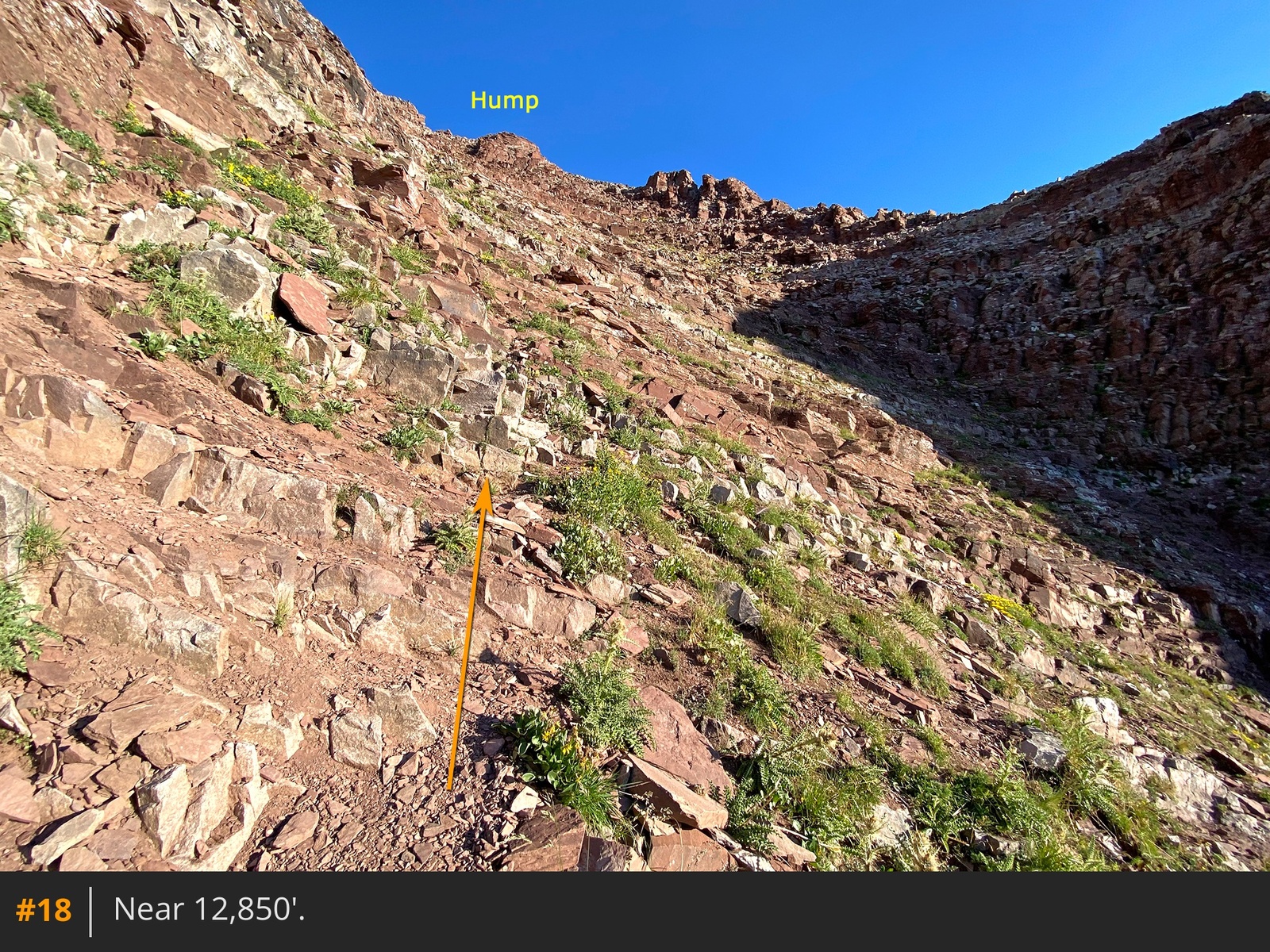
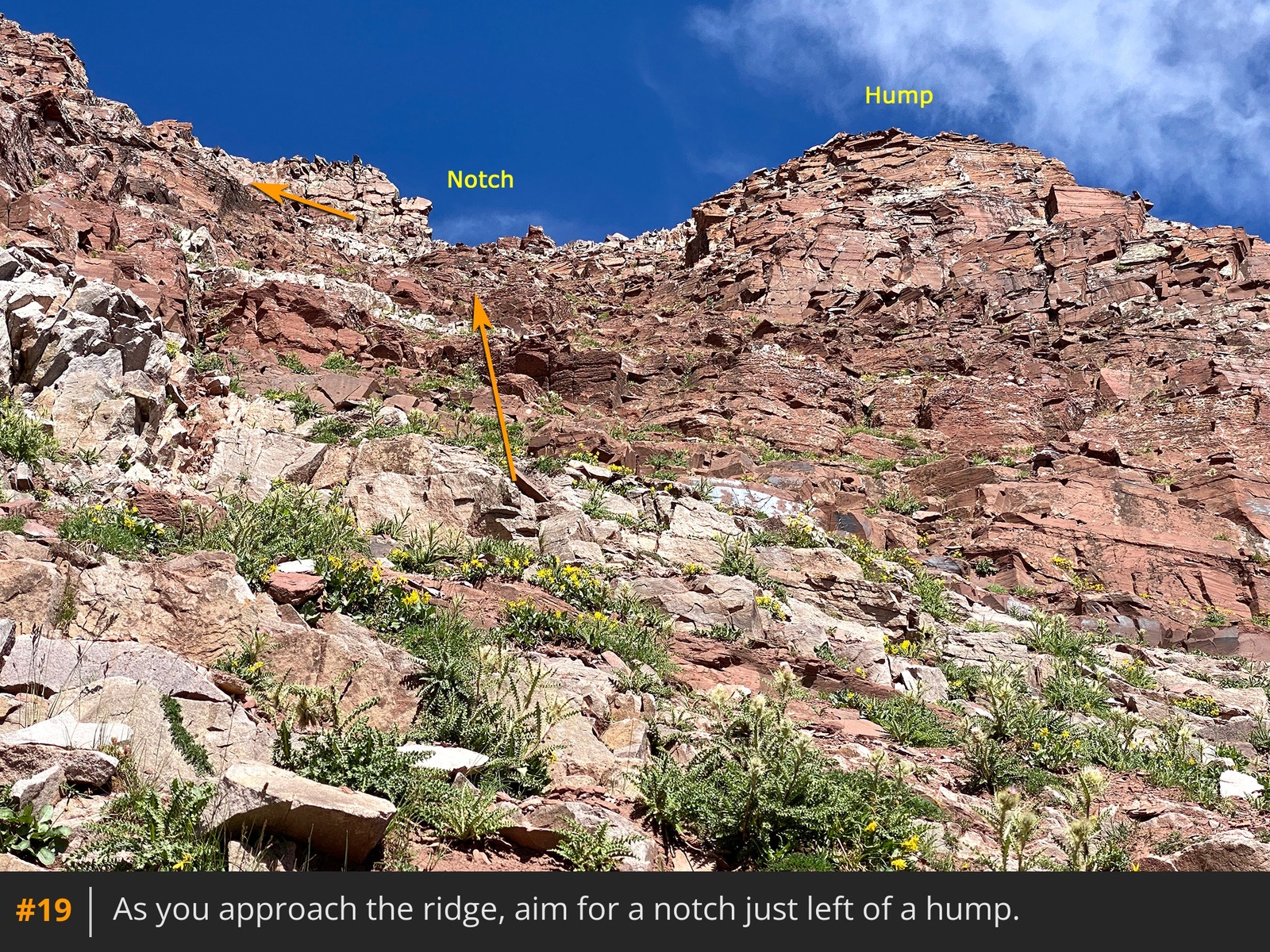
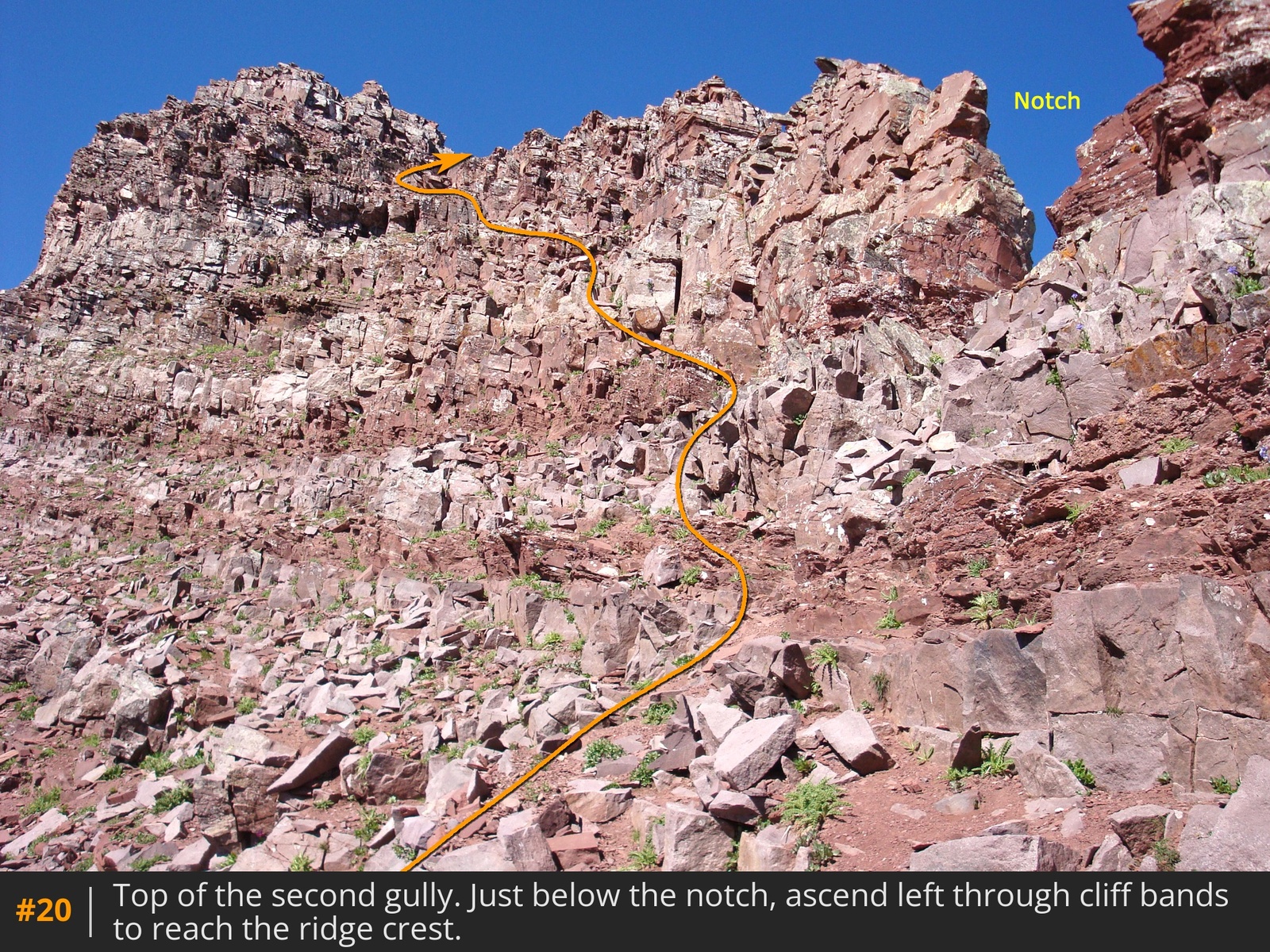
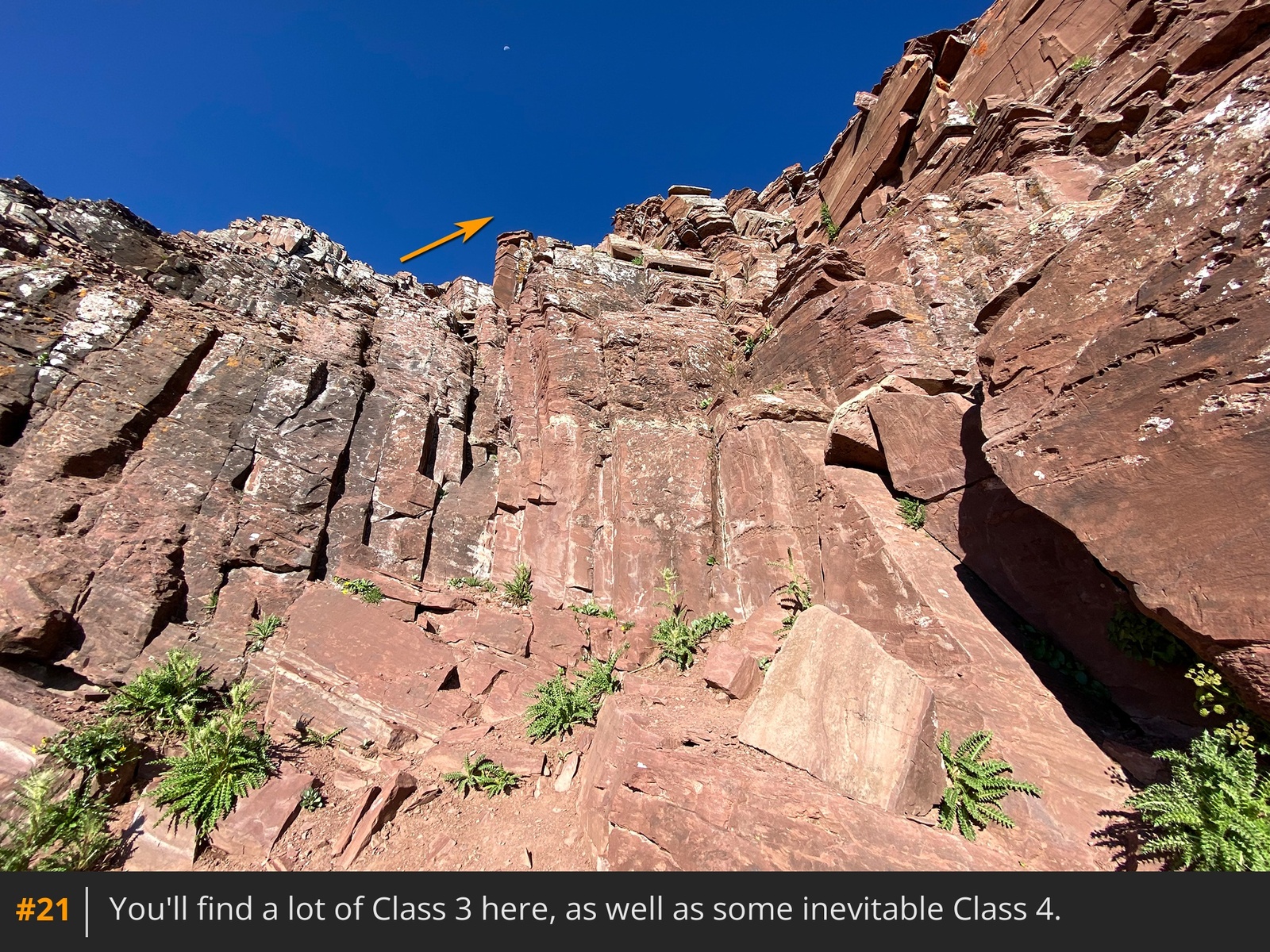
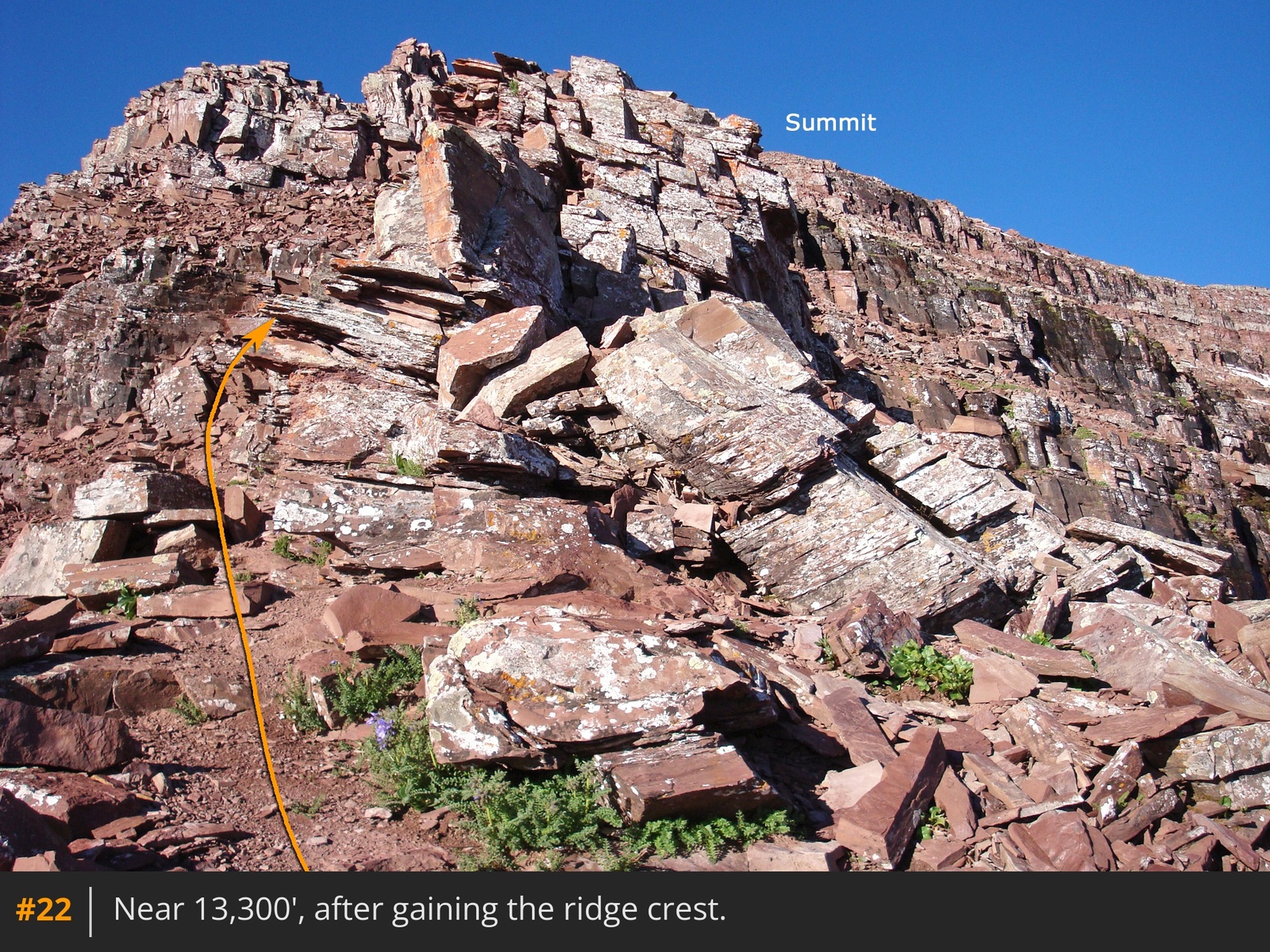
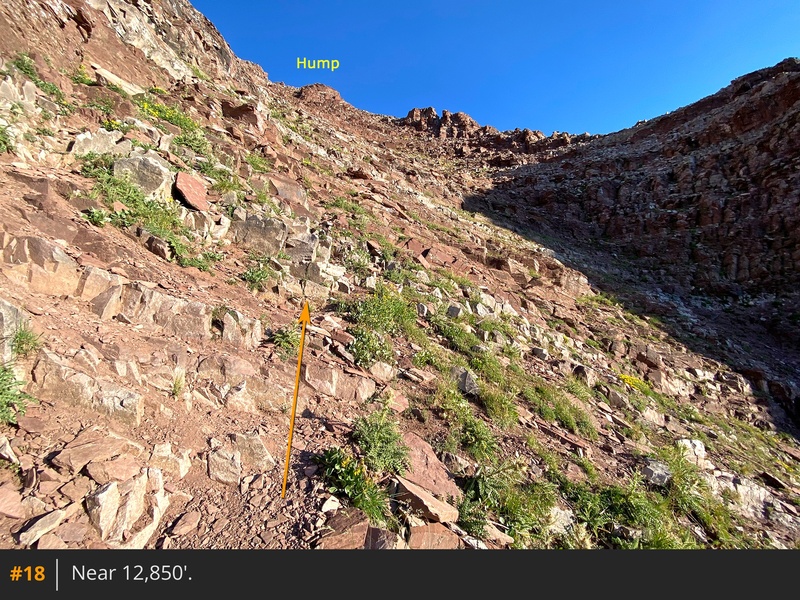
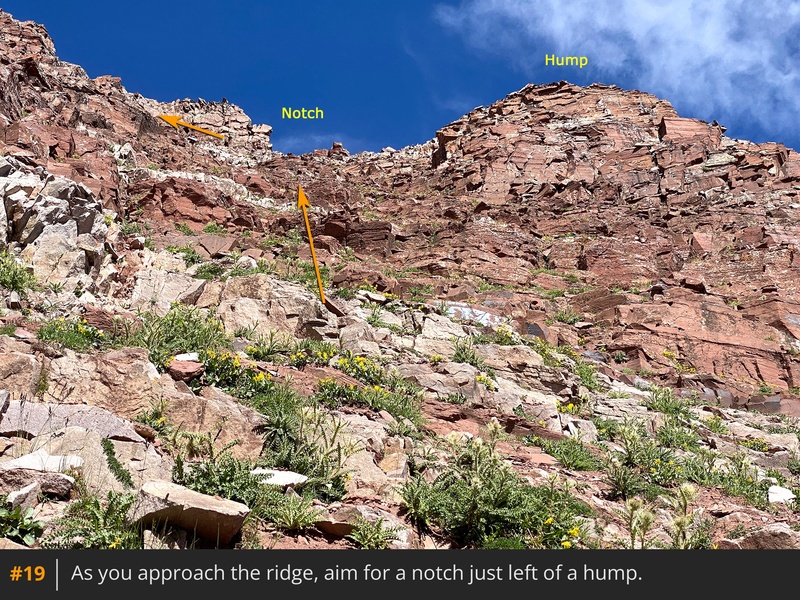
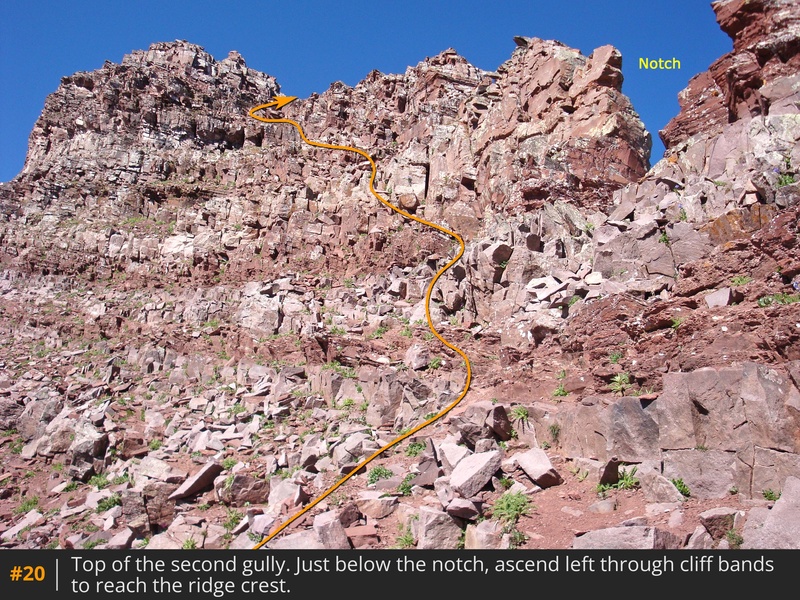
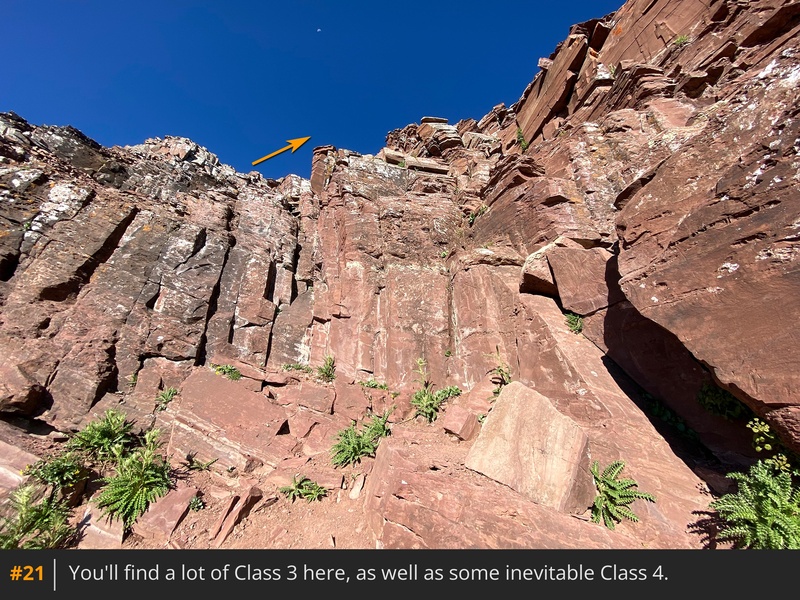
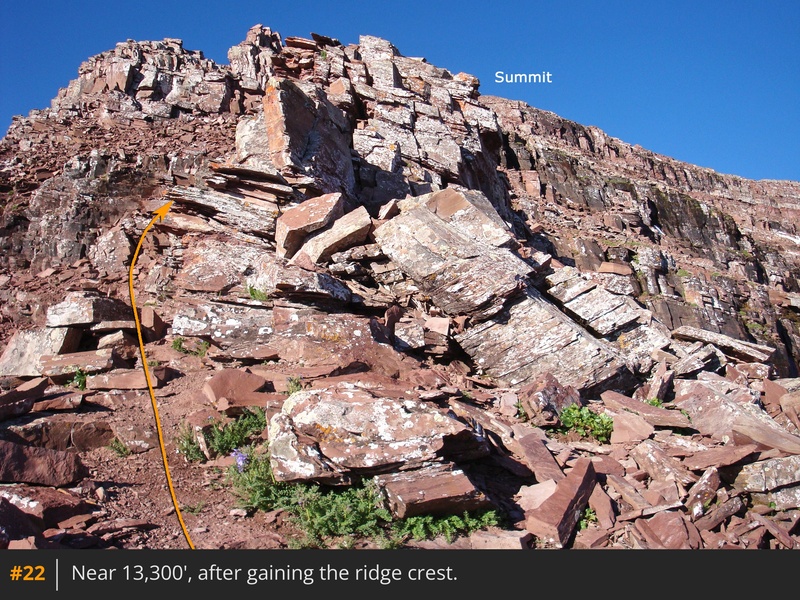
The route becomes more demanding and time-consuming from this point onward. If the weather begins to deteriorate, turn back! The 2nd GULLY is steeper than the 1st, with loose rock and scrambling required near the top. Descend slightly to reach the center of the gully before beginning your ascent  17  18. Above 12,900', the gully steepens. Follow the faint trail along the left side of the gully, aiming for a notch in the ridge, just left of a prominent hump of rock  19. At the notch, turn left and climb through cliff bands  20  21 to reach the ridge crest near 13,300'  22.

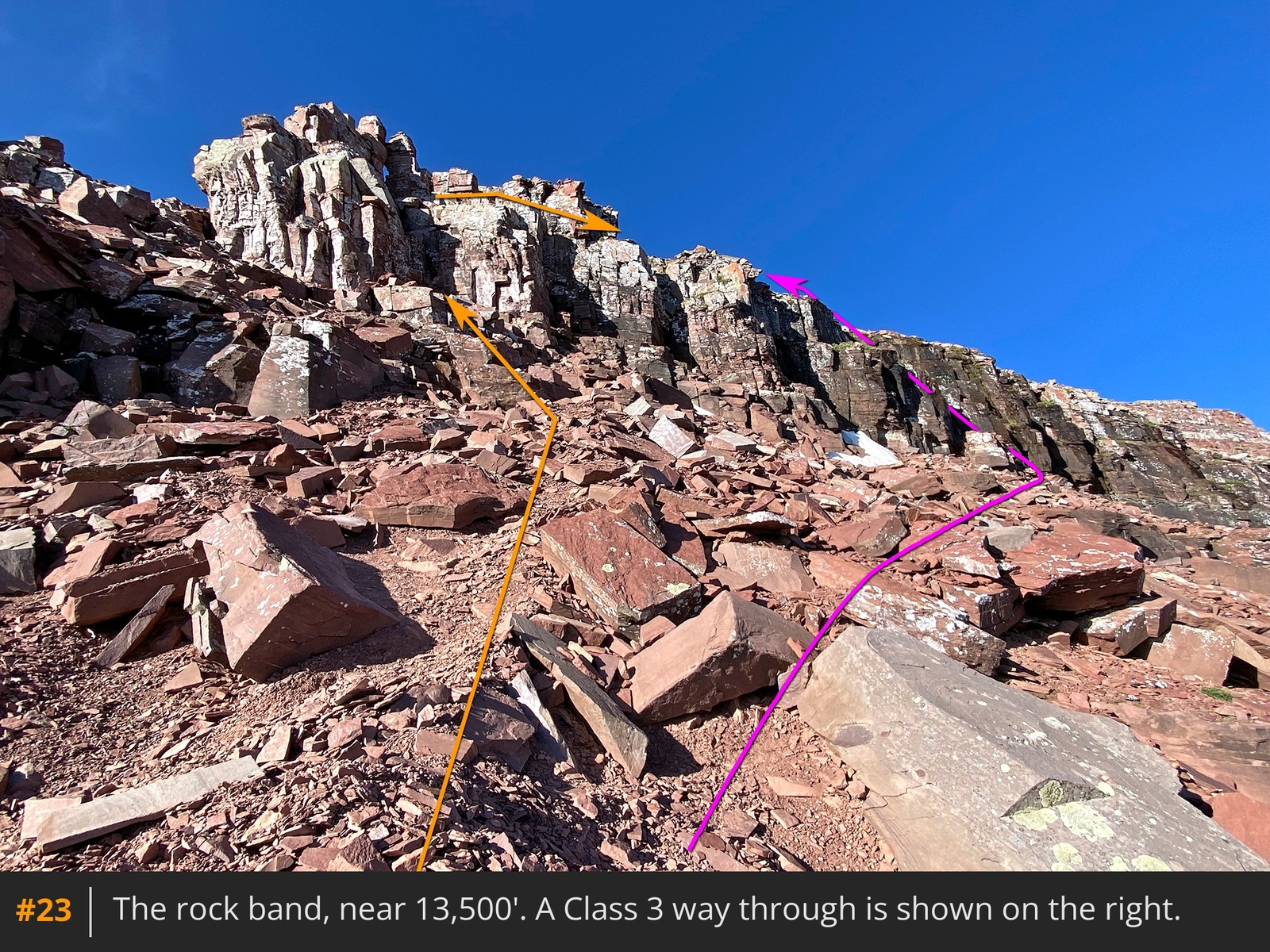
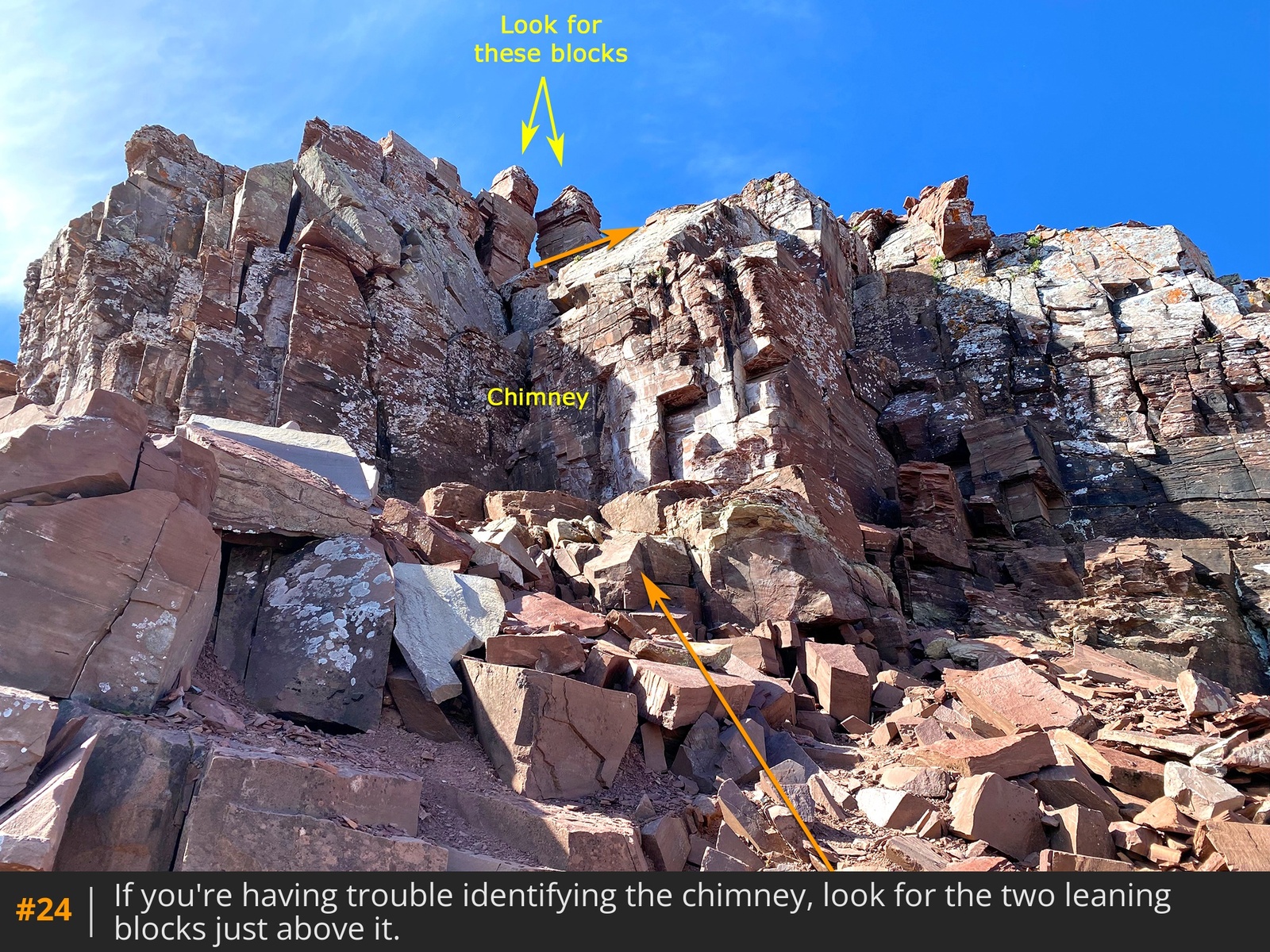
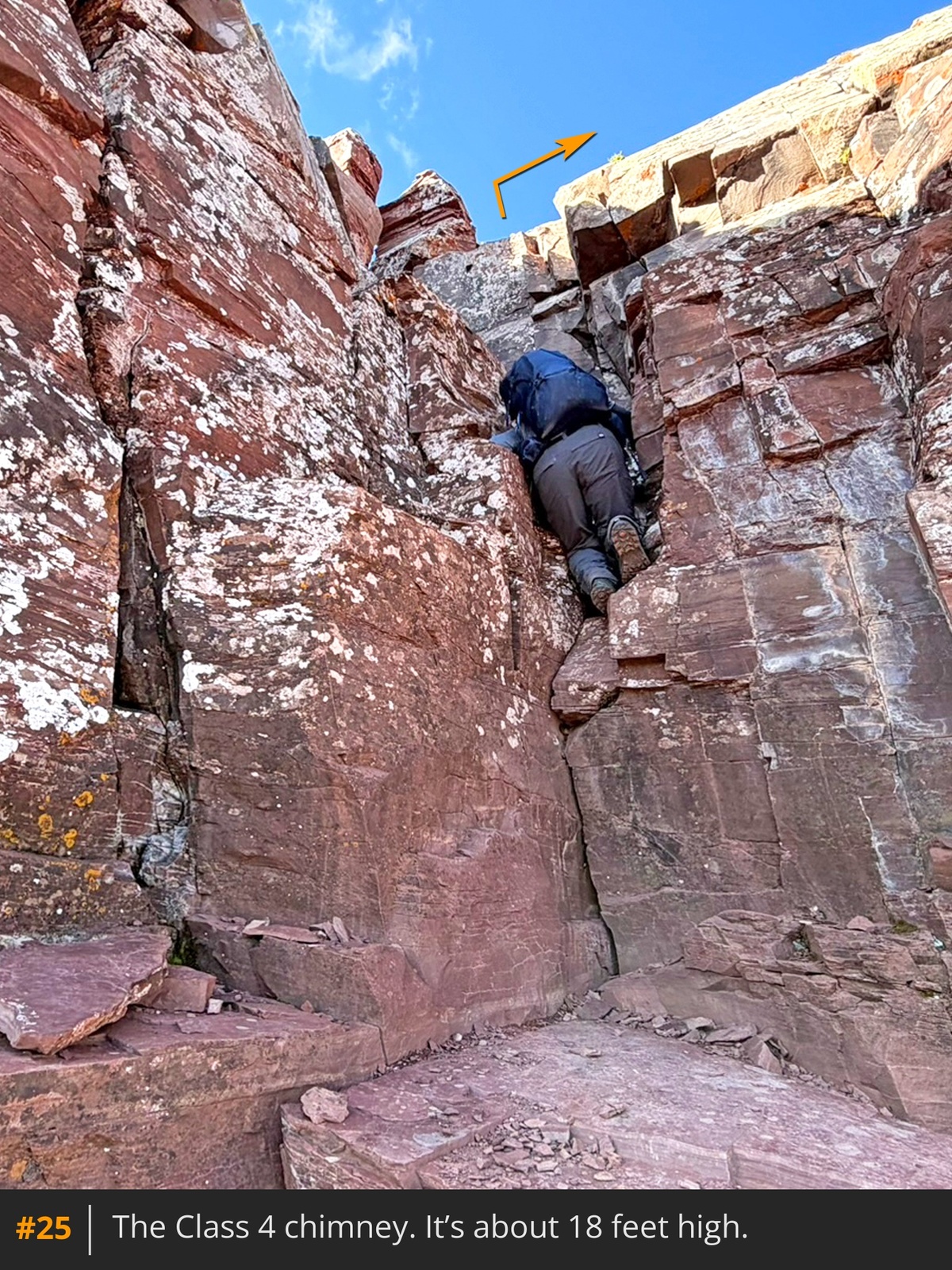
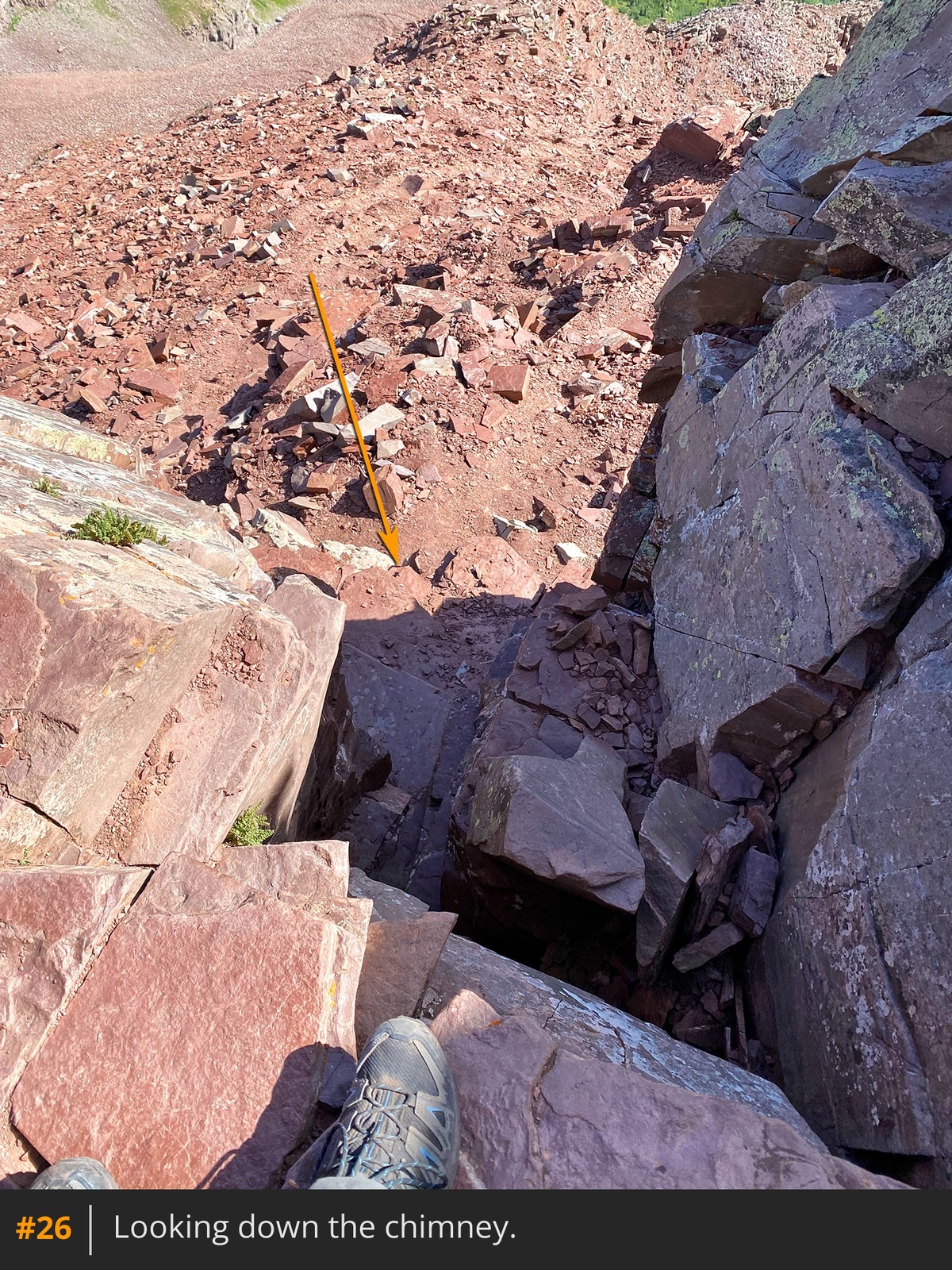
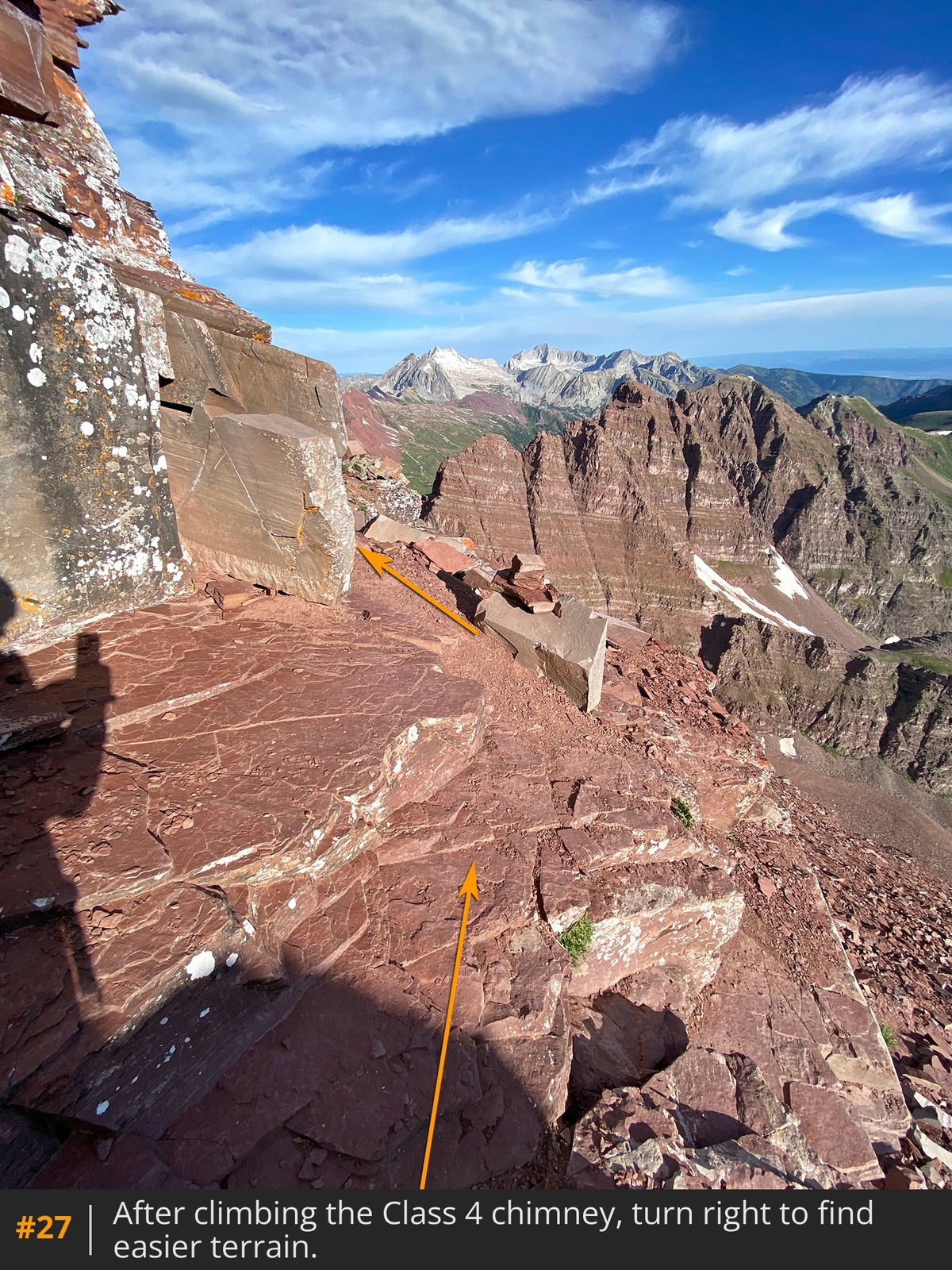
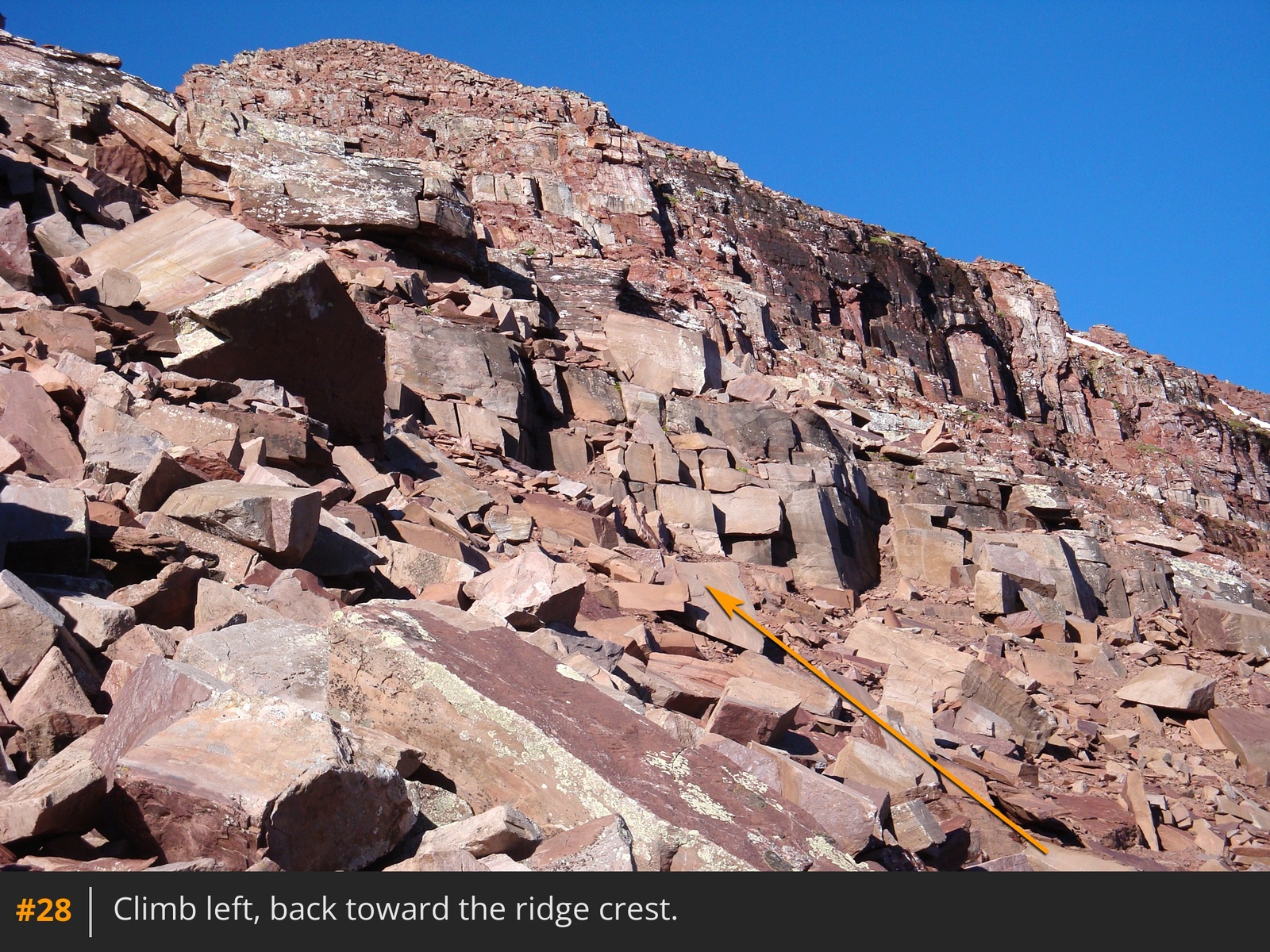
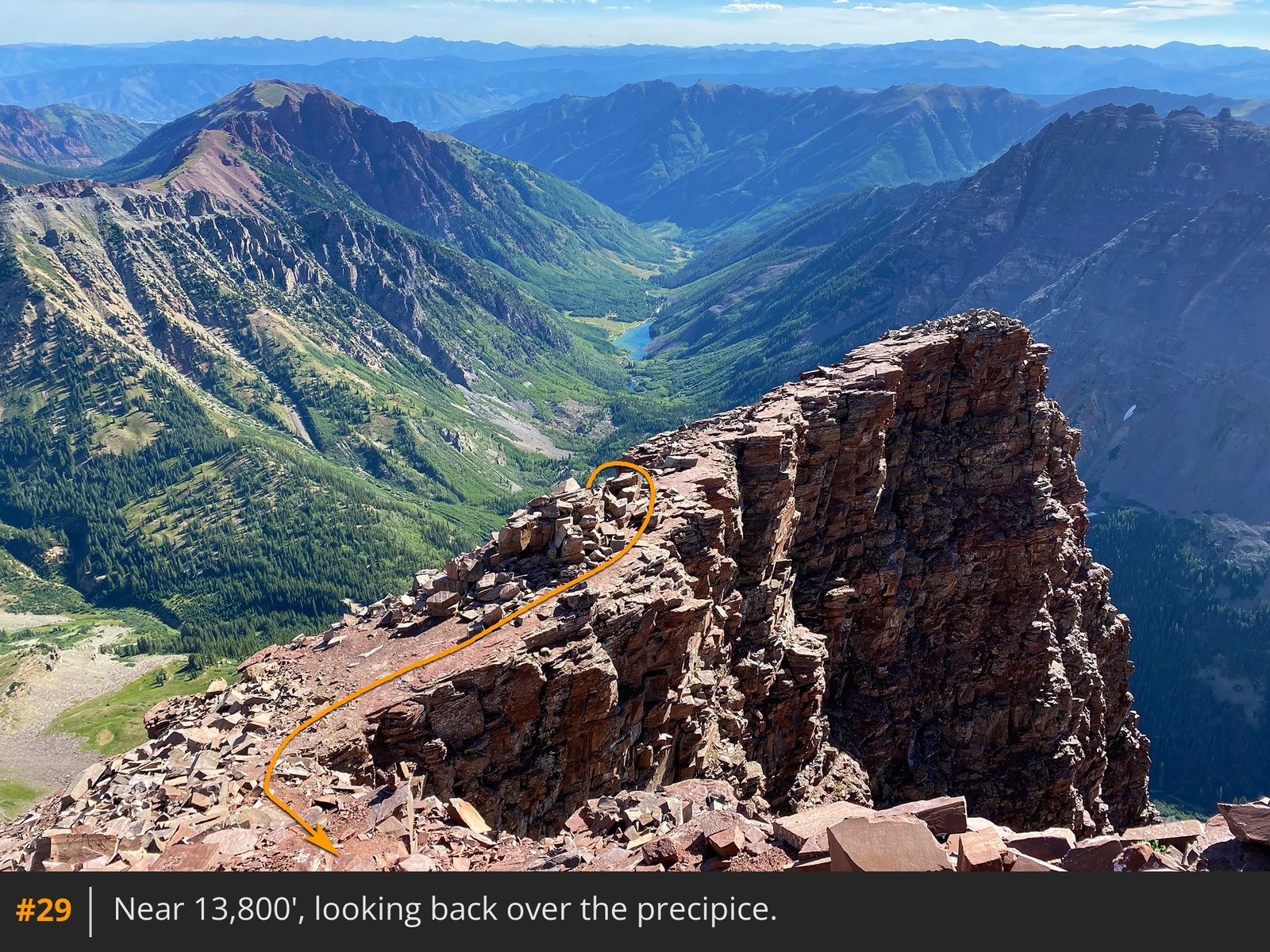
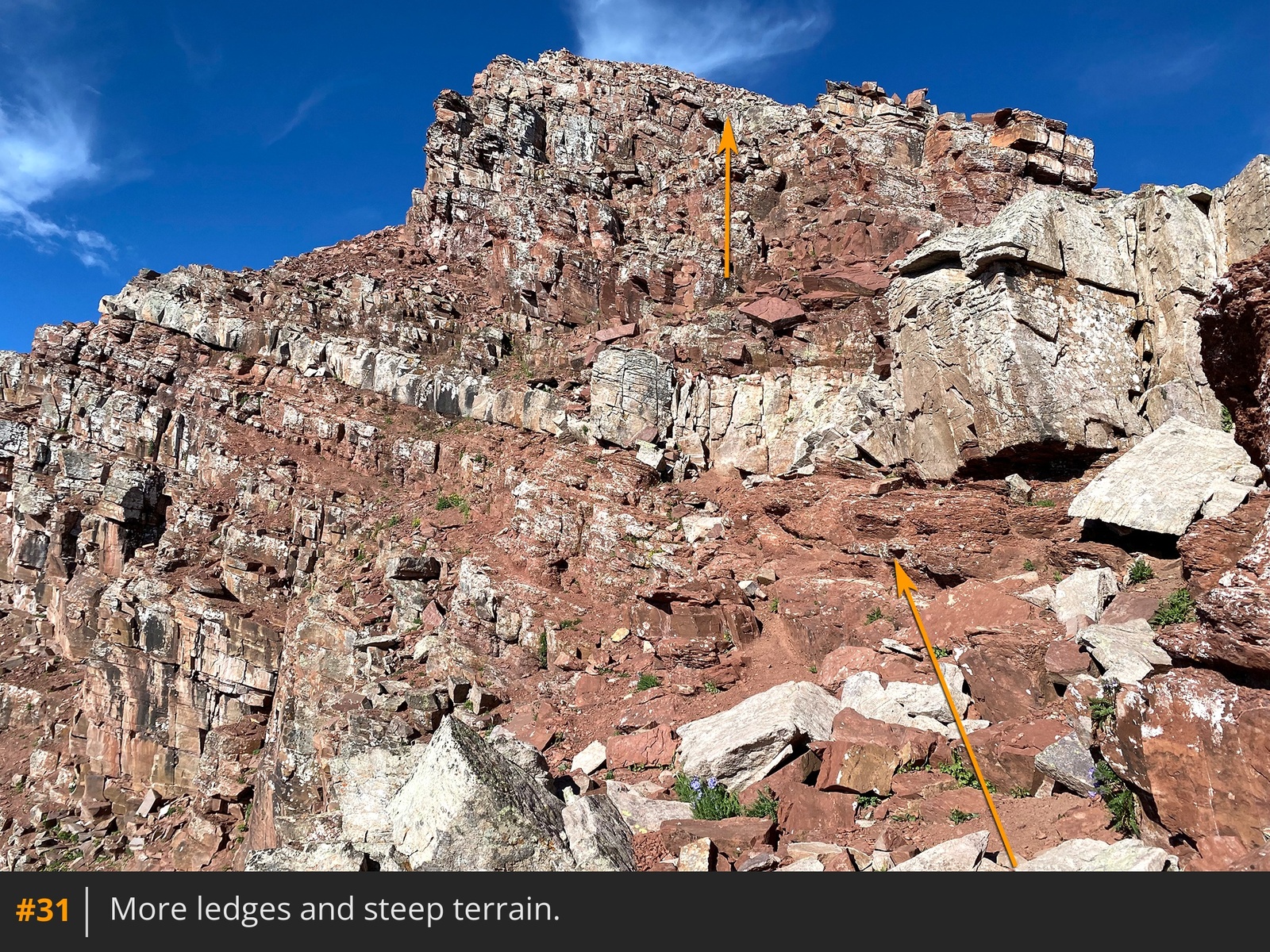
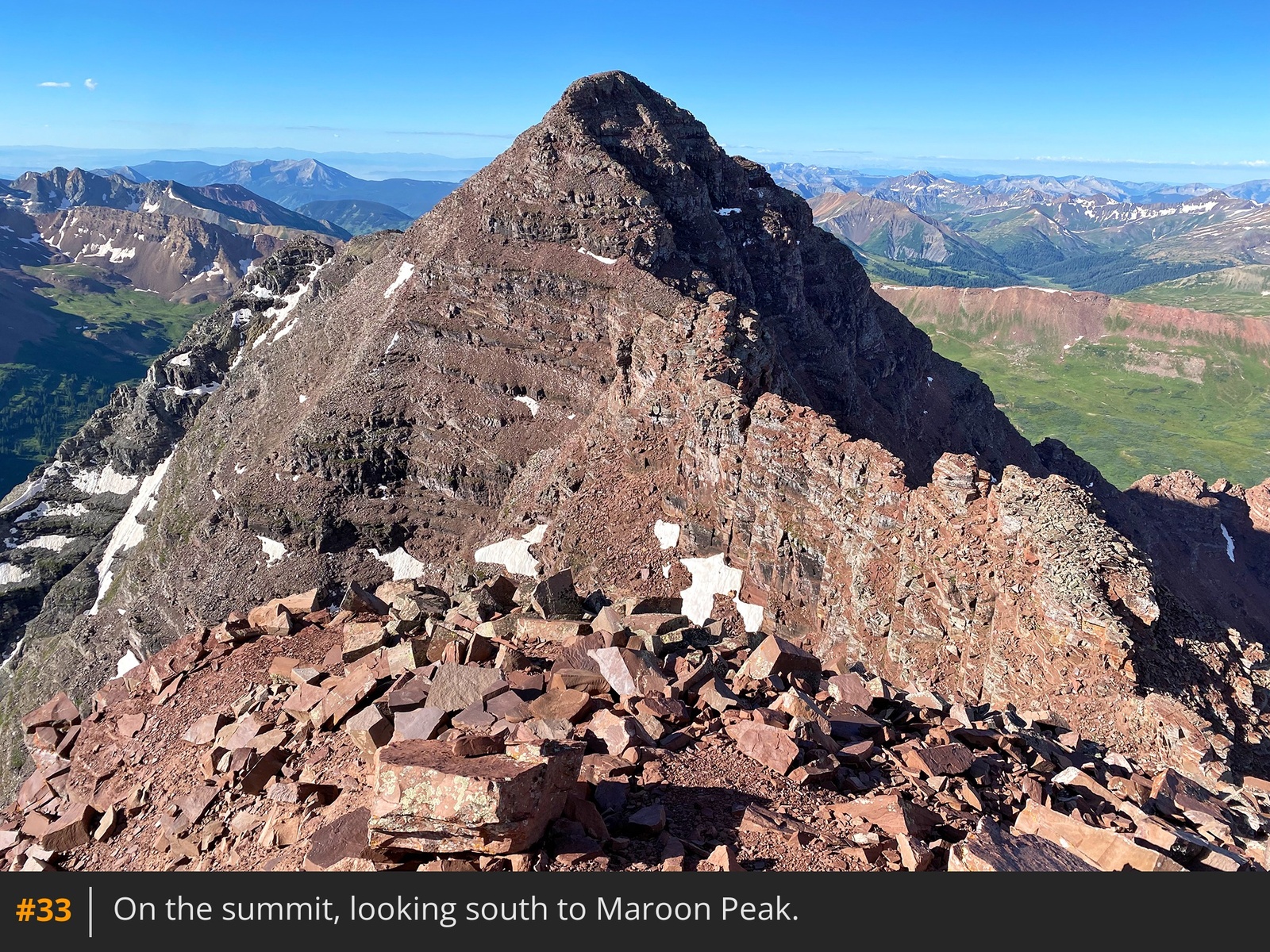
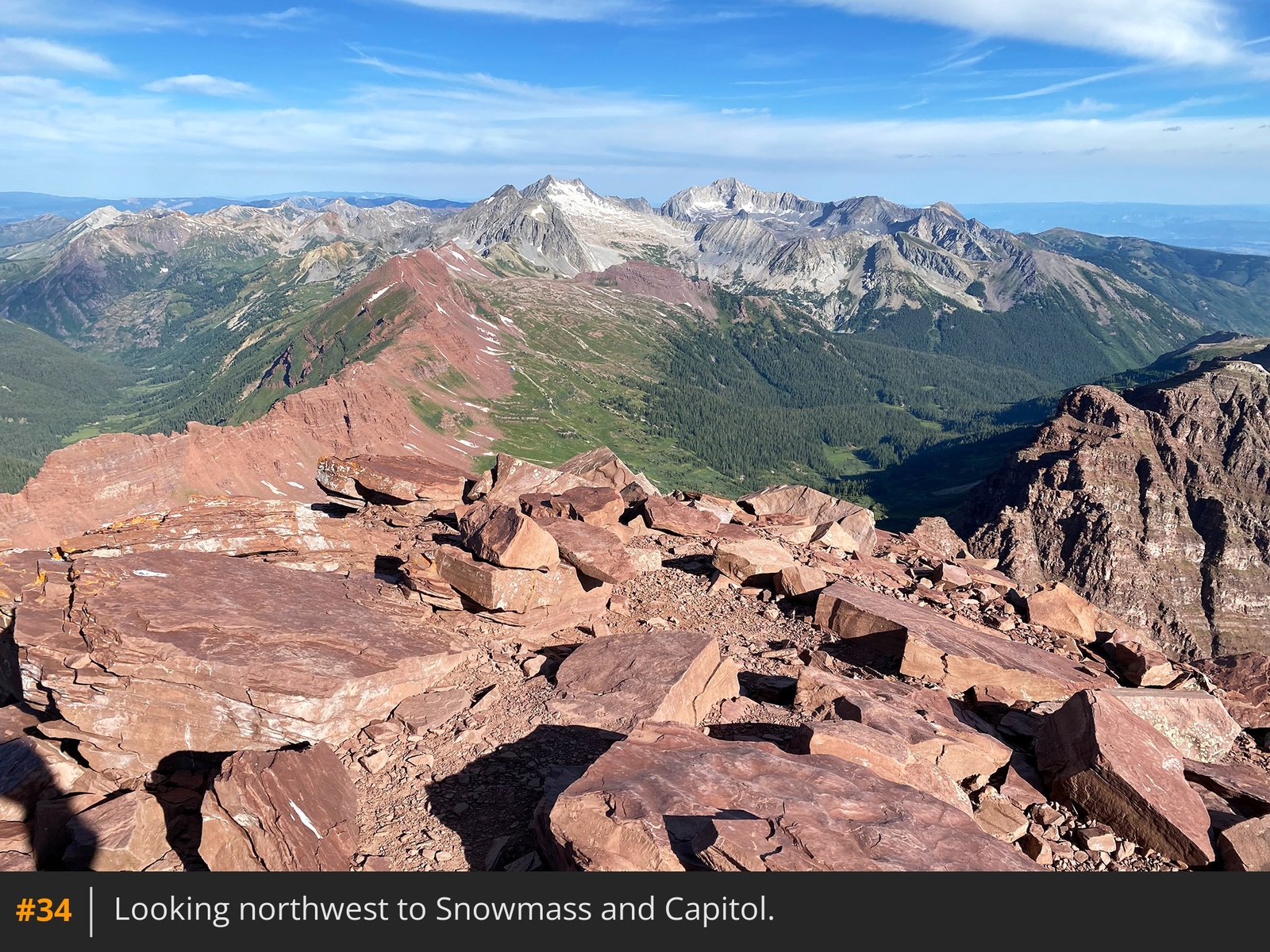
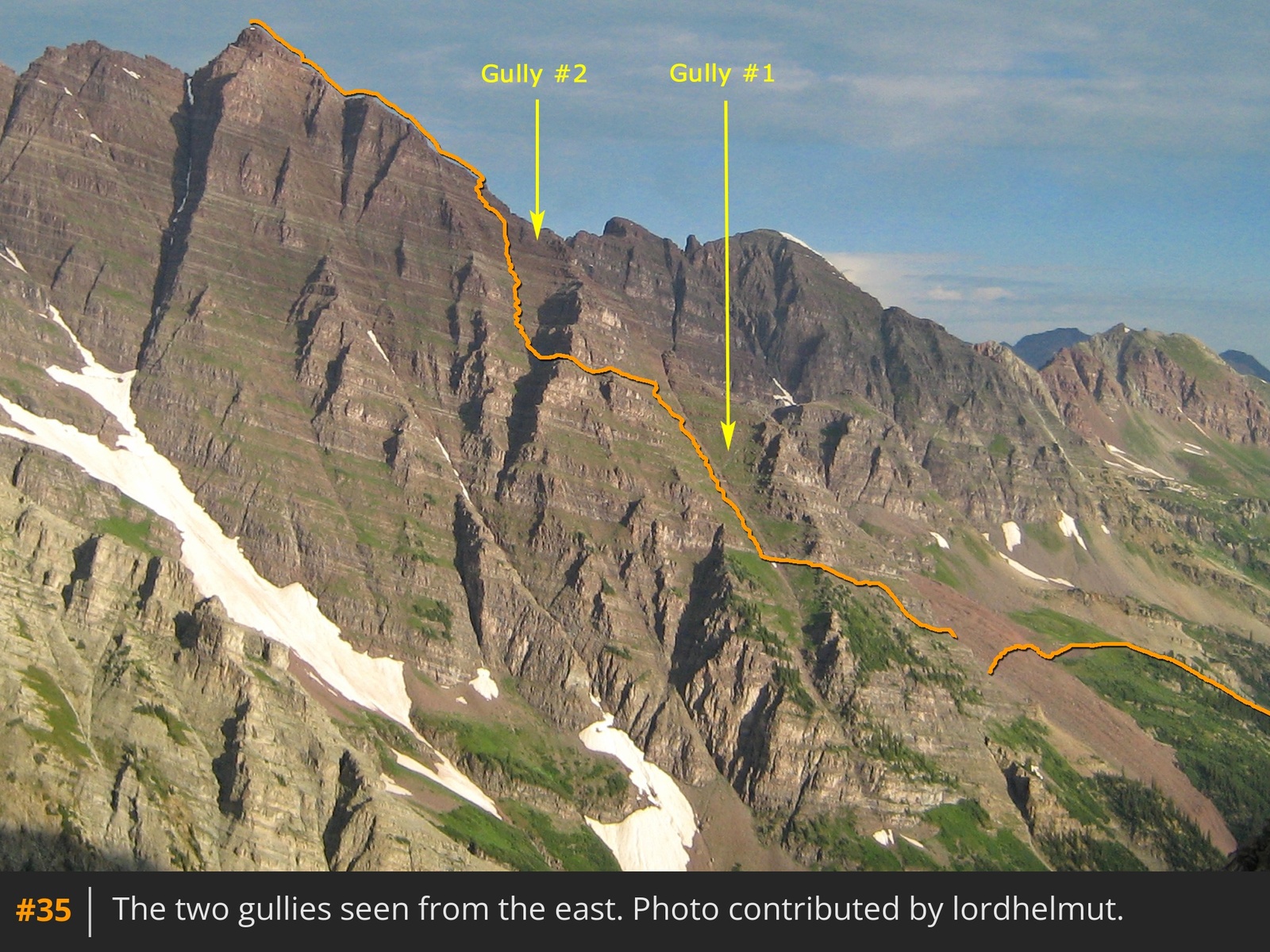
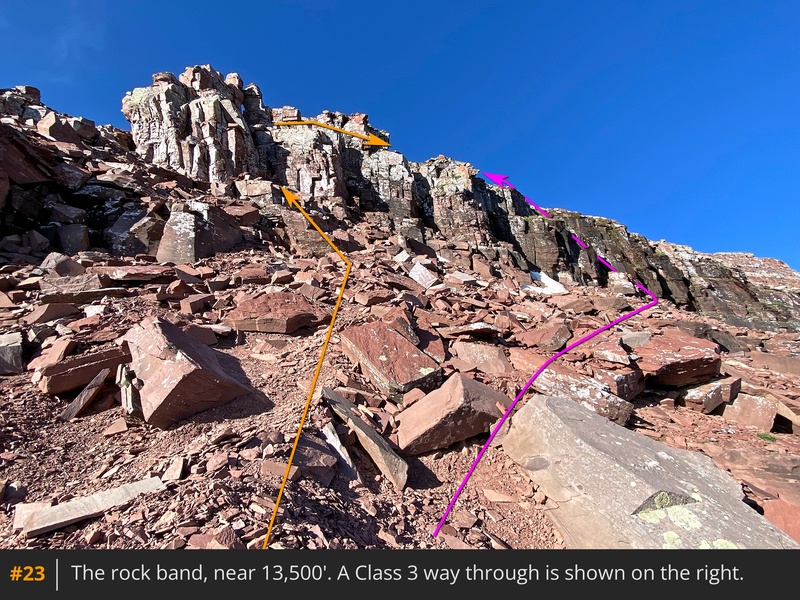
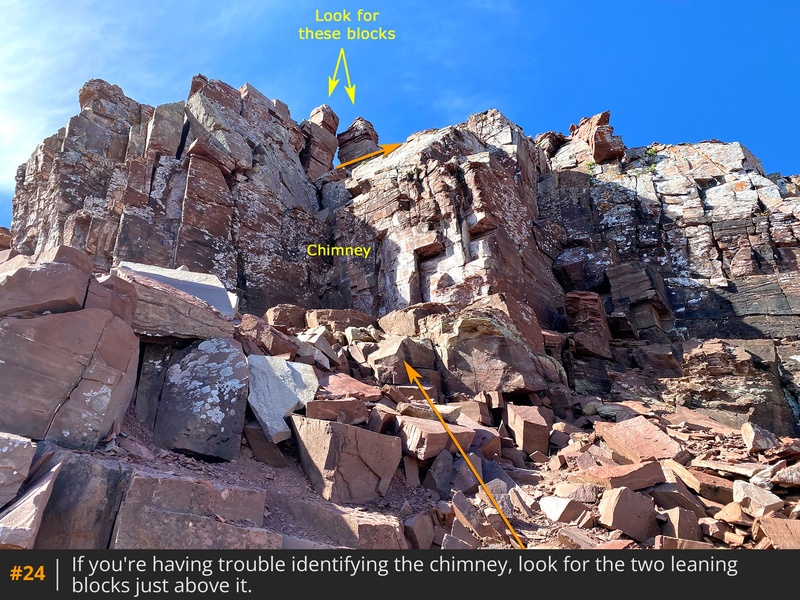
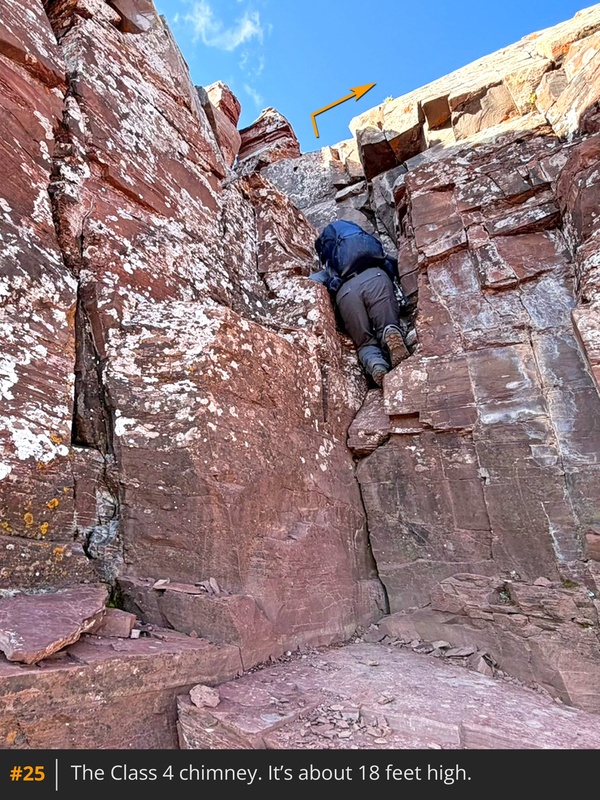
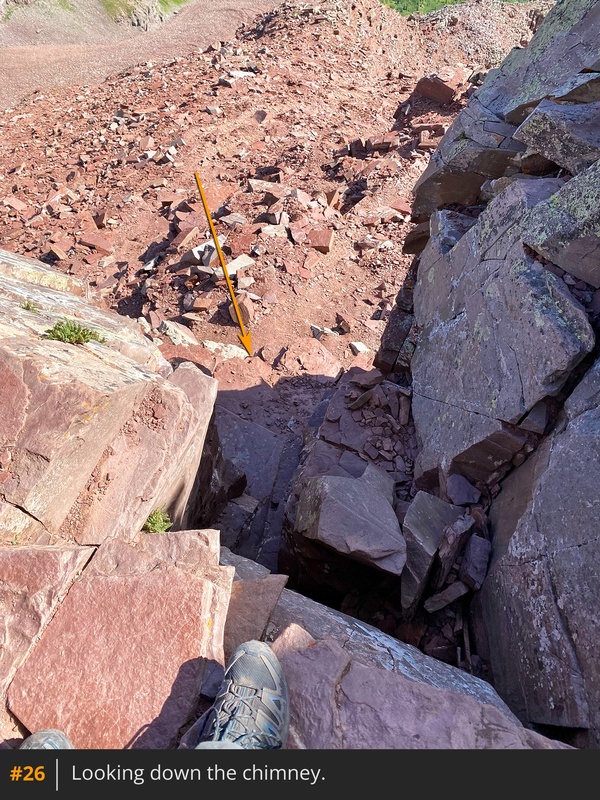
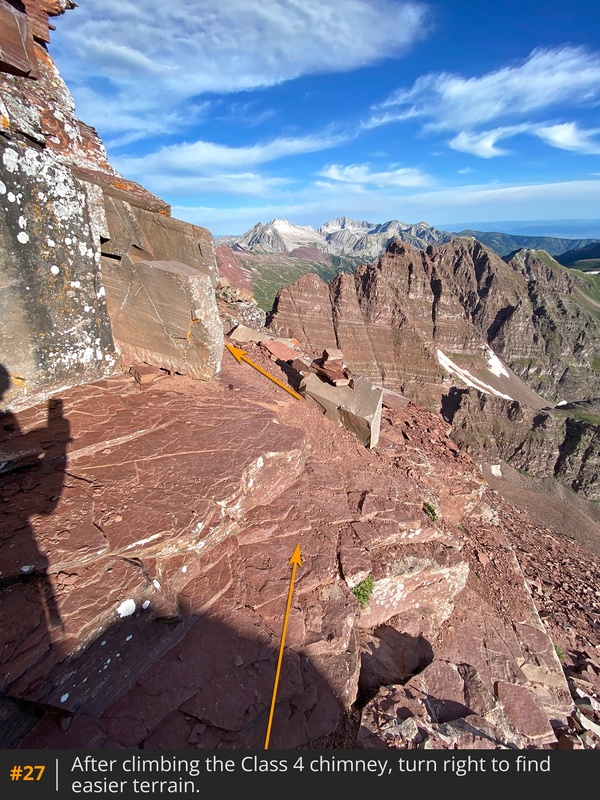
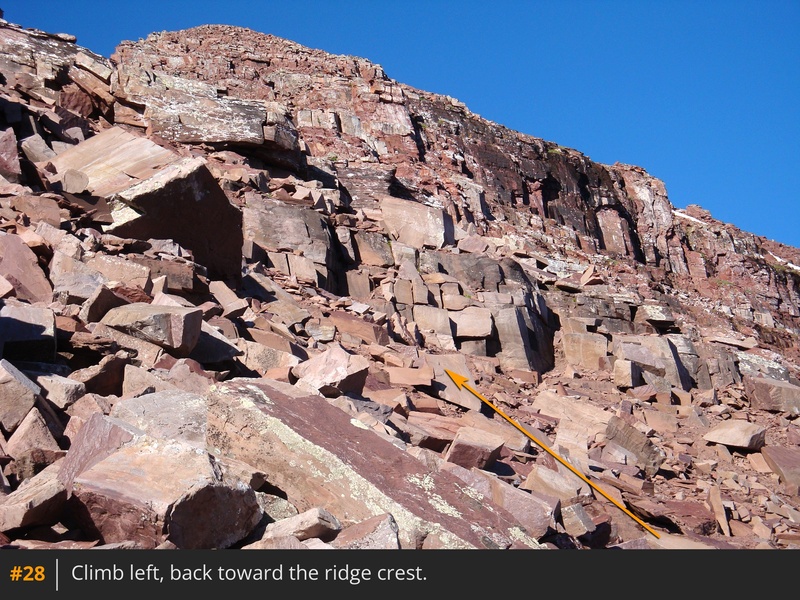
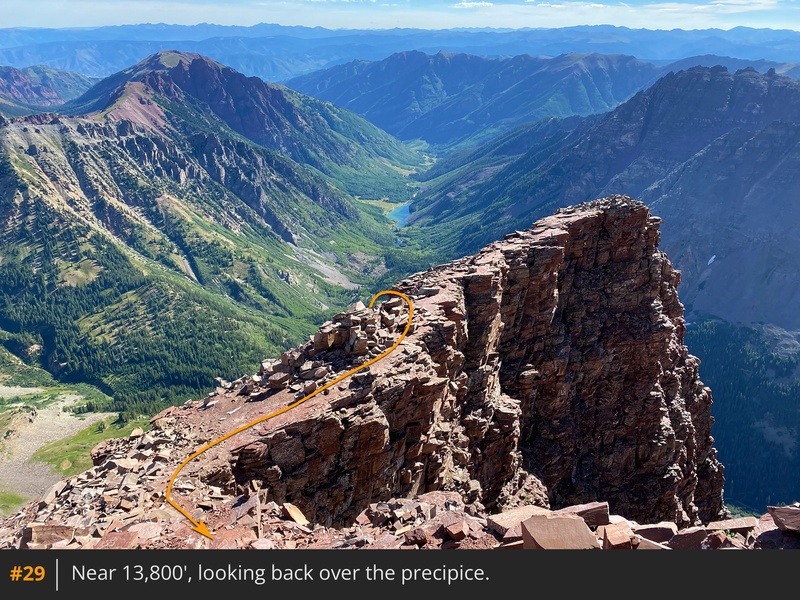
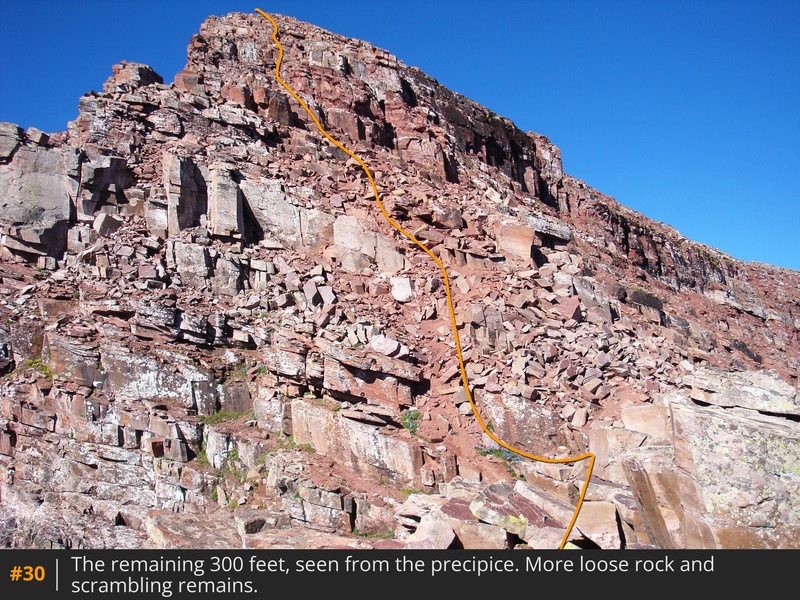
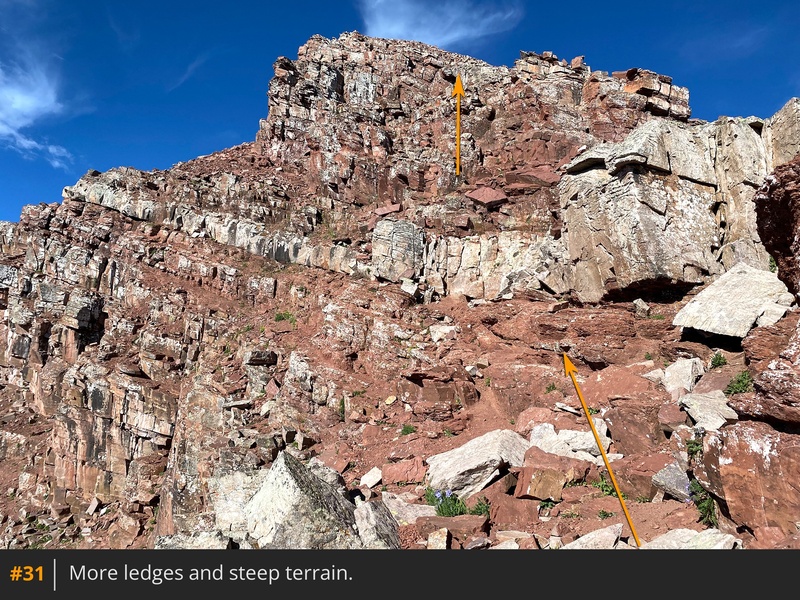
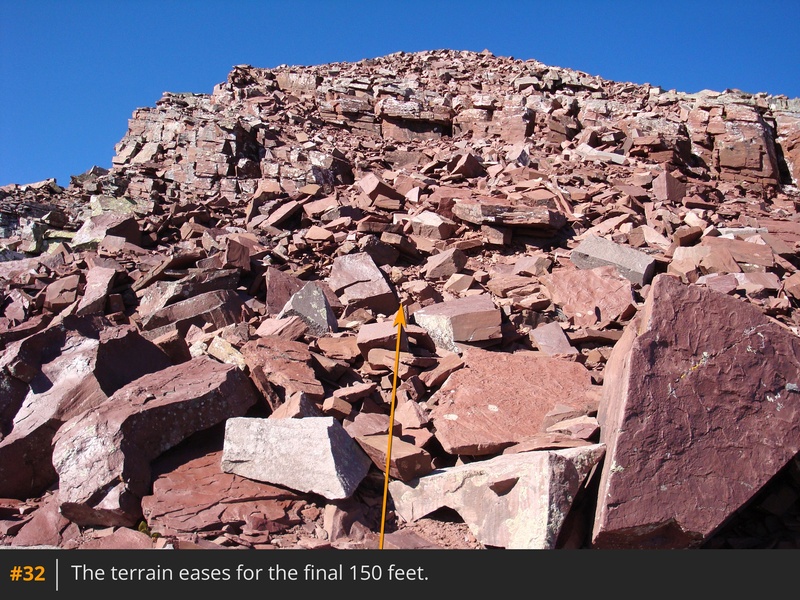
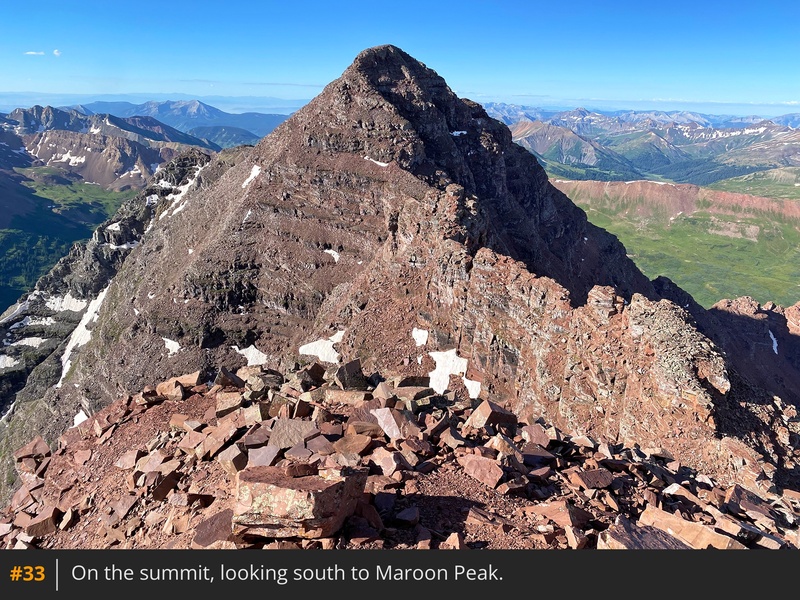
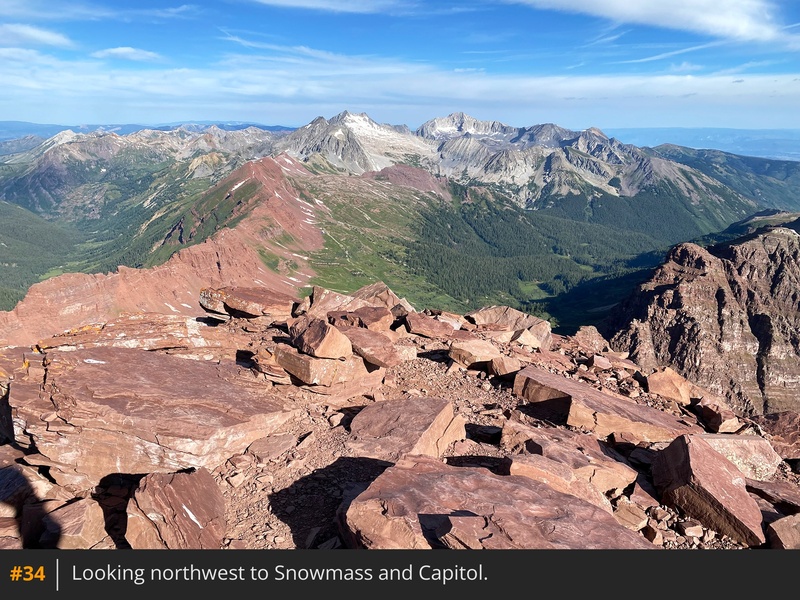
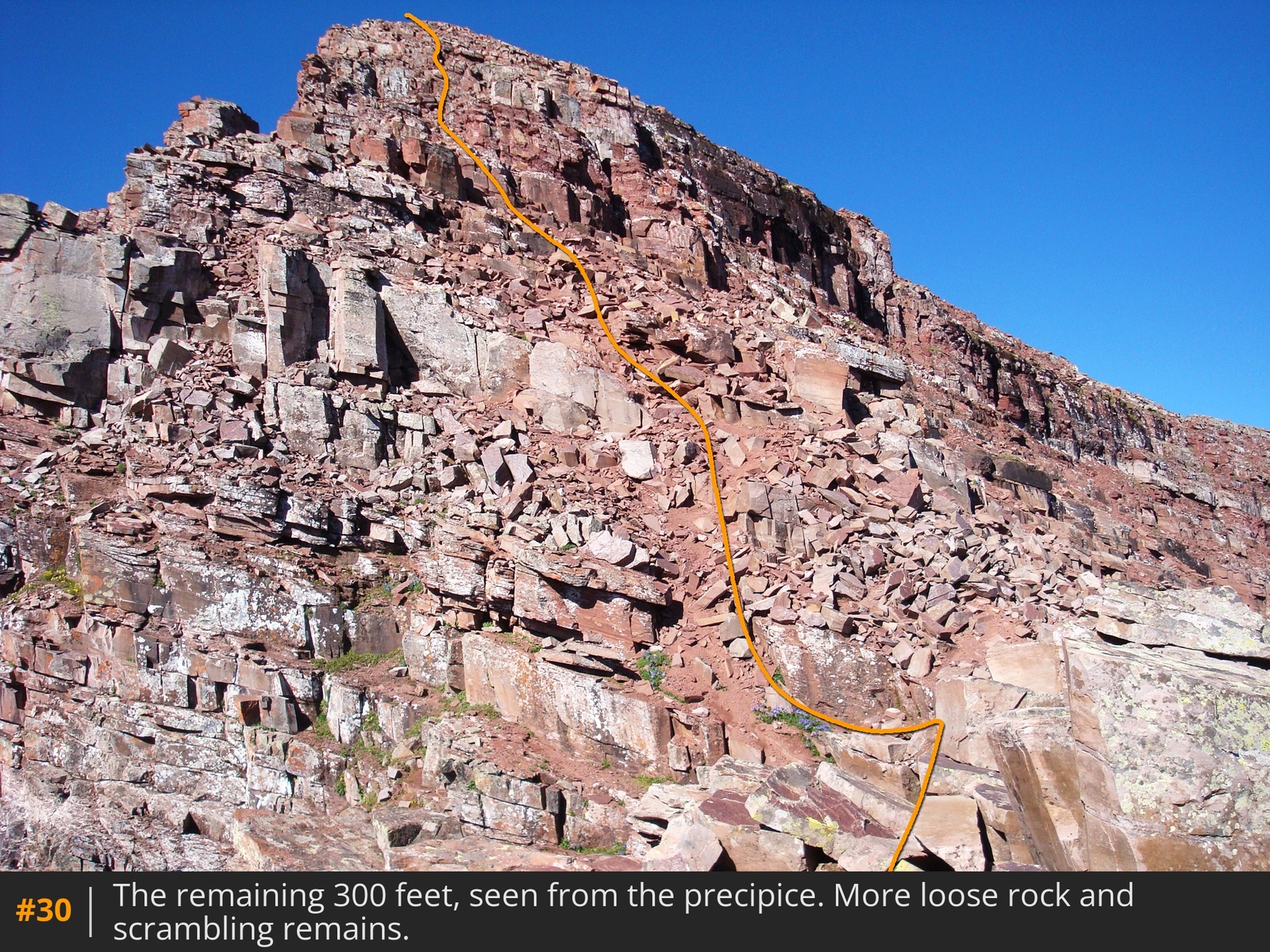
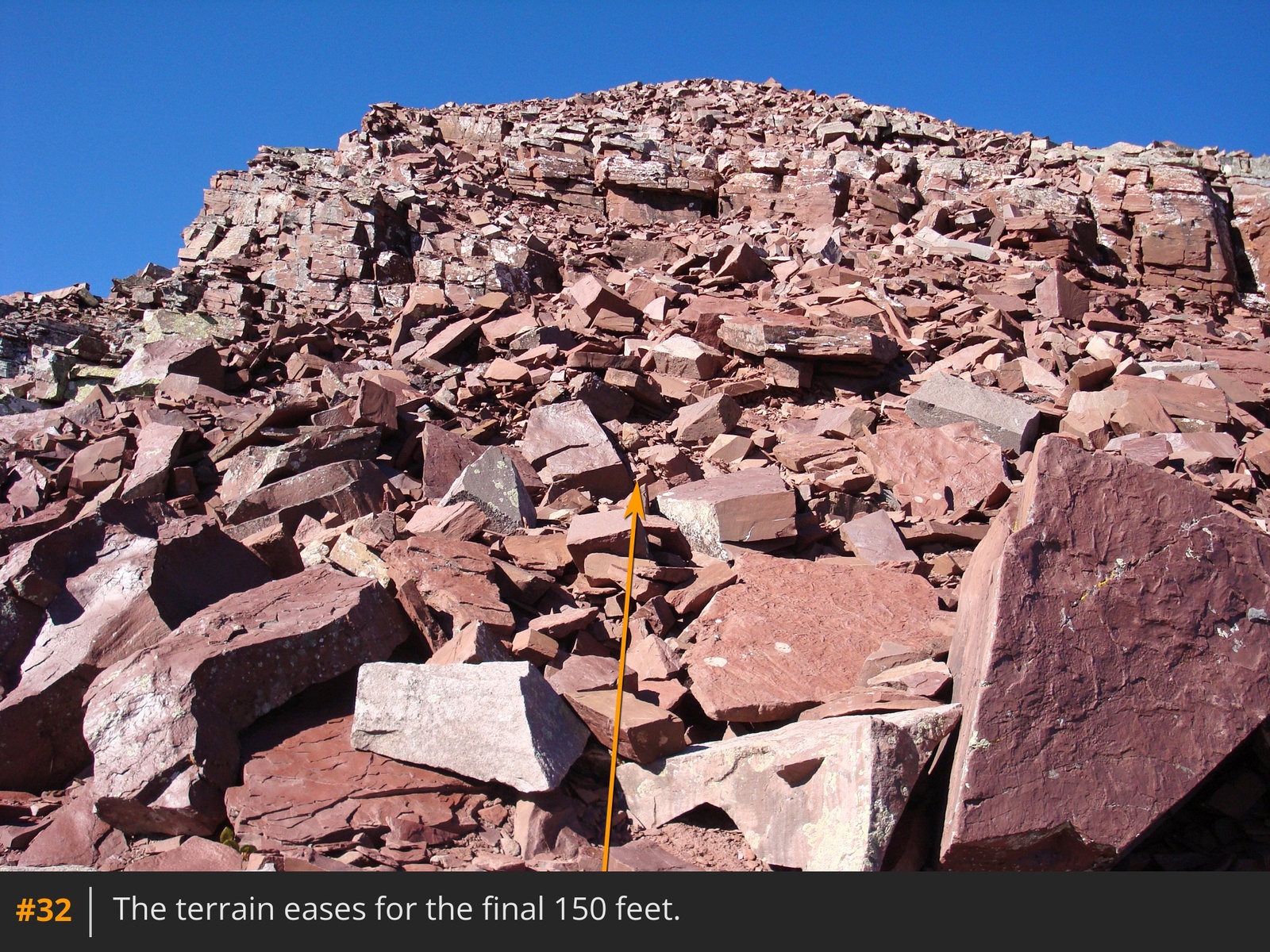
From here, continue a short distance to a rock band at 13,500'  23. This band blocks your easy progress up the ridge, forcing a choice. You can either climb the traditional Class 4 chimney, or opt for a Class 3 line that climbs through a break in the band, roughly 150 feet to the right (west). Many climbers choose the Class 4 chimney, although it has become slightly harder since 2025 because a helpful rock disappeared from the upper portion. To identify the chimney, look for two leaning blocks just above it  24. Begin climbing it  25. If you get partway up and feel uncomfortable, descend and use the Class 3 bypass instead. If you successfully pull through the chimney  26, turn right  27 and walk a short distance before climbing left back to the ridge crest  28. If you choose the Class 3 bypass, remember to turn left after climbing through the rock band. Ascend back toward the ridge crest and onto a precipice, where you'll see the final 300 feet to the summit  29  30. Leave the precipice and climb the ridge's exposed edge, navigating steep ledges  31. Back on easier ground, finish with a short, rocky walk to the summit  32  33,  34. From Pyramid Peak,  35 provides a view of the east side of North Maroon and the route between the 1st and 2nd gullies.

Notes

IMPORTANT: This route enters the Maroon Bells - Snowmass Wilderness area. Designated wilderness areas have special regulations and restrictions for party size, dispersed camping, campfires, etc. Also, dog owners should read the wilderness information carefully because some wilderness areas prohibit dogs to be off-leash and/or limit how close dogs can be to lakes and streams. If you have questions about the wilderness area, please contact a U.S. Forest Service office for the National Forest(s) listed above.

Maps

JPG Image
Static Map JPG

Interactive Map & 3D Flythrough
Human Verification Required

Photos

#1#2#3#4#5#6#7#8#9#10#11#12#13#14#15#16#17#18#19#20#21#22#23#24#25#26#27#28#29#30#31#32#33#34#35

Weather

Caution: The information contained in this route may not be accurate and should not be the only resource used in preparation for your climb. Failure to have the necessary experience, physical conditioning, supplies or equipment can result in injury or death. 14ers.com and the author(s) of this route provide no warranties, either express or implied, that the information provided is accurate or reliable. By using the information provided, you agree to indemnify and hold harmless 14ers.com and the route author(s) with respect to any claims and demands against them, including any attorney fees and expenses. Please read the 14ers.com Safety and Disclaimer pages for more information.
Please respect private property: 14ers.com supports the rights of private landowners to determine how and by whom their land will be used. In Colorado, it is your responsibility to determine if land is private and to obtain the appropriate permission before entering the property.
Heading to a 14er soon? Don't forget the 14ers.com mobile app.
Google Play     Apple App Store