- La Peak (14,344ft): 3rd ascent, FALL 2024
- Date: December 16th, 2024
- Route: NW ridge winter variation
- Trailhead: La Plata Peak TH
- Range: Sawatch Range
- Class: 2-2+
- Partner(s): Will E, Logan Paxton
- Stats:
- Stats; 10.1mi, 4,900ft gain, 7:51RT
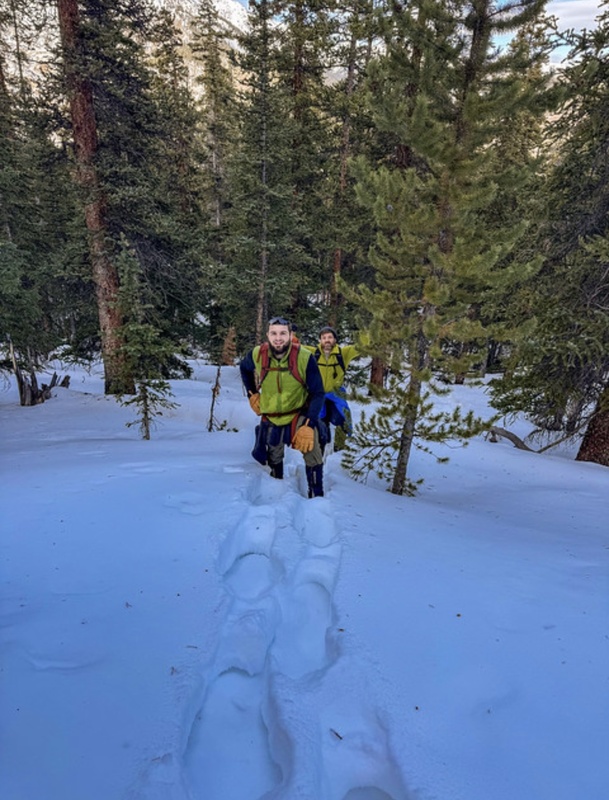
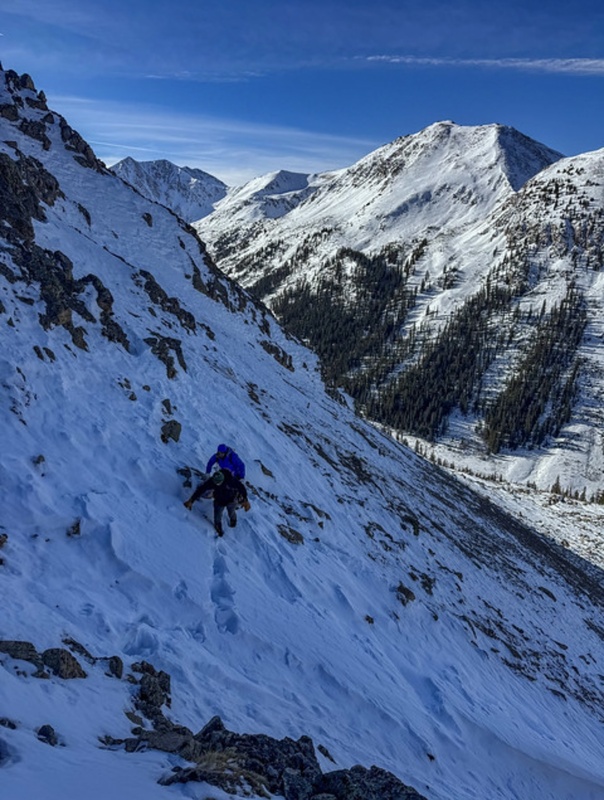
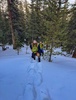
- Report: December 16th, 2024 was the closest I ever came to perishing on a mountain. All started out well, just after 8:20 we hit the trail. The first mile was a breeze, it was going to be a good day, or so I thought. The plan was to do the winter variation of the NW ridge due to deeper snow and possible avalanche conditions. The standard route has a gully with switchbacks that become loaded with snow and can pose a big avalanche risk. So we left the trail at 10,600ft and began our bushwhack through the forest to get to the headwall, which provides access directly to the NW ridge. Will yelled, “we are clearing those arteries!” That we were, it was tough work trenching through the snow, a calorie burner and heart pumper for sure.
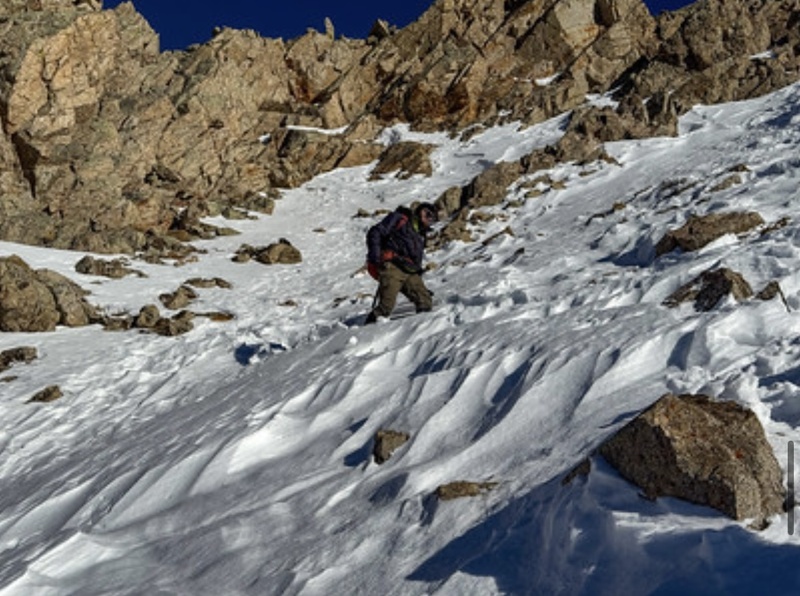
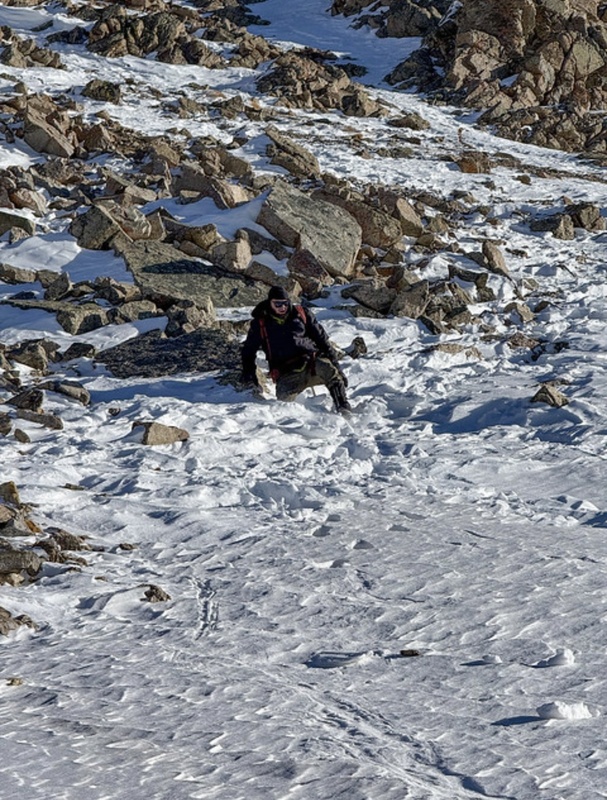
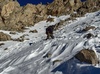
- Will was in front, I was behind him and princess logan or so I like to call him, was behind me. We have a running joke he always finds himself in the back of the group when trenching, getting a much easier time, so we both (me and Logan) had the idea he should be called the princess of the group. About halfway to the headwall, Will yells again, “HOLY CRAP THERE’S A TRENCH!” The trench made our time easier for sure on the final push to the headwall, but the snow was still quite soft and deep. We got to the headwall, stashed our snowshoes, ate some food and pushed up the steep headwall. Some say it’s class 2, some say class 3, I’m gonna go with 2+ and not that difficult. We started up the northwest side of it and then traversed a little to the east and basically came directly north to south over the top of it but slightly on the east side. None of was sketchy or particularly difficult. We topped out on it at about 10:30, I was feeling great. I was given an electrolyte drink and I was fueled up, hydrated and ready to make a push for the summit.
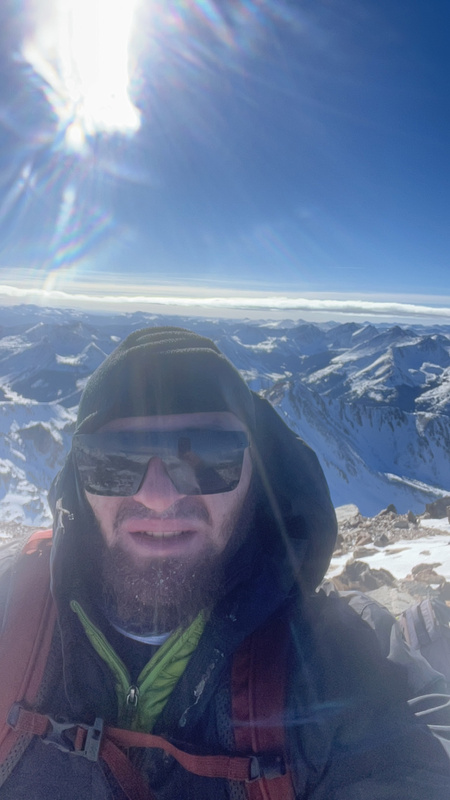
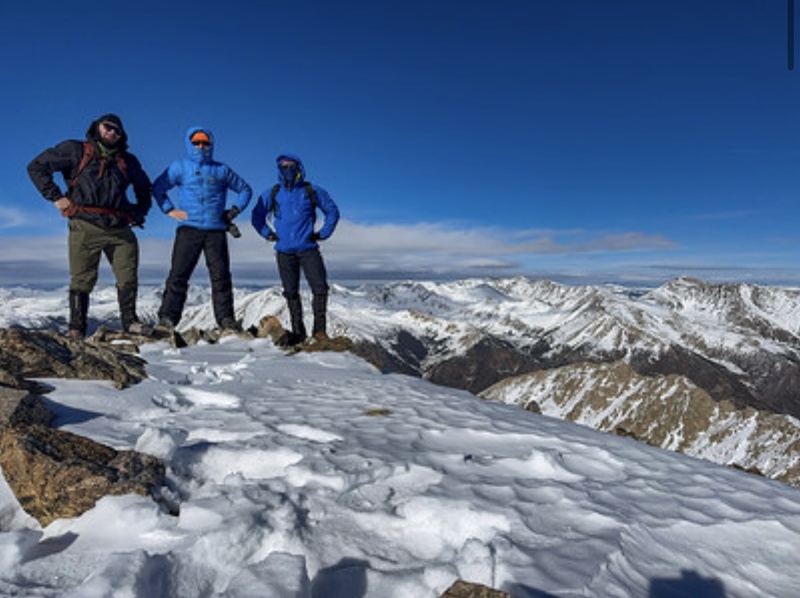
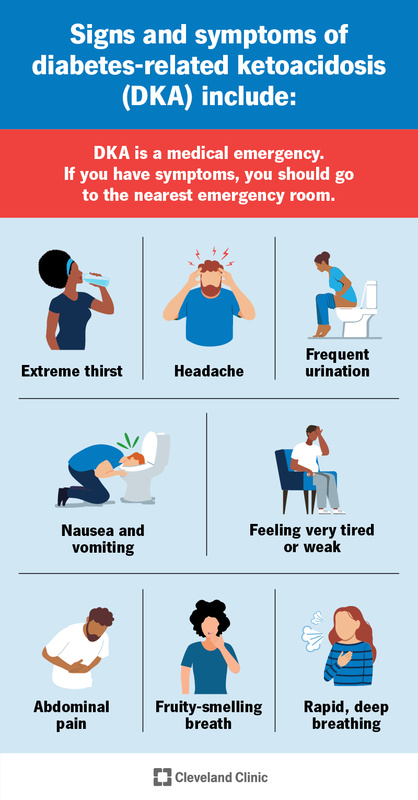
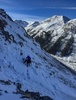
- We pushed up the ridge and at a flat section at 13,400ft I said to myself, “something isn’t right.” I was starting to feel dizzy, weak and had a huge headache. I thought to myself, “this can’t be altitude sickness, I’ve done way too many mountains for that.” The final 1,000ft was a total drag. It was miserable, more painful and miserable than it should have been. I summited at 12:40 about 5 or so minutes after Logan and Will. We took our photos and began to head down. I knew I needed to get down fast. The way down was hell, truly one of the most painful and hard things I have ever overcame physically. Not because the mileage or the snow or anything really to do with the mountain or weather. What’s crazy, is that the way down is always easier, I’ve been exhausted on summits before, after a long push and the way down has never been harder than the way up. But this time was different. Something. Was. Off. I was feeling terrible, my chest was tight and full of mucous, I could literally feel my blood inside my body and it felt like glass was in my veins—you’ll see why when I reveal what happened. I had a piercing headache and full body weakness, my kidneys were hurting and my joints felt like they were about to snap.
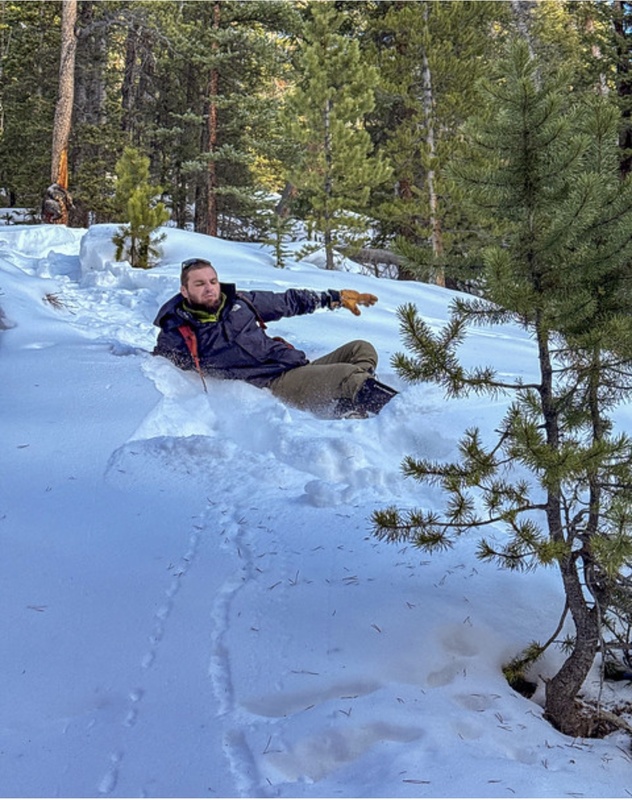
- We got below the headwall to treeline and mentally I was done. I had NOTHING left to give. I could not picture why. The only time I ever suspected I felt altitude sickness was in the first couple months I started these peaks. But by this time, I had been getting out on 14ers nearly every other week for 3 years at this point. “It just couldn’t be altitude,” I thought. But I knew it was winter conditions, cold and I had to keep pushing to get myself out of there. I was determined and still am to never need SAR assistance. I consider myself very experienced in the Colorado mountains, even at this point in December 2024 I did too. I know how dangerous it is for SAR missions, and I refused to ever call them. I believe for myself, that I’m skilled and experienced enough to know how to avoid and safely get out of potentially unsafe situations or conditions on these peaks. So I kept going. Every step coming down the bushwhack in treeline felt like torture. The way up was a total breeze in comparison. I kept descending and wondering what was wrong with me? I had a stomach bug just a few days before and thought maybe I was dehydrated from that? But I knew I had hydrated and rested for a few days prior to this climb. We finally got back to the trail and I was tasting blood in my chest, throat and I felt like I was breathing through a straw, but literally breathing through a straw. Like I couldn’t get air. I felt like my body was shutting down. The final flat mile back to the car was the hardest of the day. I had to take a 5 second rest every 30 seconds. It made no sense to me, it’s flat ground, minimal snow at this point and a nice trail. Normally I’d be flying down this section.
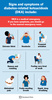
- I made it back to the car with short lived relief, I changed into my normal clothes and I sat in the car with Logan. Our friend Bosco rented a place for the winter near Leadville and we were going to drive to his place. I assumed I was going to start feeling better but I kept getting WORSE. Finally I checked my blood sugar. Now, normally on these peaks, I almost always go low, which isn’t as dangerous long term, you can have symptoms such as weakness, blurred vision, disorientation and pass out if severe enough. But for me, I always recognize the symptoms quickly, I typically pop an energy gel and or some gummies—sometimes without even stopping. But I wasn’t low. My blood sugar was high, very high. Over 400mg/dL, which is insanely high. It instantly hit me, I was having Diabetic Ketoacidosis (DKA), a life threatening complication of type 1 diabetes. High blood sugars are the real killers for type 1 diabetes.
- Insulin lowers blood sugar, carbohydrates raise it. T1D is managed by balancing the two. it’s an autoimmune condition since early childhood where I attack the cells that produce insulin—so I don’t make insulin naturally.
- I was given an electrolyte packet that I realized had 100 carbohydrates, and I didn’t take insulin for it. You might ask why, like I said, I always trend on the lower side in the mountains, it’s a pain to have to stuff your face with food with low blood sugar on a mountain, especially when it’s cold. I’ve eaten whole energy bars without taking an insulin shot up there before. Taking a shot and pricking your finger at 14,000ft in December isn’t fun. So back to the car, I was in a medical emergency. My blood sugar was 400mg/dL, and my body was in a full acidic state. You see, when your blood sugar is high for a sustained period, you develop ketones, a toxic amount of ketones that make your blood too acidic. It’s why you’re not supposed to workout when your blood sugar is that high, because guess what working out and exercise creates? Lactic acid. 10 miles of climbing a mountain with deep snow in winter conditions will create a TON of lactic acid. Pair that with my blood literally being too acidic from the high blood sugar, my blood became dangerously acidic on the mountain.
- At this point in the car I had developed Kussmaul breathing, a deep, consistent, totally involuntary breathing your body does to try to get rid of acid from your breath. It was very odd. My entire body felt like it was gonna shut down. We call Bosco and tell him I need to stay there, we get to his house and I kid you not, the most physically challenging thing of the day was getting out of the car, and walking up THREE, yes, THREE TOTAL STEPS, to his front door. I was so physically weak at this point I could barely walk up a couple stairs. Had I been on that mountain for any long, even 60-90 more minutes I think I would have been a goner. The speed in which my condition rapidly deteriorated from the final mile to the car, to Bosco’s house was insane.
- To treat Diabetic Ketoacidosis (DKA), your body needs 3 things, 1. insulin, 2. Water, 3. Rest. The goal is lower your blood sugar to normal levels from insulin, drink tons of water to flush ketones and get blood Ph back to normal and rest. I had already taken insulin in the car and that had been working for about 15 minutes but it takes a couple hours to really work. I also had ketone strips in my other bag, I tested them and it showed large (high) ketones. Which instantly confirmed exactly what I was having. The only reason I did not go to the hospital is that I could keep down fluids without vomiting. I knew if I could drink water and let the insulin do its thing, in time I would get better. After about 4 hours resting at Bosco’s place, my blood sugar and ketones had dropped significantly and I felt safe enough to ride in the car with Logan driving us home.
- Logan was my roommate at the time. I got home, showered and went to sleep. I was bed rest for 3 days. It took so much out of me. I’ll never forget it. It’s crazy to go from a strong, fit guy in the mountains to being too weak to walk up 3 stairs. For anyone out there who knows how dangerous DKA truly is, will know how hard this story hits. It was the closest I ever came to losing my life.
In the end I’m proud that I overcame it and made it back on my own 2 feet with no assistance. Very few people truly understand type 1 diabetes and just assume I take a couple shots every now and then and call it a day. But it’s a truly brutal, life altering condition that can present dangerous, life threatening complications such as this day.
Only someone who has seen, treated or felt what DKA is like knows the pain of what I went through on that day. I’m never on here to gloat about myself, but the mental fortitude it took me to push on through the pain and hell is something I’m proud of. I truly believe if I was someone else, I maybe wouldn’t have made it. In life, I try to put myself in hard situations to train my mind to be stronger in my fight career, I’ve always sought out discomfort and suffering to callous my mind and body for whatever life throws at me. I believe that training saved my life that day and gave me just enough mental strength, to push on and fight to survive.
After this, I got a CGM monitor, I was worried as a pro fighter it would get damaged from training but it stays on pretty well. It isn’t always accurate at altitude, but it allows me to see where my blood sugar is on my phone without poking my finger. I still poke my finger to check a couple times each outing but the CGM has alerts when my blood sugar is rising or dropping fast.
- Stats; 10.1mi, 4,900ft gain, 7:51RT
Thumbnails for uploaded photos (click to open slideshow):



|