| Report Type | Full |
| Peak(s) |
Mt. Ouray - 13,979 feet Vestal Peak - 13,867 feet Trinity Peak - 13,816 feet "Castleabra" - 13,804 feet Jagged Mountain - 13,833 feet San Luis Peak - 14,023 feet |
| Date Posted | 10/14/2026 |
| Modified | 10/15/2026 |
| Date Climbed | 09/27/2026 |
| Author | RyanOlsonDDS |
| Additional Members | cashterry, Danger_D, kyrawhitworth, meg8709, Leereatiraza, JerJerBinks, StoutAdventureCO, WorstCaseOntario |
| A Cent finisher story - I would be a lot warmer and a lot happier... |
|---|
|
...with a belly full of mead." Chapters: 1) Intro 2) Trinities 3) Castleabra 4) Castleabra 5) Jagged 6) Mt. Ouray Chapter 1: Intro This trip report is meant for entertainment rather than beta. It serves as documentation of my and my wife's (kyrawhitworth) journey to becoming Centennial finishers after completing the 14ers. If you're here for beta and .GPX files you'll have better luck elsewhere, but feel free to stick around if you like pictures and anecdotes. So anyway, September of 2021 came around and we finished the 14ers on San Luis. This really felt like an accomplishment for us... so I brought a 1/6 barrel keg of Verboten Thinking Of Something Orange (TOSO) to celebrate the occasion. Here are a few highlights from our final year of the 14ers, and a few highlights from our early 13er and Centennial summits. 
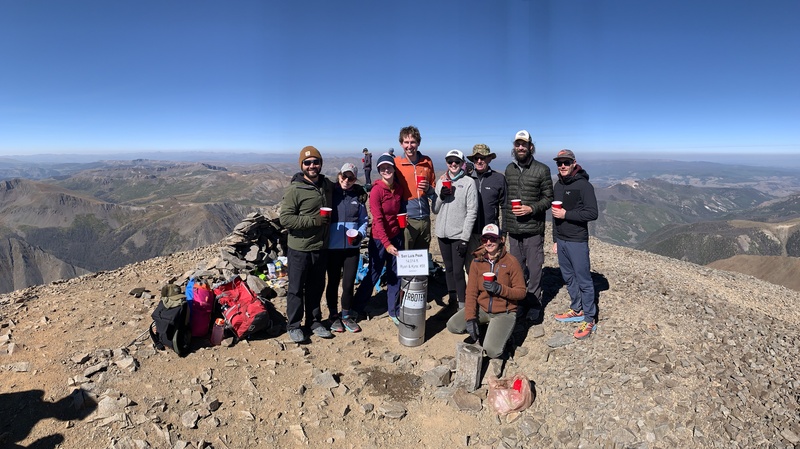
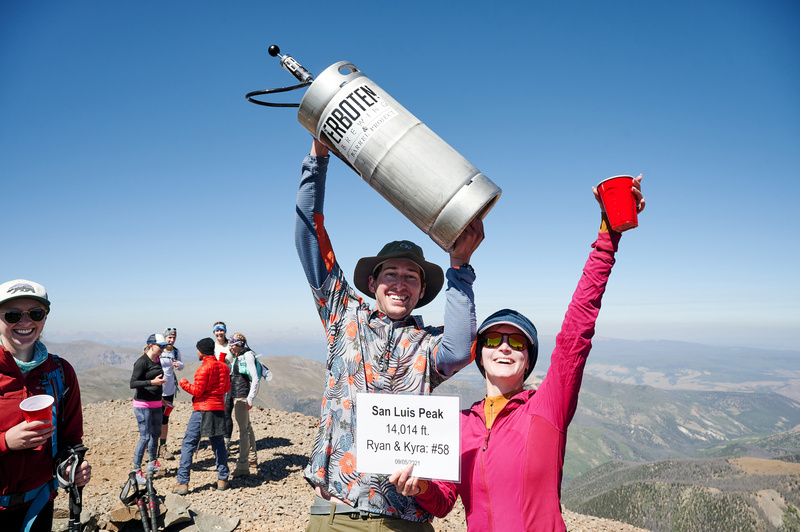
We didn't know what we'd do regarding hiking/climbing went after that, but after a long summer season of wrapping up the most difficult 14ers on the list we decided to... just keep going and increase the difficulty. The Centennials were a priority but all ranked 13,000'+ peaks were on the list as well. After we started checking off 13ers we continued to climb almost every weekend year-round, and five years later we've maintained an average of over one 13er summit a week (285 total ranked 13ers for me so far). 


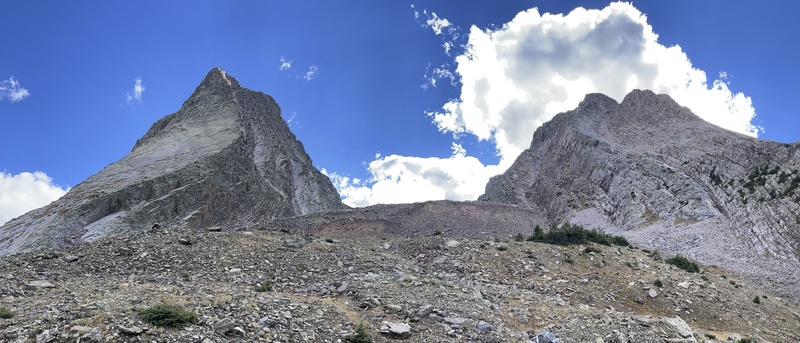
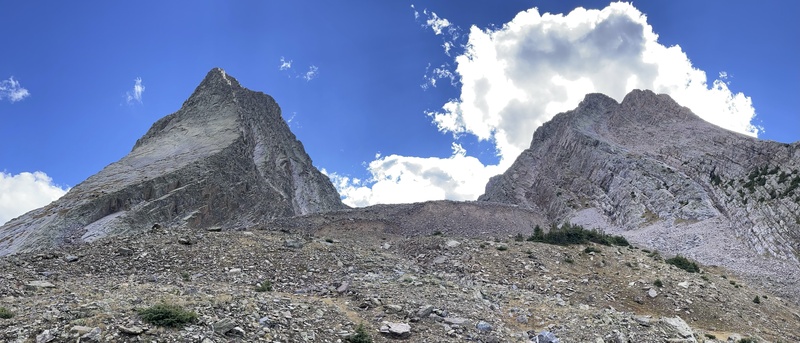
During our trip to Vestal (via Wham Ridge) and Arrow in September of 2022. We successfully summited both peaks as a day trip from camp but a heavy storm cycle was going to move in the following day. We enjoyed this basin so much that we really wanted an excuse to return. Instead of pushing to get the Trinities we elected to pack out. 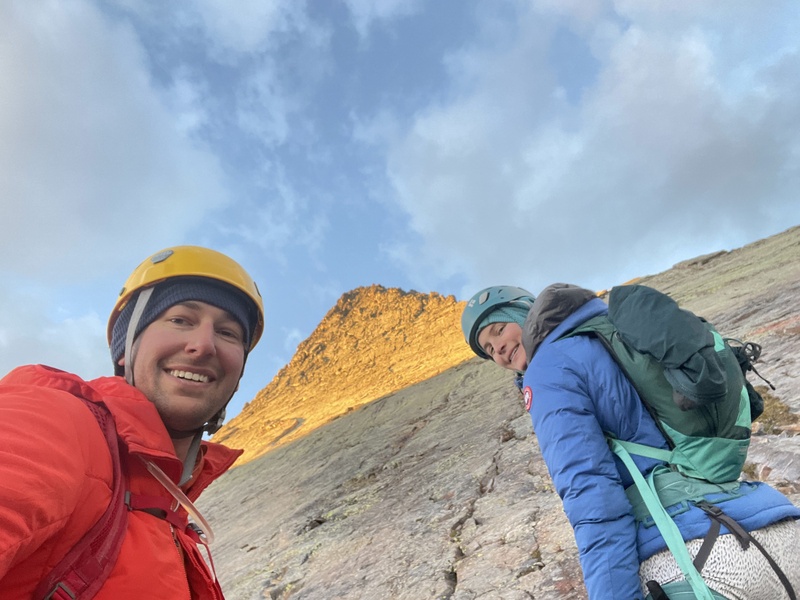


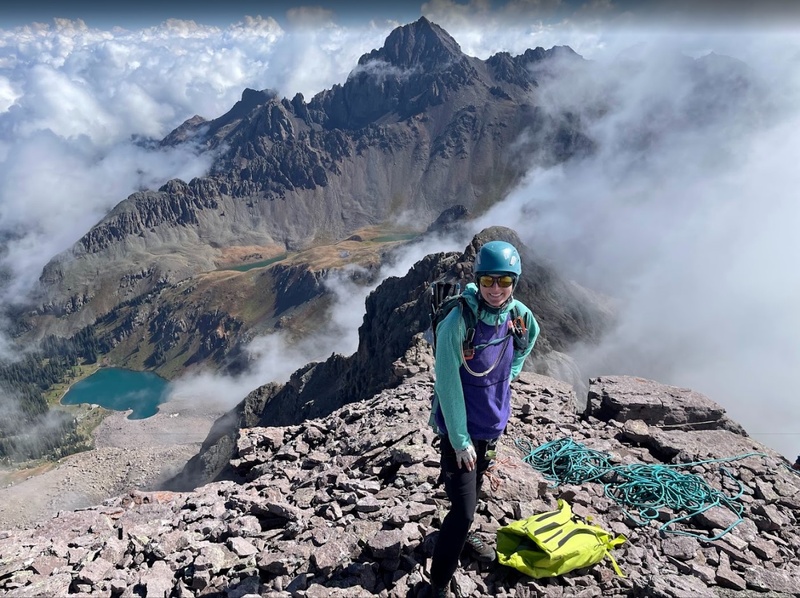
Chapter 2: Trinities July 2025 rolled around and we had a trip to Norway booked. It was a guided group trip featuring Lofoten and the surrounding areas with some low-key hiking involved. As we were awaiting a ferry to Lofoten we met with our group and found that one couple, Dave and Ginny, were from Colorado and were returning from a trip to [successfully] summit Kilimanjaro. Not only that, but they were from Montrose and have done some extensive climbing in Colorado and abroad. And not only that, but Dave (Cooper) informed me that he'd written a few books, including Colorado Scrambles... and Colorado Snow Climbs...; the former had already served as a reference book for me. Small world! 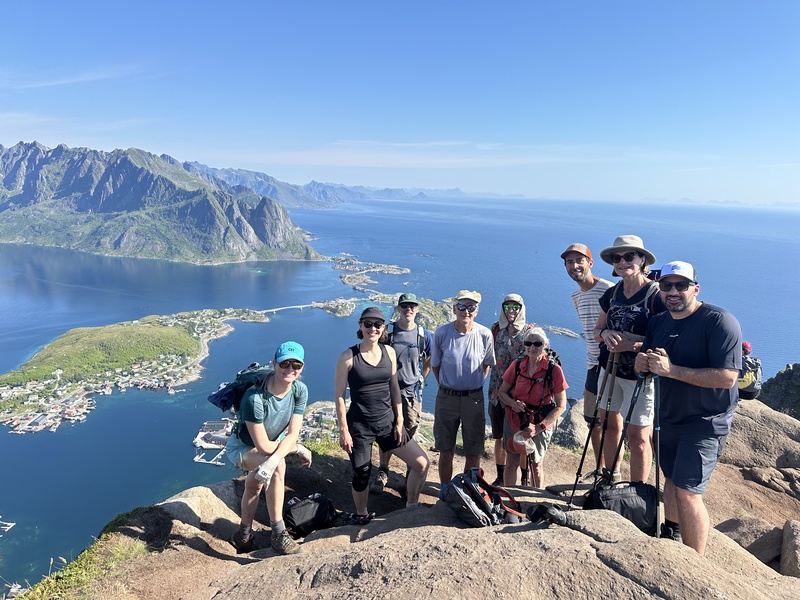
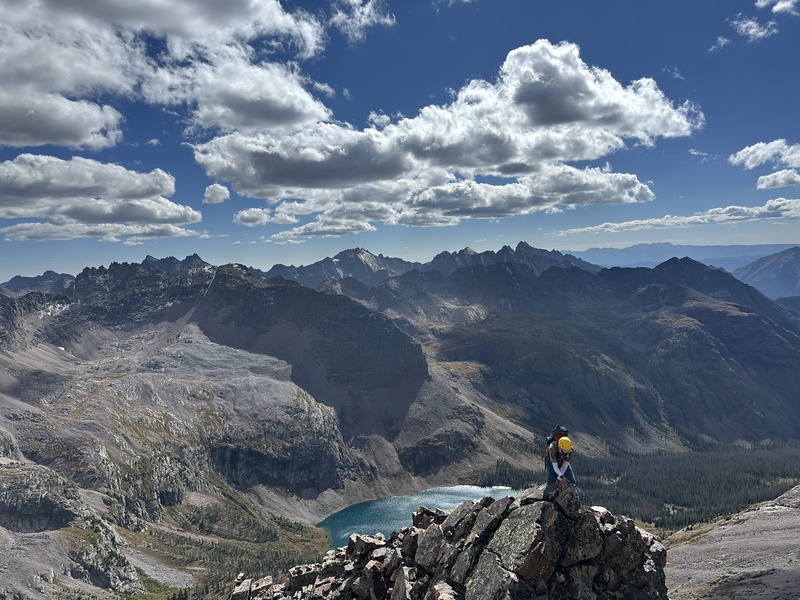
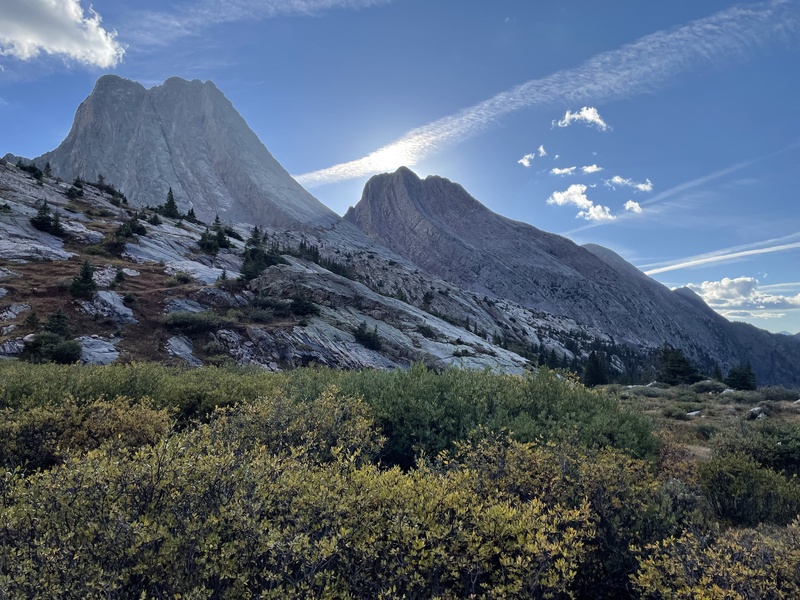
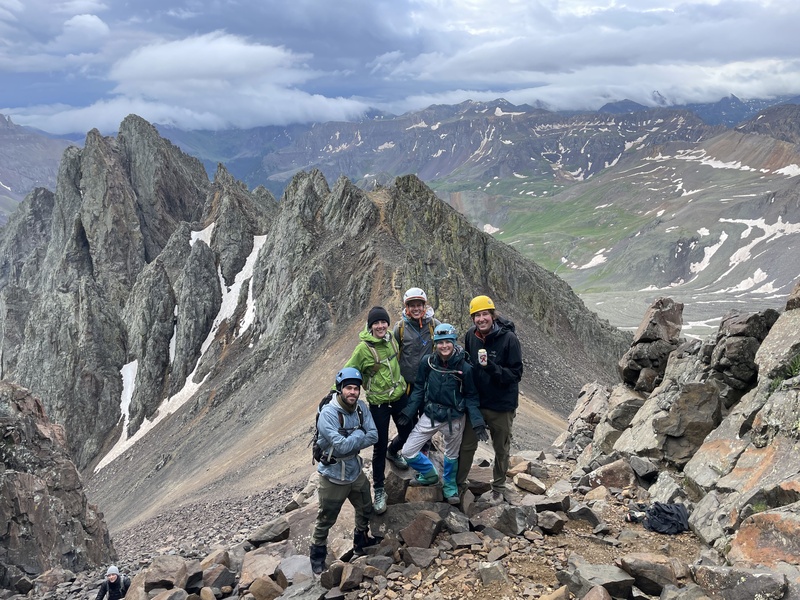
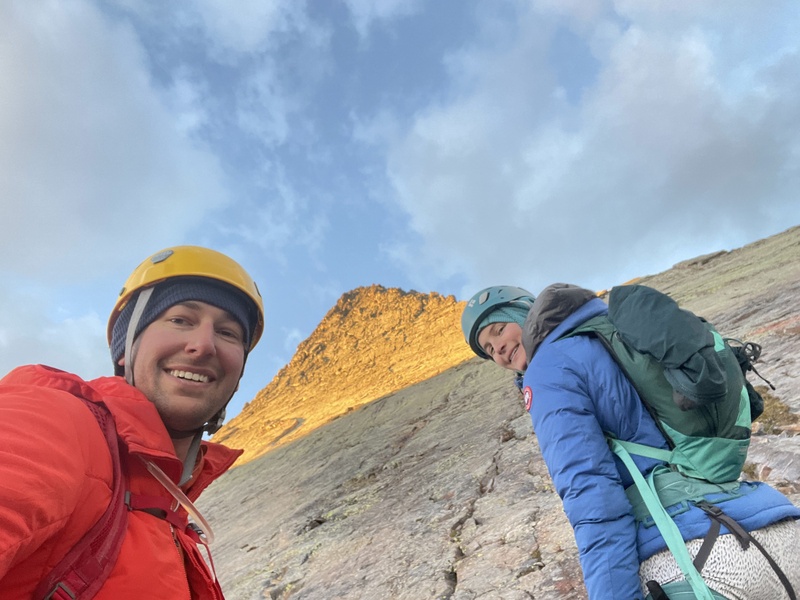
Kyra and I reviewed our hypothetical plans to complete the Centennials the following year and Dave couldn't say enough good things about the Trinities. With our previous experience in Vestal basin our enthusiasm for our upcoming trip was piqued. Sept of 2025 rolled around and it was time for our second assault on Vestal Basin. Our anticipated deadline for finishing the Cents was Fall of 2026. That said this is a long and committed trip for us coming from the front range and we knew that our finisher plans hinged on the success of this trip. Because of work-related time-off restrictions we had one week in 2025 to get the Trinities, and exactly one week in 2026 to get Jagged. The pressure was on. Snow/graupel hit the range the day before our pack in which complicated things (and it was the heaviest on aspects not visible from camp). We had partners lined up who ended up pursuing other goals. It felt like the Grenadiers might be telling us it wasn't the time to do this. But we found ourselves in a favorable situation once we got there. The Trinity traverse is truly magnificent. The views of the Weminuche are excellent and sustained, and the rock quality is outstanding. The routefinding was occasionally difficult but unproblematic and the 4th class cruxes were airy, memorable, and fun. 

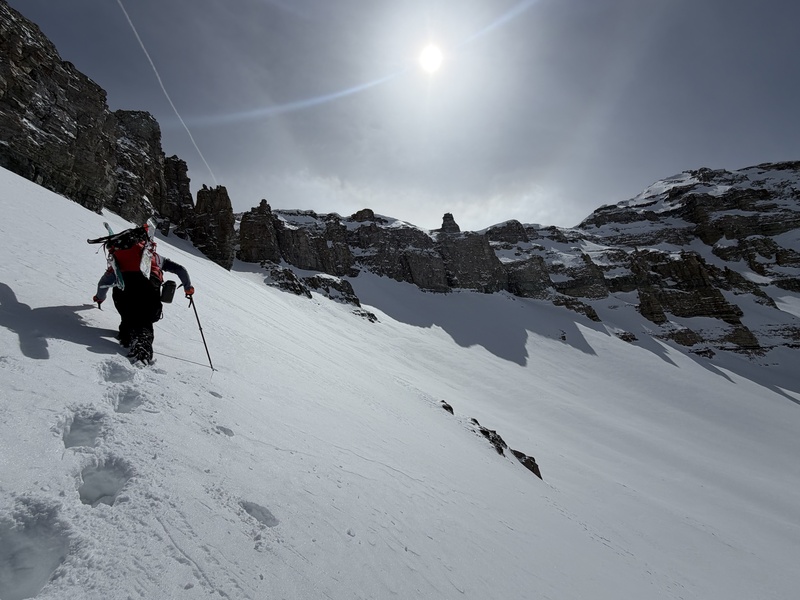
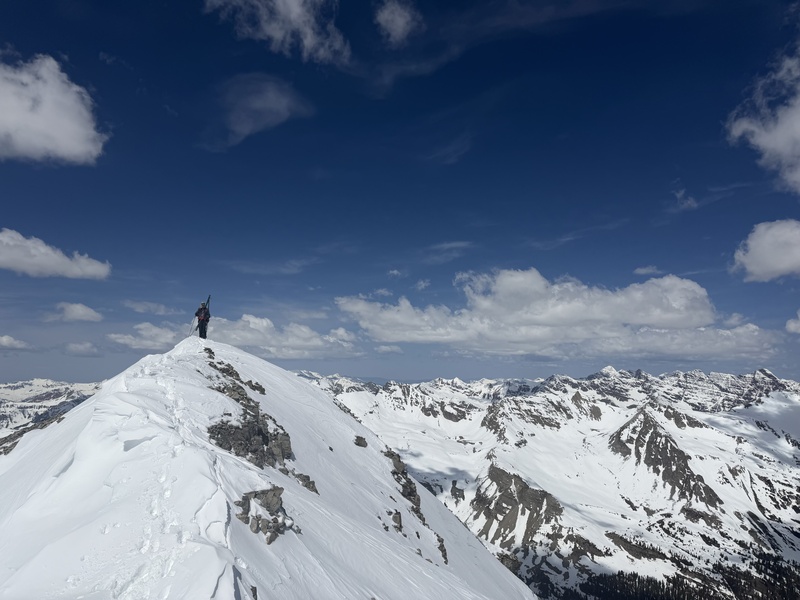
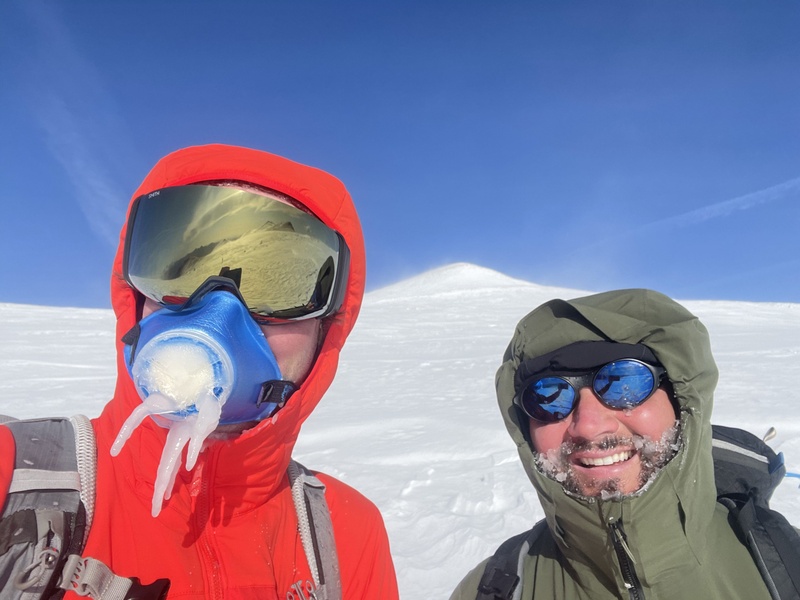
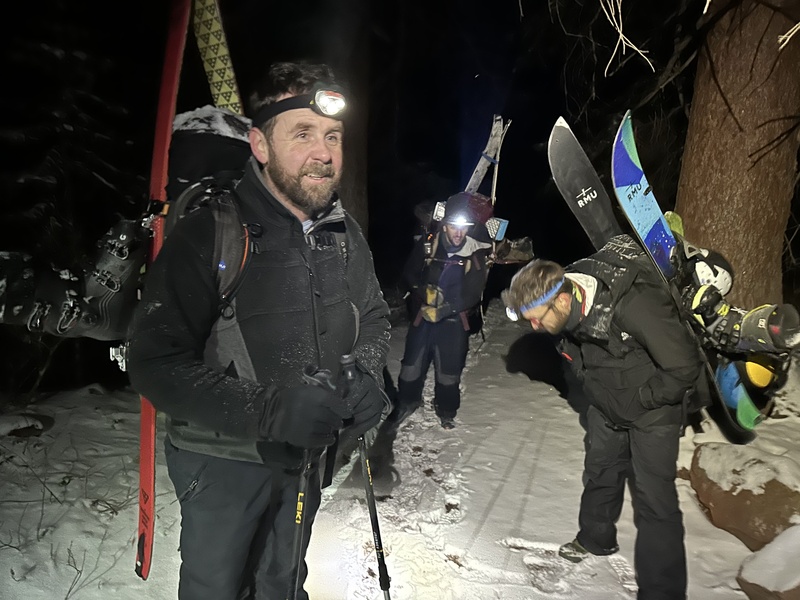
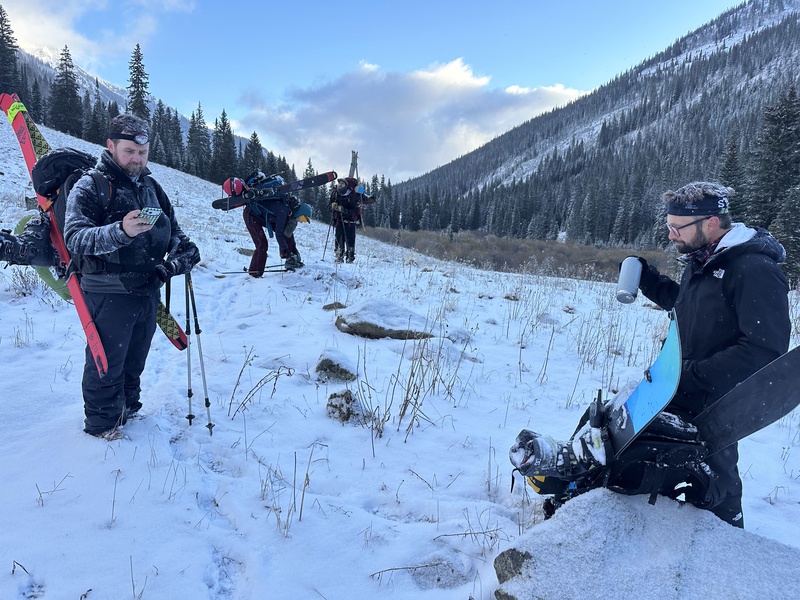
Chapter 3: Castleabra, April 2026 Kyra already detailed this (mis)adventure in her trip report (link to the right) but I'll drop my brief account here as well. https://www.14ers.com/php14ers/tripreport.php?trip=23452 We planned 2026 with two major goals in mind: complete Jagged (for which we'd taken a whole week off in August in case weather proved challenging) and Mt Ouray to round out the Cents. That said, we are "list people" and we couldn't help but internalize the annoying changes LiDAR had made to the Cent list. We'd already completed Teakettle and Dallas which left only one remaining outlier above 13,800': Castleabra. We'd always wanted to visit the Conundrum hot springs and we'd hoped to eventually make Castleabra a ski trip in order to kill two birds with one stone. With the appeal of potentially finishing out 2026 with a completed list of Colorado's highest 110 summits we began to hatch a plan. We ended up planning for two possible 3-day weekends to make this goal happen. One in April and one two weeks later in May. We reached out to a few partners and quickly developed a strategy: we would start early, pack up to the stream crossing, drop our winter camping gear, make a light and fast approach to the summit, ski down, re-pack the gear, head up to the hot springs, set up camp and soak a bit, then return to the cars the following morning. This is a style of approach that Kyra and I have utilized (with generally good success) many times. It's particularly useful in the Spring when you want to ski down from the summit on warm snow but you want to be packing out early in the day (before snow at lower elevations has become unsupportive). 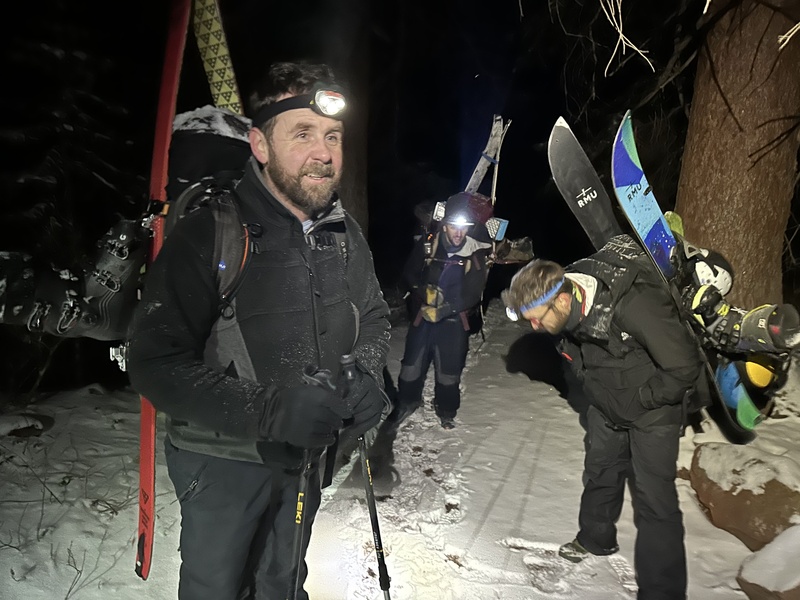

We eventually made our way to the stream crossing, got across, and dropped all unnecessary gear. We made slow progress up in to the basin due to the steep bushwhack with unsupportive snow. With a group of 5 we'd already lost a lot of time to transitions, some necessary and some not so much. When we approached the mellow terrain below the apron of Sloman couloir we knew it was time to make a call. As a group we decided 4:00pm was the absolute turnaround time, summit or not. We still had to ski down several thousand feet, bushwhack back to our gear, re-pack, then climb a few miles to Conundrum hot springs, set up camp, and make food (ideally before dark). We made the group decision to part ways for the next stretch. Kyra and I wanted to prioritize the summit and we knew climbing Sloman would be the slower of two options; we elected to pursue a much shorter couloir to the east which would top out on Castleabra's East ridge allowing easy passage to the summit. 

Progress slowed dramatically in the couloir due to thin snow cover and loose rocks that were not at all frozen to the ground. Kyra and I topped out on the ridge at exactly 4:00pm. The other three in our party were getting past the halfway point in Sloman; we all agreed the time had come to make our way down. Knowing that the short couloir was a reasonable alternative was a good consolation prize. The summit, by my estimation, was still likely a 90 minute round trip which would have put our descent well into the night. Off to the hot springs! The ski down was excellent and we made quick progress to our gear back at the crossing. 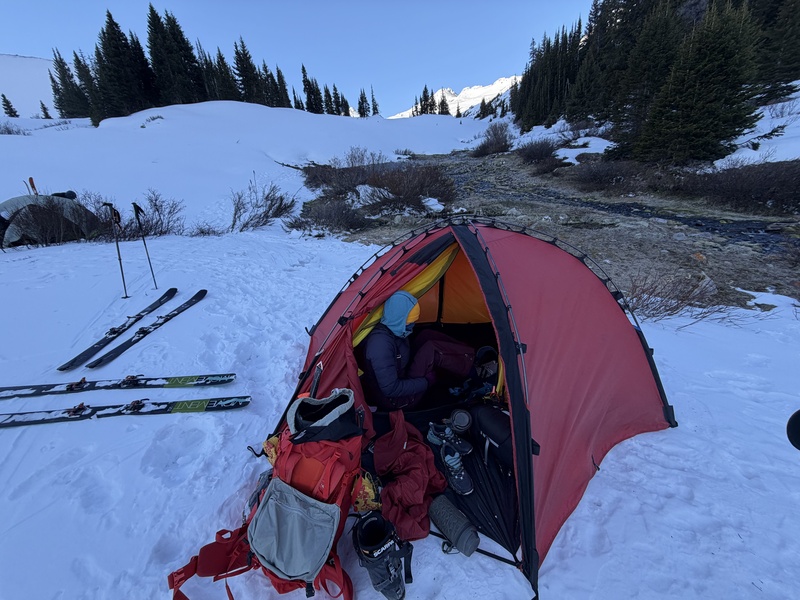

The night was very, very cold. Camping at the hot springs does not provide much shelter from the elements. We made our way back to the car in relatively decent time the next morning and headed back home. After getting some food and rest Kyra and I resigned ourselves to doing Castleabra some time in the summer, which would be much easier. Chapter 4: Castleabra, May 2026 The following weekend we took it relatively easy; Castleabra (the way we attempted it anyway) is exhausting. Little did we know that on Saturday, May 2 Dave was already launching a second siege on Castleabra. By the evening he'd informed us that his day push (with a climb and ski of Sloman couloir) was a success. 
Not to be outdone we began planning our second assault. From our previous attempt we'd learned: 1) the shorter couloir goes without complications 2) a lighter, faster day push (as opposed to our 40-45 lb packs the previous attempt) would be more conducive to success 3) the approach trail was now dry, per Dave and 4) we needn't do the bushwhack; there's a tree-free avalanche path further uptrail that would skip that difficulty entirely. We packed our things and resigned ourself to another huge, tedious day. 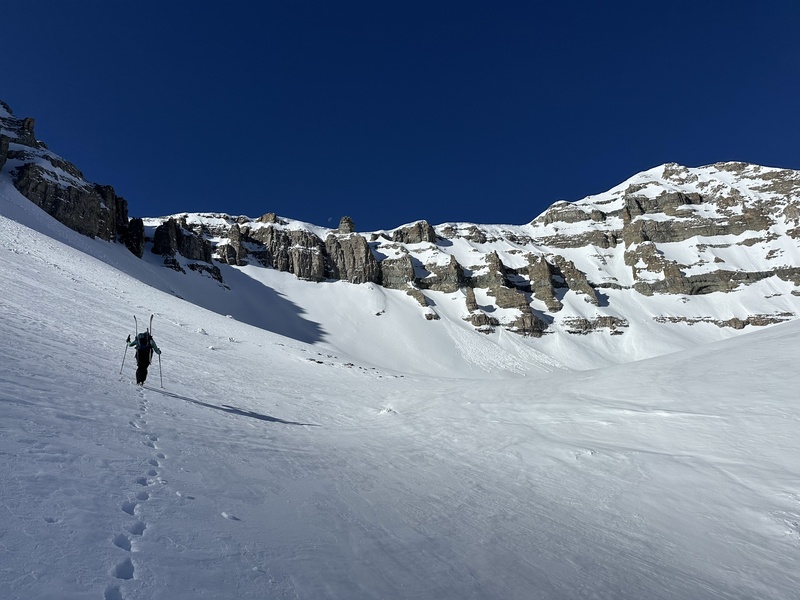


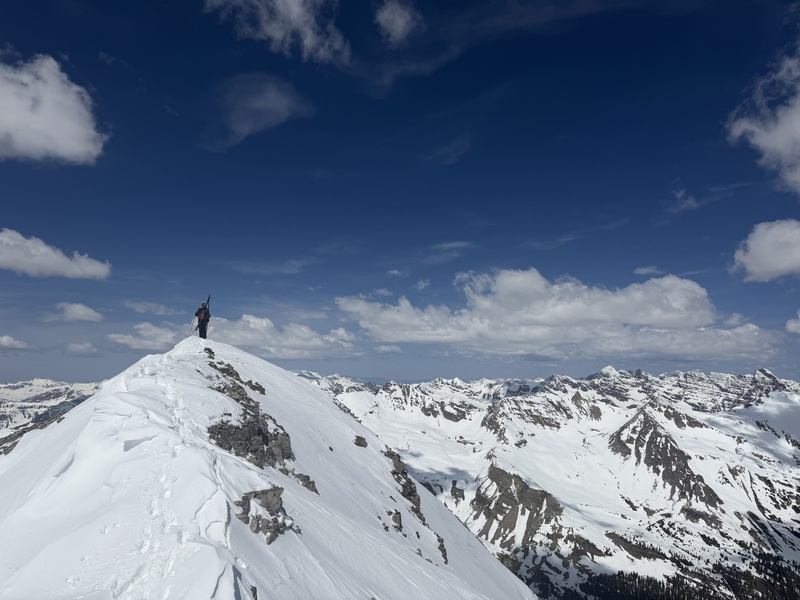

20.8 miles, 5500' vert, and 18 hours 10 minutes later we arrived at the car just before sunset. This felt like substantial accomplishment (as redemption tours often do). Round 2 on Castleabra also felt like a blur being so close in proximity to our previous attempt. We were both happy to finally put ski mountaineering in the rear view mirror with dry pursuits ahead. Chapter 5: Jagged 
The late spring and early summer came and went; before we knew it our August trip was around the corner. We confirmed plans with Cash and Lee. The A-team was all-in for this final crux! In mid-August the San Juans got absolutely rocked with precipitation. This was a major concern for our anticipated Beartown approach. We quickly decided to opt for Vallecito instead. Some parties split the 16+ mile pack-in into two days for reasons that would become apparent on the approach. A significant portion of the approach is on low-elevation flat trail. The August heat was tolerable but unpleasant. The last few miles to camp are where the progress will inevitably slow. While routefinding through willows and deadfall isn't an issue, the micro-detours add a lot of time and effort. 
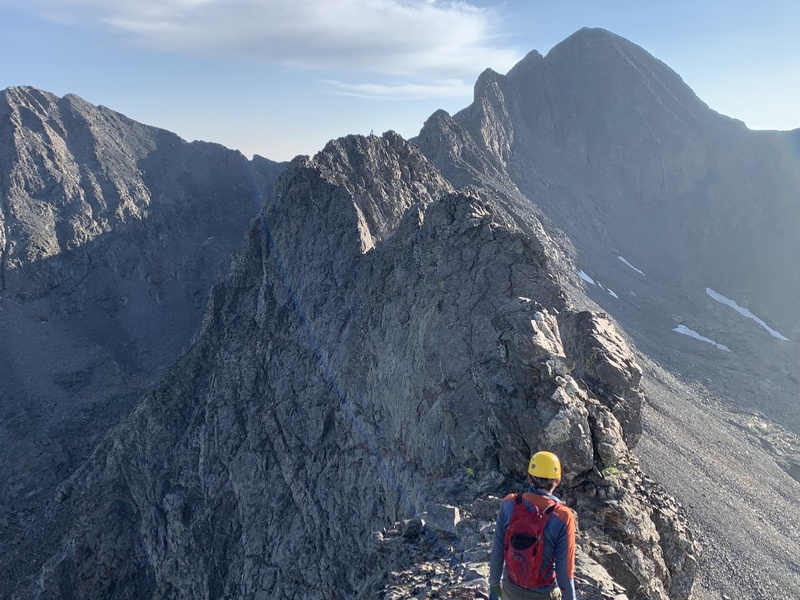
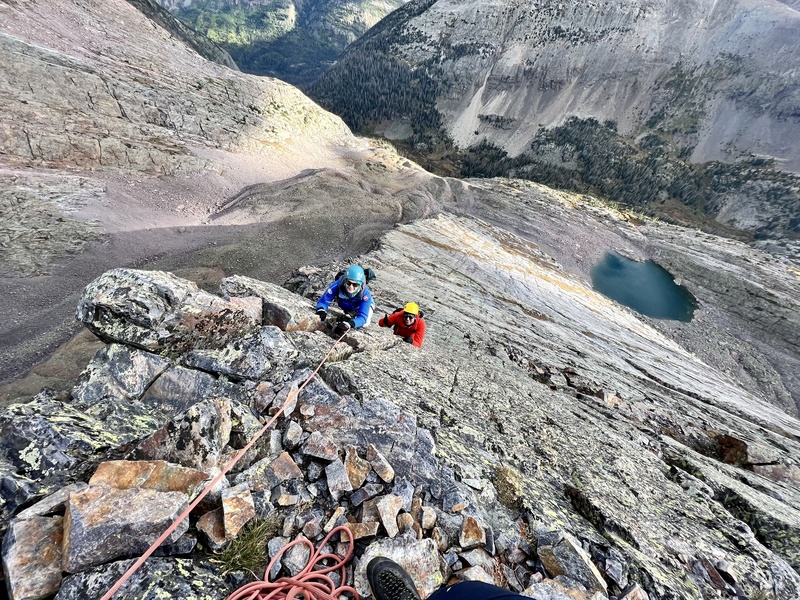
Morale had taken a hit by the time we got to camp; the length of that approach (and the inevitable fact that the deproach is exactly the same length) was weighing on all of us. We made dinner, set up camp, packed our day packs, and did our best to restore morale. The following morning came faster than I think any of us would have liked but the time had come regardless. We began weaving our way higher into the basin. The terrain until the high basin below Crux 1 is complicated. There's a mix of loose rock, impassible convoluted cliff bands, bushwhacking, and intermittent steep climbing. Several hours later we finally arrived at Crux 1: 
As we continued upward past Crux 1 I became increasingly frustrated with both the terrain and my well-worn TX4s which have almost no tread remaining. The sticky rubber is still great for climbing rock but the terrain between Crux 1 and 2 features a lot of kitty litter, dirt, and grass strewn across small steppy ledges with very high consequences. I donned my Kahtoolas (don't worry I don't use those on ice, just loose dry terrain) and pressed onward with greatly improved traction on the loose stuff. 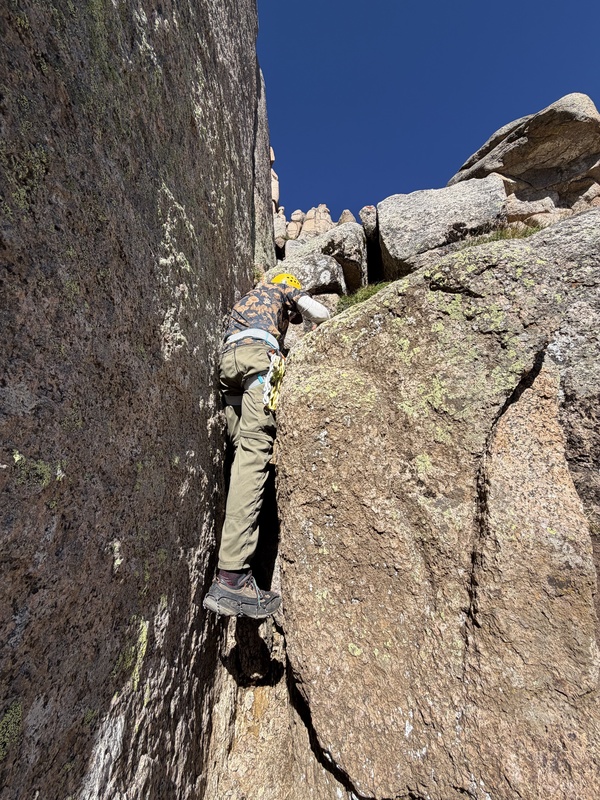
Crux 2 came and went without issue. Height is definitely an advantage here, as are long pants/sleeves which can be used in all sorts of creative ways to provide friction as you climb. Crux 3 also proved to be only a minor obstacle to our progress. Make no mistake though, all of the cruxes on this route are somewhat awkward and committed despite their low grade. I'm not a particularly experienced outdoor rock climber. Anyone in a similar situation will definitely be best advised to bring a partner who is willing to lead/belay the cruxes or hire a guide. 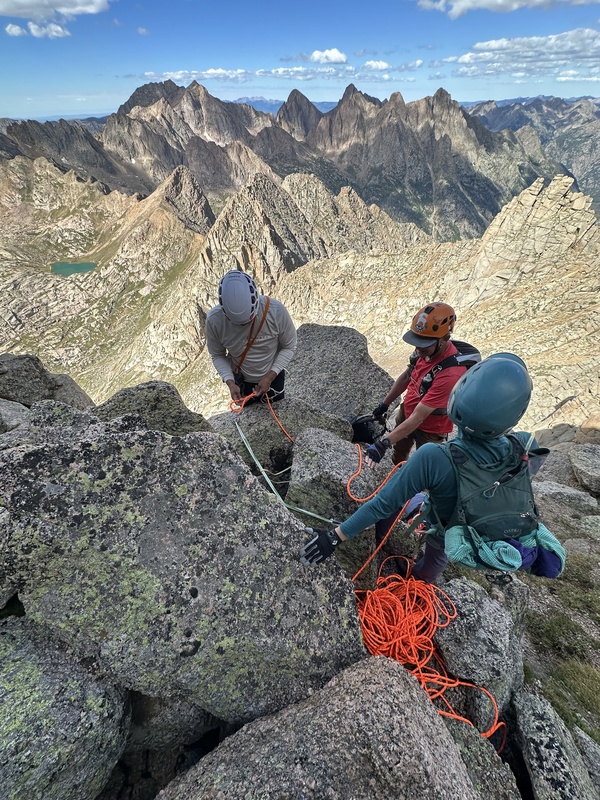
The airy ledges are exposed and awkward at times but routefinding is straightforward and the rock quality is great. 

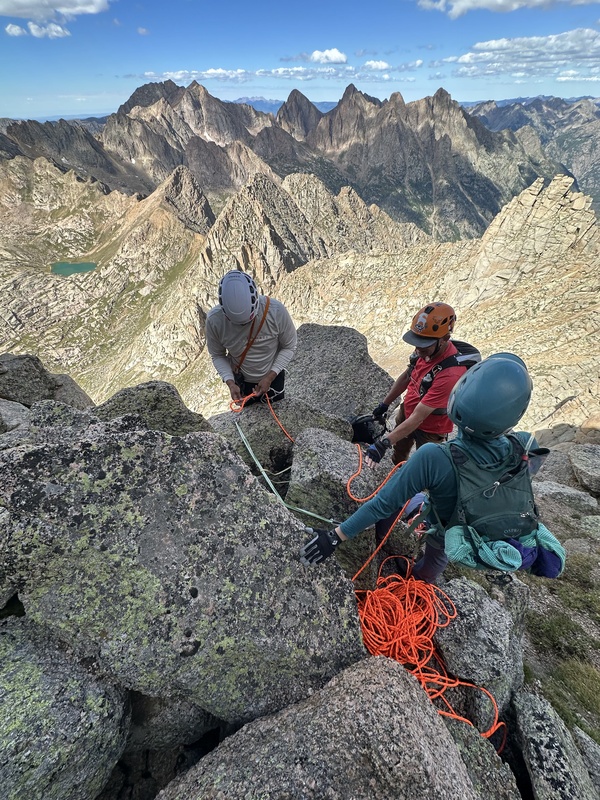
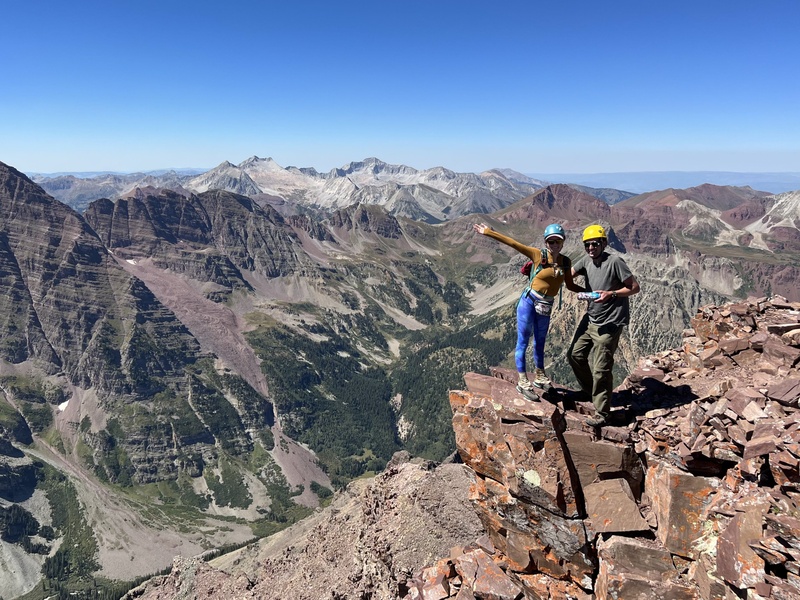
We quickly snapped photos, ate snacks, and I drank half a shooter of Malört; the rest of which I left in the summit register as a fifth crux for those who dare. We geared up for the rappels back to mellow ground. The North face was rather appealing with two bolted anchors. We decided to opt for that as we felt it would be more efficient. But as we soon found out: DO NOT DO THAT. We nestled ourselves on a small ledge with a "rat's nest" of cams an nuts all tied together. It took a 30m double strand rappel to get us here. We tied in and Lee pulled the rope... and pulled, and pulled again. The rope was stuck. Sheeeiiittt. Due to the amount of stretch we were getting when yanking on the rope it was clearly stuck near the top. We began deliberating about what our next step would be. Ascend the rope? Nope, Lee had a better idea. "This is what I love about climbing, sometimes you have to get creative" said Lee (or something to that effect), "I'll just climb out to the East and get back to the summit." Before we knew it Lee was out of sight, climbing mystery terrain unprotected. I'd settled in to the rat's nest expecting a long stay on the ledge. 
Far sooner than I expected we received radio communication from Lee that he was still alive, and more importantly, that he was rappelling down from the summit! Onward and downward! 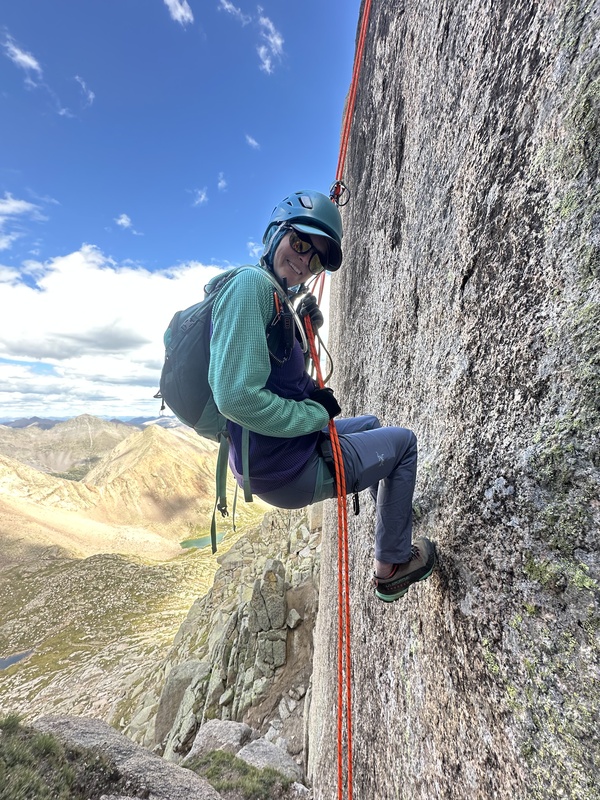
Crux 2 went without a hitch minus my ATC getting thrown into the abyss (rookie mistake). We rappelled down from the top of Crux 2 which put us in unfamiliar terrain above Crux 1. The third rappel was tricky from a rope-drag standpoint and we had to climb a ways back up class 3/4 terrain to get the rope unstuck. 
Our fourth rappel got us within 30 meters of Crux 1. Lee slung a flake that was disconcertingly wobbly but he gently put his hand against it to make sure it wouldn't jettison itself from the wall as I rappelled. We safely made it back below Crux 1 after a total of five 30m raps. To be abundantly clear the first rap over the North face is very prone to problems like those we encountered, as evidenced by the SAR mission that transpired just a week or two later (due in a large part to that climber's rope getting stuck at the same spot). Although the North face is tempting, direct, and theoretically efficient I think that retracing one's steps down the four cruxes is probably the most reliable choice. In any case we safely made it back to camp, and back to the car the following day. Due to scatter on vertical terrain it's hard to accurately assess the total stats for this one. I got 37.0 miles and 7800' vert over the 38 hours, 28 minutes that I recorded on Caltopo. Certainly not an FKT (possibly an SKT?) but we lost a ton of time with rappelling woes after the summit, and we took our time keeping the approach and deproach mellow. Jagged is a huge objective no matter how you approach it (at least in the context of climbing in Colorado). Between the long approach, extensive array of technical terrain, and potentially problematic rappels Jagged is far and away more difficult than any other Centennial. For those looking to finish the Cents I'll advise going in to Jagged very prepared, and I'd recommend completing it earlier than second-to-last because that imposed a lot of unneeded pressure on us to succeed on the first try. I'd also like to emphasize that, if you're like Kyra and I (no significant trad experience) some excellent prereqs are Teakettle and Dallas. If those were still on the current Cent list I'd feel that'd go without saying. I think it's a recipe for trouble to attempt Jagged without doing these successfully first. The awkward climbing and inherent use of protection translates well. I've also heard some people claim that Dallas is the hardest Cent; I couldn't disagree more. Chapter 6: Mount Ouray With the date set and fast approaching we reached out to find partners. I secured a 1/6 barrel keg of Meadkrieger peach/raspberry mead (at about 10% ABV so as to not risk a SAR mission for those unaccustomed to combination of high elevation and ethanol), Kyra put together a charcuterie spread, and I picked up a notebook to refresh the summit register. The turnout was such that I was hopeful I wouldn't have to carry down any liquid in the keg. On the day of the climb (with a 5:45AM start time established) everyone in attendance arrived at the trailhead and started on time, which is miraculous for a party of nearly 20. 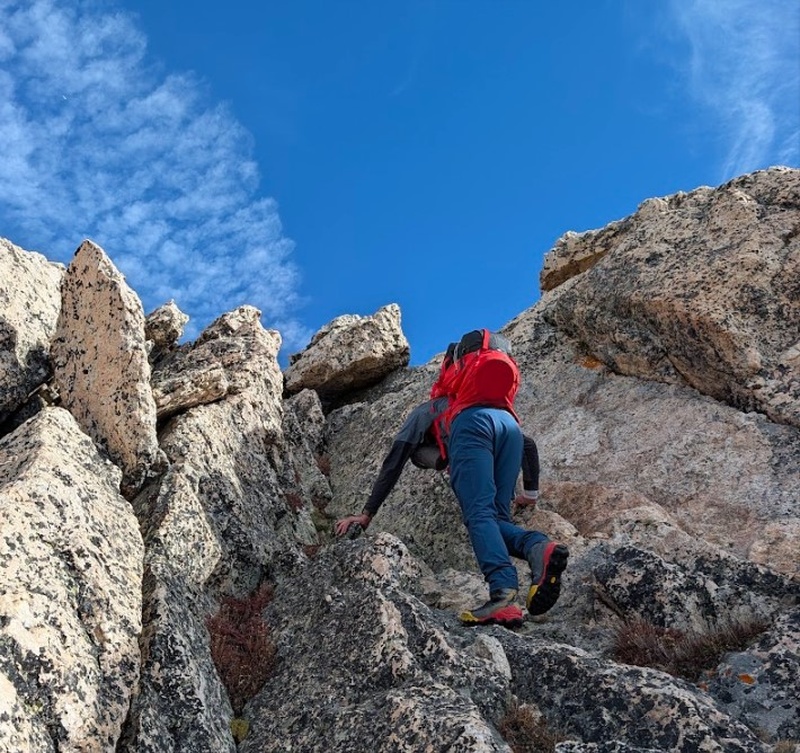
Unlike our previous keg finisher, my ego this time allowed for other people to help share the weight. A full 1/6 barrel keg weights approximately 58 pounds, which is a bit worse than it sounds because the weight distribution and center of mass are far from ideal for carrying in a backpack. Mike, Ben, Phil, and I traded the keg pack for the majority of the climb before handing it off to Kyra to slog through the last few hundred feet. 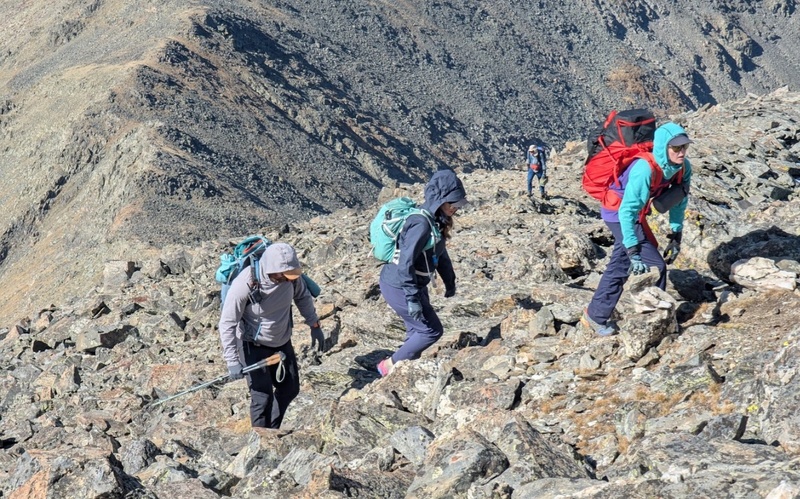
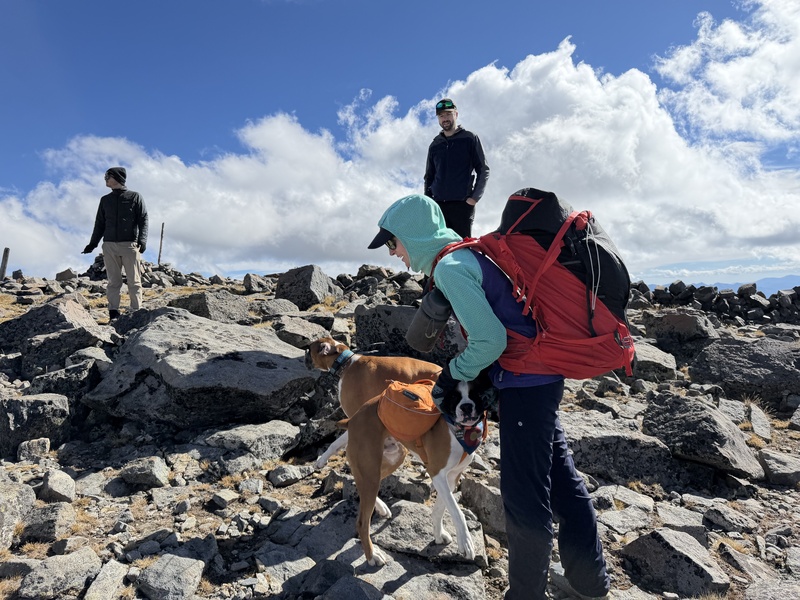
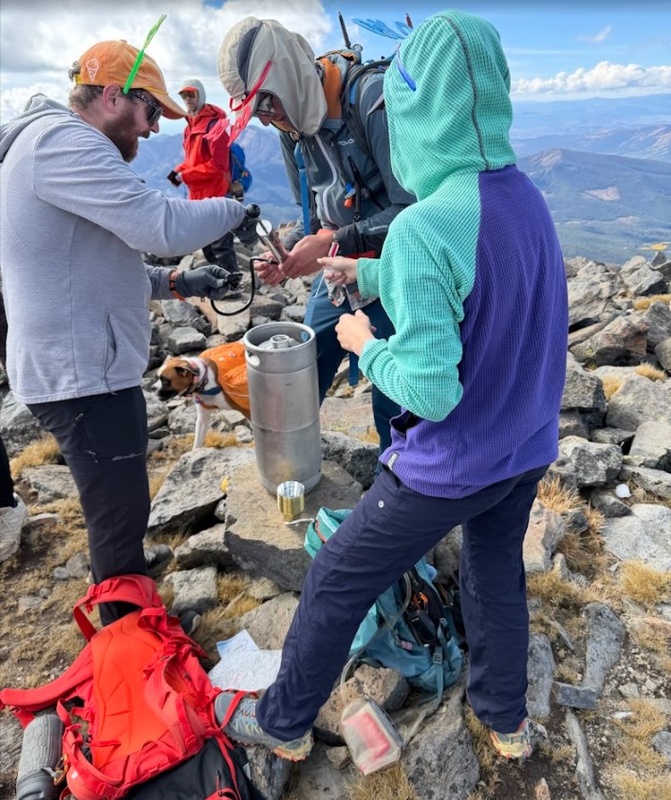
With everyone at the summit it was time to tap the keg! 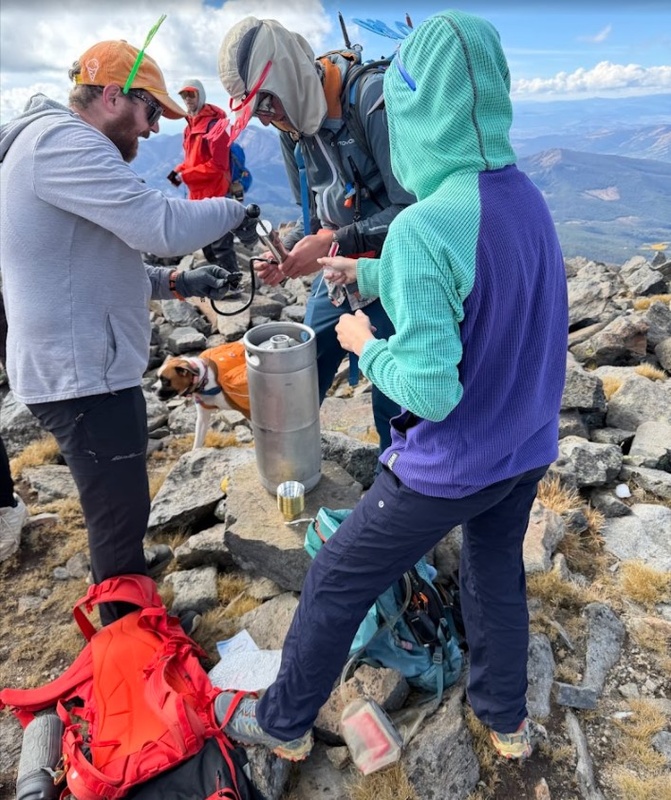
Many stories were shared, cheers' were had, and glasses (or drinking horns) of mead were consumed. 
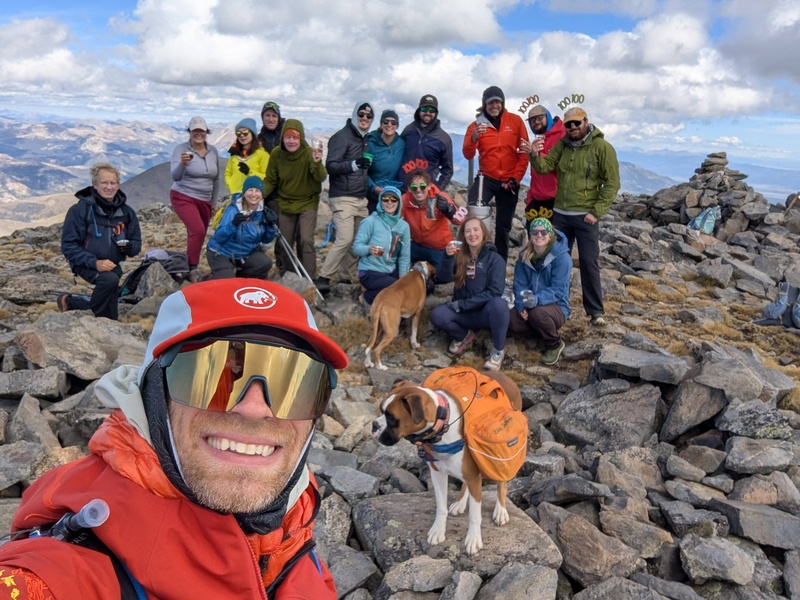
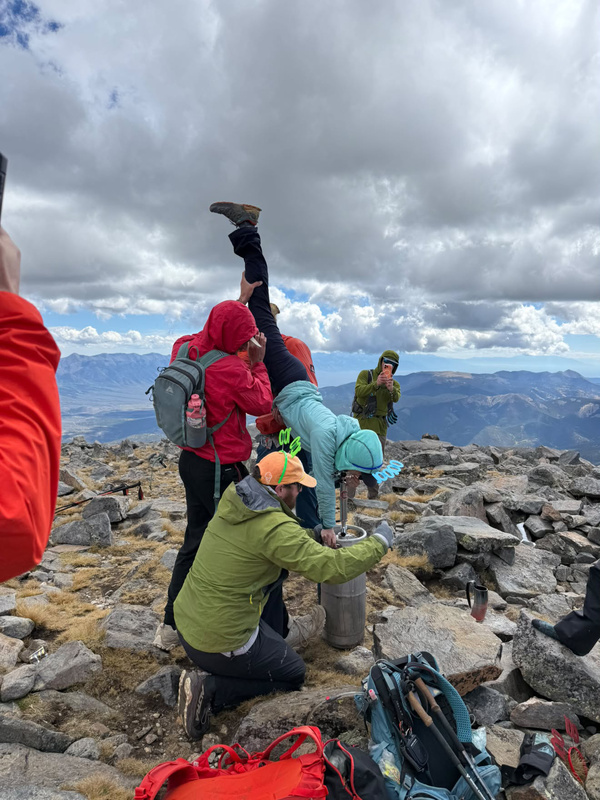
It was truly amazing to celebrate with everyone! I couldn't be happier to have the support from friends and family to make silly events like this possible! 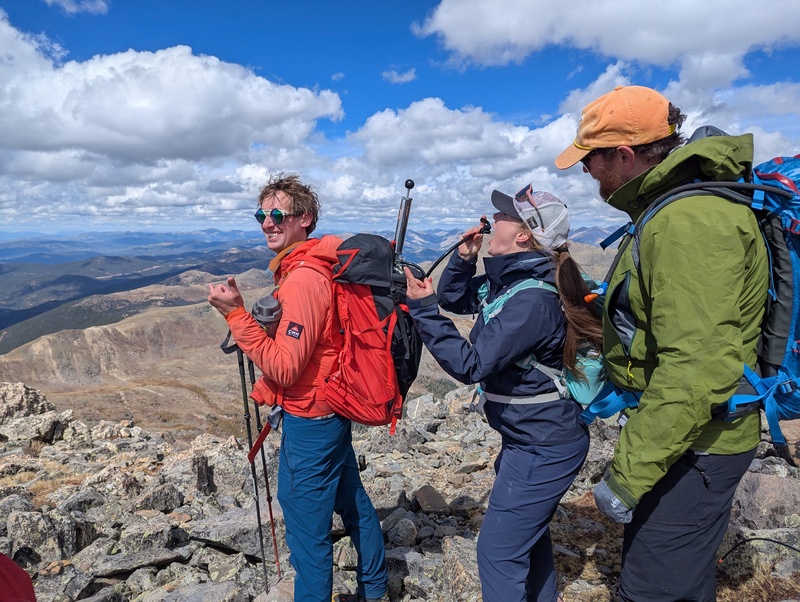
With the Centennials behind us (along with 238 other ranked 13ers along the way) my total stats (excluding repeats) are 827,536 vertical feet and 9,027 miles. Reflecting back on the journey to becoming a Centennial finisher brings a few points to mind. First and foremost I was pretty surprised by the difficulty of this list. While we intentionally increased the degree of difficulty of our climbs in general by pursuing winter objectives and ski mountaineering (several being Centennials) I will still assert that finishing the Centennial 13ers is at least three to four times as hard as finishing the 14ers. This is a completely subjective conclusion but I'll stand by it, especially if you live on the front range. Secondly, the 14ers in Colorado represent a relatively homogeneous subset of peaks. There are trails, information, reports, etc. on all of them. Shifting towards summits that are slightly lower but potentially dramatically harder is a rewarding pursuit. And lastly, 14ers or 13ers or not, dry terrain or not, hot farts or not, there's more to learn and do in Colorado's public land than a lifetime could reveal. A very special thanks to my wife, friend, and climbing partner Kyra for helping make all our wildest mountain dreams come true! Cheers to more summits! Thumbnails for uploaded photos (click to open slideshow): 

















|
| Comments or Questions | ||||||||||||||||||||||||||||||
|---|---|---|---|---|---|---|---|---|---|---|---|---|---|---|---|---|---|---|---|---|---|---|---|---|---|---|---|---|---|---|
|
Caution: The information contained in this report may not be accurate and should not be the only resource used in preparation for your climb. Failure to have the necessary experience, physical conditioning, supplies or equipment can result in injury or death. 14ers.com and the author(s) of this report provide no warranties, either express or implied, that the information provided is accurate or reliable. By using the information provided, you agree to indemnify and hold harmless 14ers.com and the report author(s) with respect to any claims and demands against them, including any attorney fees and expenses. Please read the 14ers.com Safety and Disclaimer pages for more information.
Copyright: Route information, text, risk factors, maps, GPX files, charts, photos, 14ers.com-created map imagery, flythroughs, and other content provided in this route description are copyrighted by 14ers.com and may not be copied, reproduced, republished, distributed, modified, or used to create derivative works without prior written permission.
Please respect private property: 14ers.com supports the rights of private landowners to determine how and by whom their land will be used. In Colorado, it is your responsibility to determine if land is private and to obtain the appropriate permission before entering the property.