I'm from Oklahoma, so I didn't grow up climbing. I spent a year in Fairbanks Alaska, so I kind of knew cold pretty well. I'd hiked a lot of fourteeners the summer, but I didn't know how it would go on the Crestone Needle. I had a sort of dark optimism that the worst case scenario would happen to me. I didn't bring food or water, and the only gear I brought was a rope and a piranha, which turned out mostly useless. I wrote the following story for myself, and when I shared it with someone close, they asked if I'd shared it in climbing circles. I think it's got a lot of vocabulary and it's melodramatic, but I hope it's interesting nonetheless.
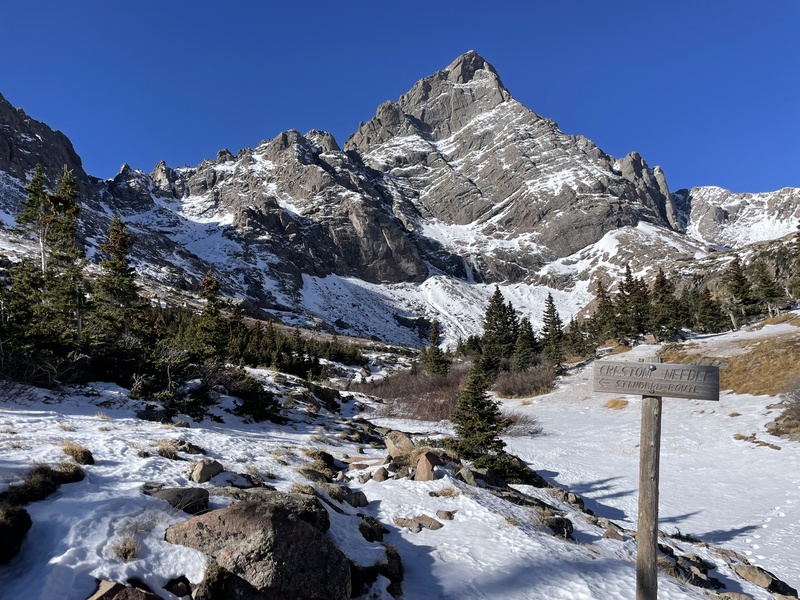
I'd decided to climb the Crestone Needle, the most technically challenging fourteener.
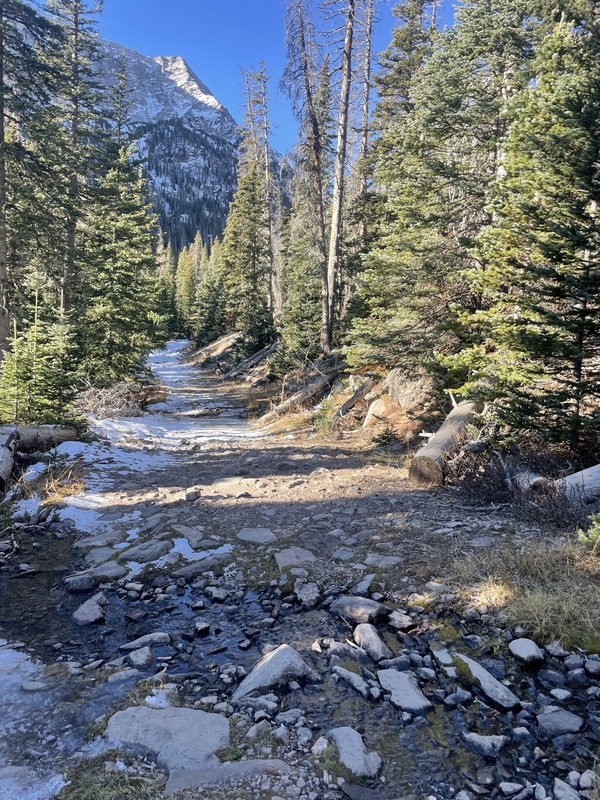
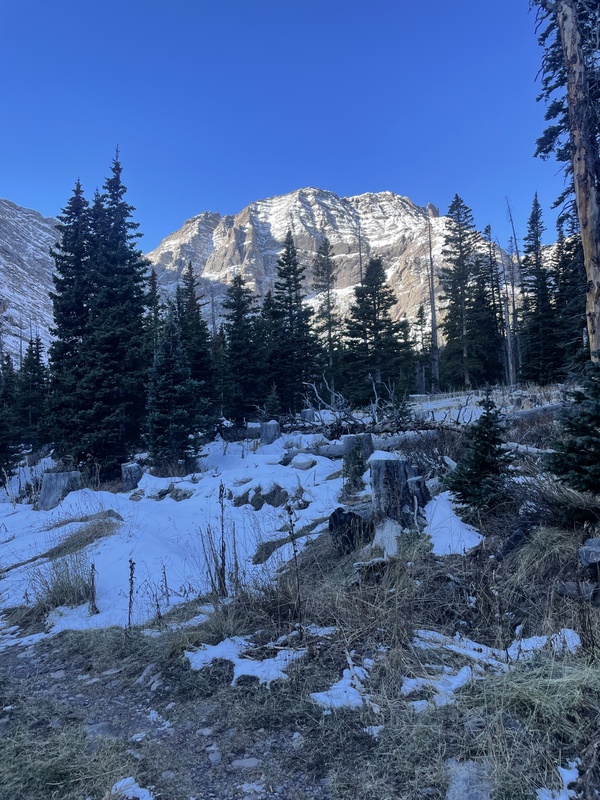
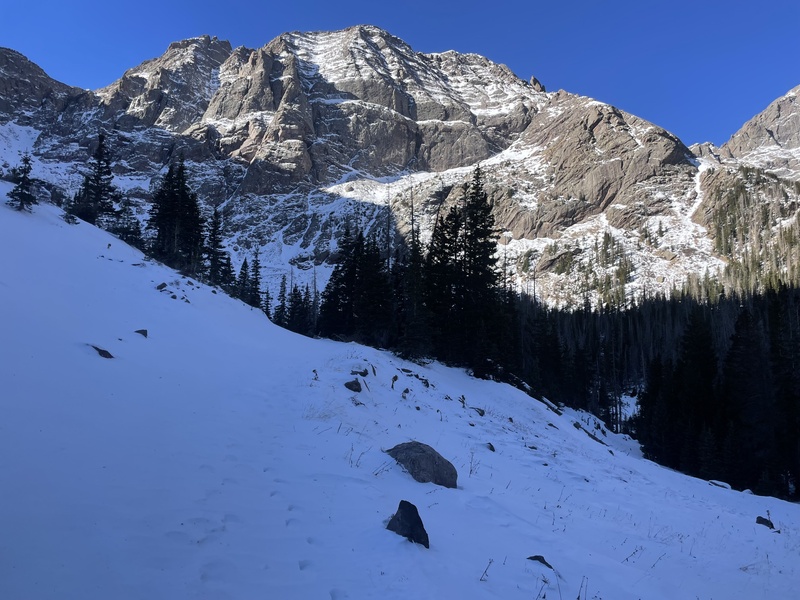
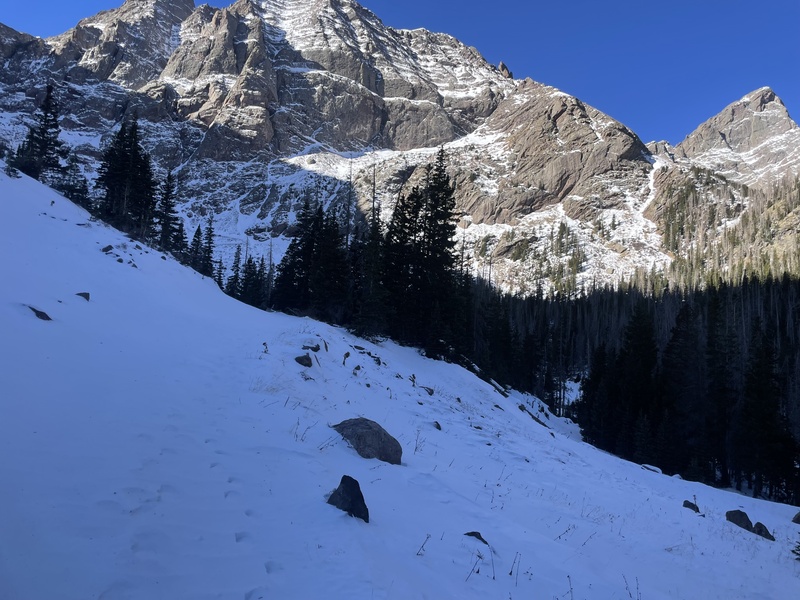
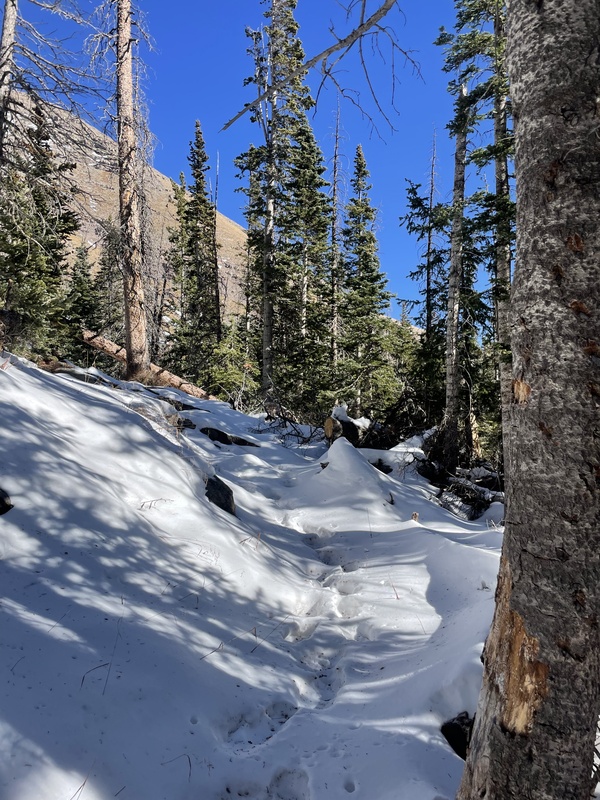
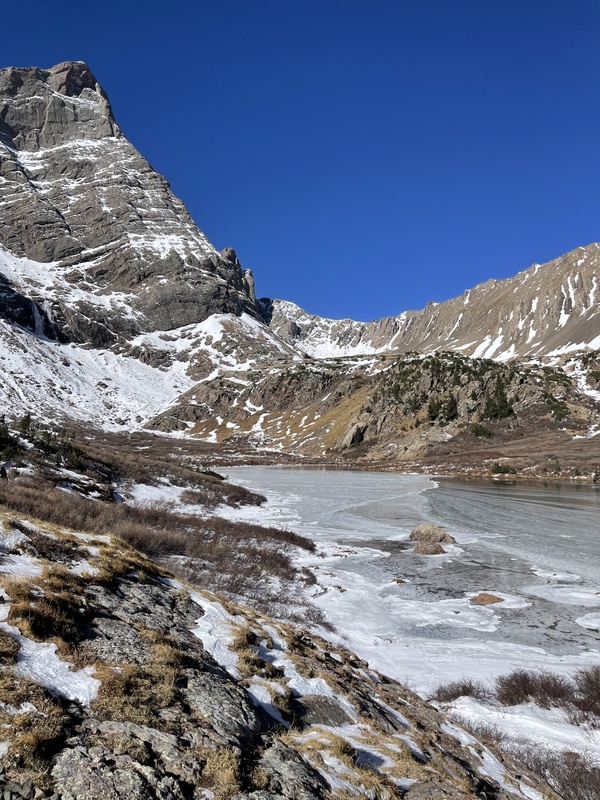
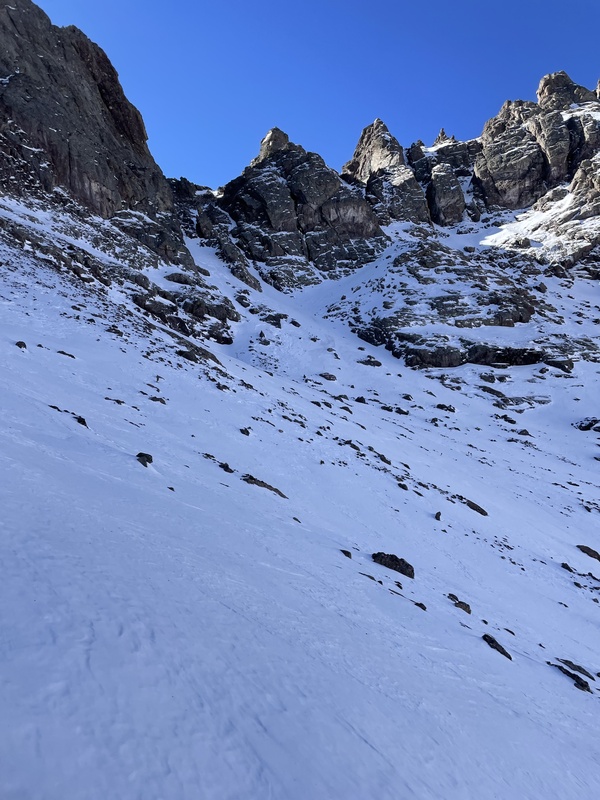
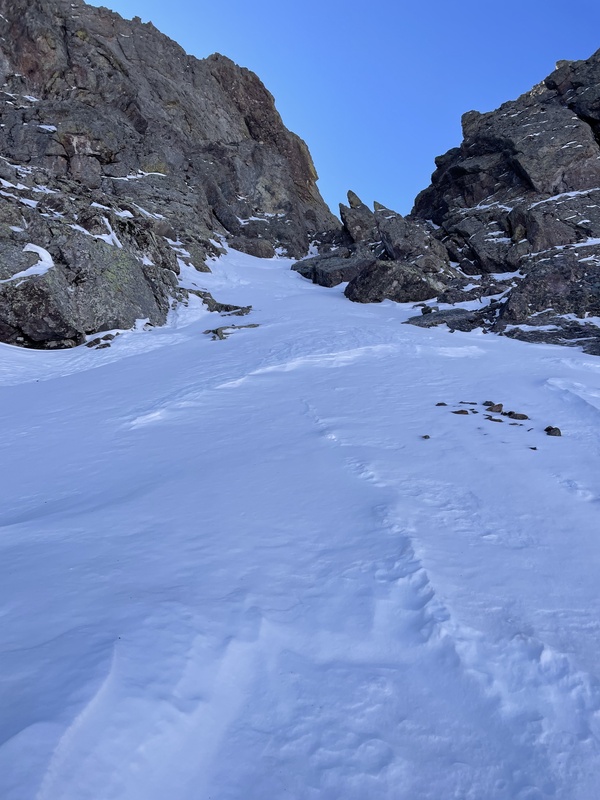
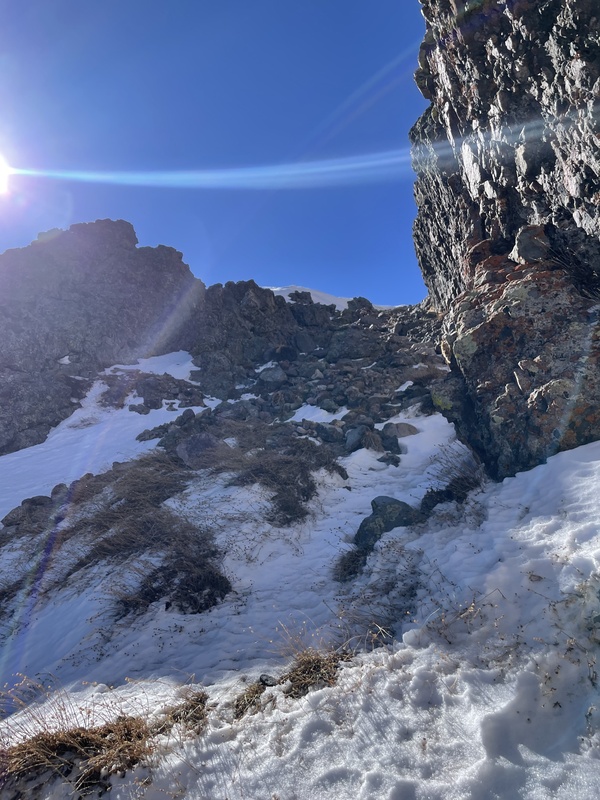
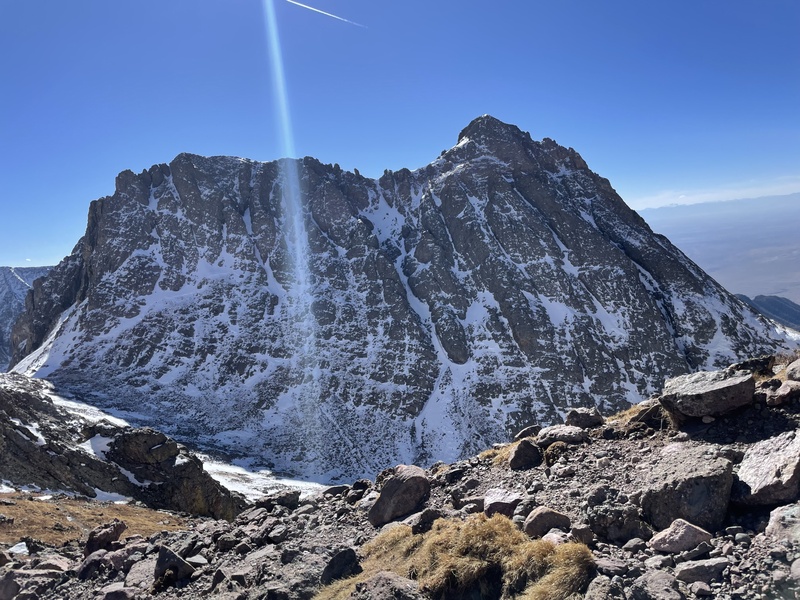
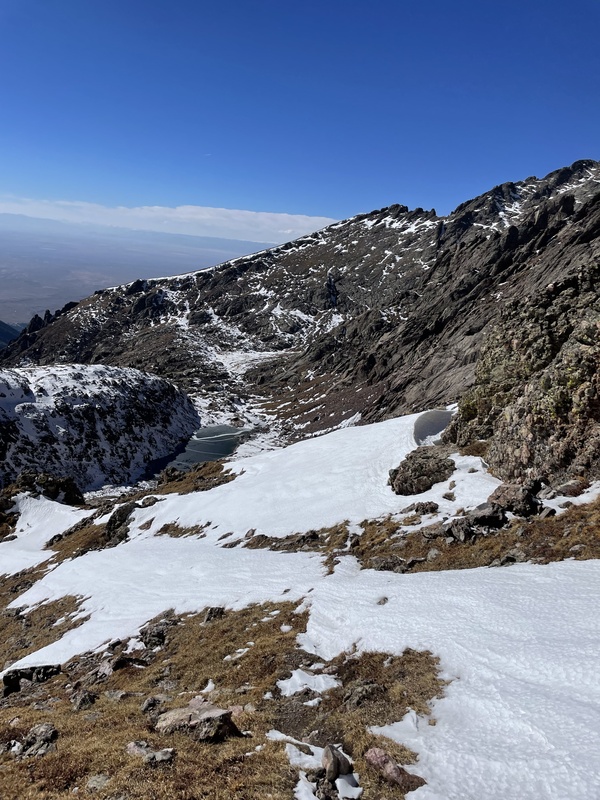
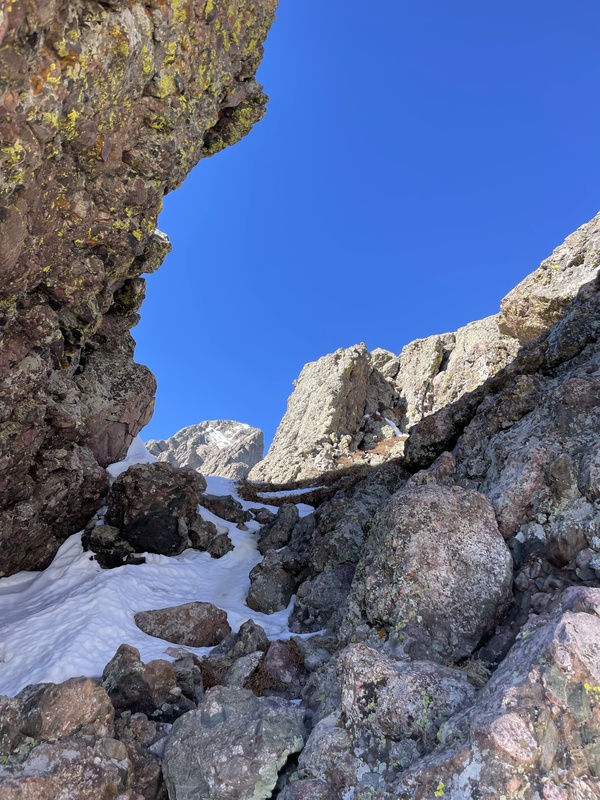
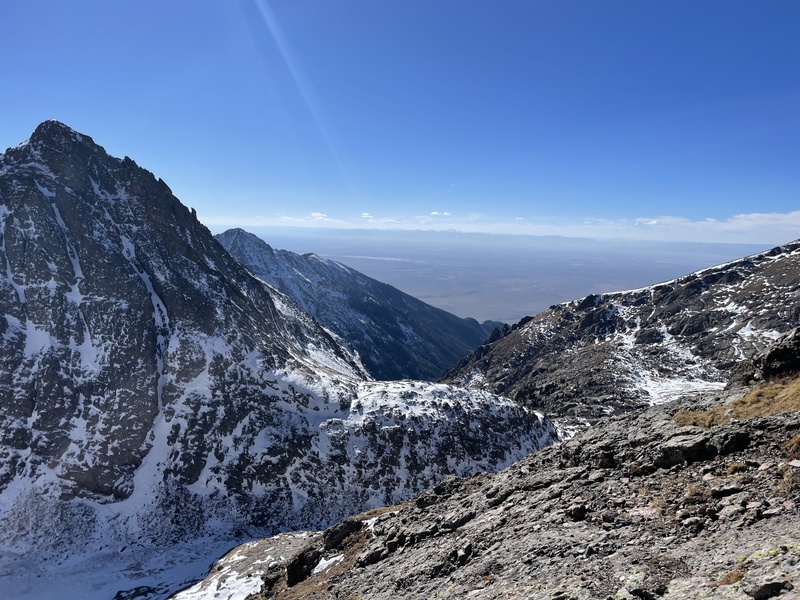
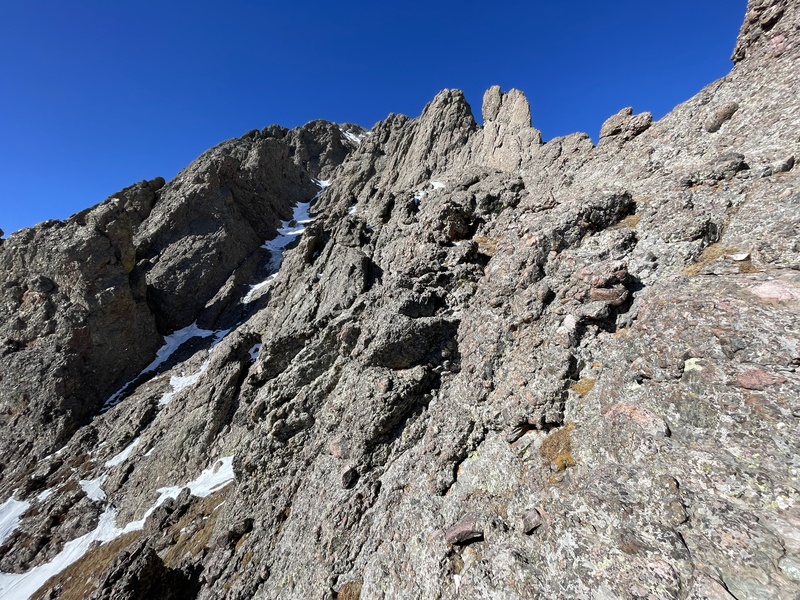
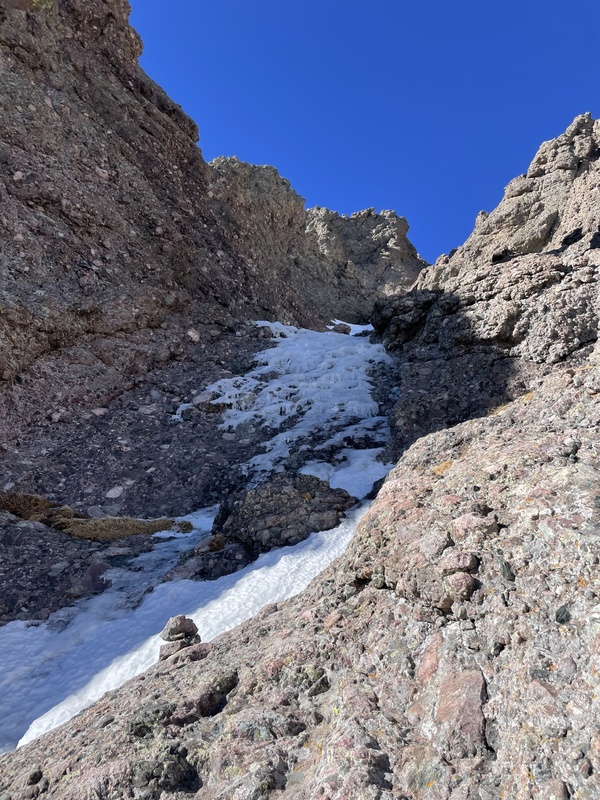
So I left Friday after work, got in late, and woke up late on Saturday morning. I didn't get started til 8 am. The trail started out on an old dirt road, long in disrepair, with patches of veirglas that put me on my ass. It became a singletrack, which took me up above treeline where the trail was impossible to make out on the snowy windswept mountainside. I kicked my feet into the icy side of the mountain to keep from sliding down, and made my way to broken hand pass. But with snow over the trail, I just chose a gully and kept pushing up, sinking a foot or two with every step. By the time I reached a sunny rock, my feet were losing feeling and my toes had lost feeling a while ago. I perched carefully, undid my shoes and dried my socks for as long as I felt was reasonable. My toes, warmed by the sun, were back to normal. So I pushed on over the ridge, and made it to the second gully. The traditional gully route was filled with snow that was melting and compacting into ice, and wet feet combined with loose snow in a gully is a risky mix. So I took the rock on the side, finding a new path that was more technically demanding than the traditional route - more challenging, but also allowing more control. A safer route. My garmin inreach said I was - it drops - not too far. I climb down carefully. Without the inreach, it would be slow and painful, whether I went to the hospital or died. The risks on mountains are big - so why didn't I bring crampons? Or food? Or water? I want to die, and it almost always surprises me to find myself clinging to life once I'm on the side of a mountain. I'm afraid that the alternative will be slow and painful. I'm so close to the top now. The sun is setting over the great sand dunes in the distance. I'm not quite at the top, and 100 meters never seemed so far. I finally reach the crest, and it's a precipice. I can't tell where the mountain ends and the cornice begins. The wind has only gotten stronger. I crawl, carefully placing my hands, aware that a gust could knock me over. I find the little place they call the summit, and look. It's cold. I can't stay long. It's dusk. So I move back swiftly, and try and rappel down the gully off the little knobs of rock. It's sketchy - the anchors are dubious, and I quickly put my piranha back in my pack to use just my leather gloves. I never slipped off a rock I used as an anchor, but the little knobs get worn down lower on the mountain, and there's no way to use them as an anchor. With colder temperatures, the snow in the gully is solidifying into ice. So I trust it more than snow; I trust that I can kick a boot into it and it'll stay. It's a narrow gully; it's unlikely to come off in a sheet. In some places, it's completely ice, and no kicking will create a foothold. In some places, it's so narrow that it's only rock and ice, so I'm forced onto the rock, moving slower because of the required deliberation in choosing footholds. I make it to the bottom of that gully. The worst part is over. But I'm cold and weak from exertion without fuel of any kind. I'd hoped to die, and maybe I can die of hypothermia. I curl up under a rock and try to fall asleep. Quickly, my body wakes up. Now I'm uncomfortable. I guess I won't be dying here. So I move on. I try again at the top of broken hand pass, but it seems as quickly as I relax, my body fights back. This gully is no longer a gully, with wind blowing all day, snow has collected to create deep snow in the couloirs. And with new snow, my old tracks are gone. I end up in other couloirs, far more treacherous than what I had climbed up. I traverse little aretes, islands in the snow. The couloirs and aretes are both outside my ability. A fall here is very unlikely to kill me, and very likely to hurt me bad enough to need to go to the hospital. The worst. There's no easy way out. But I end up back on that windswept snow that has turned to ice, and I get back to the single track. At treeline, the snow is deep enough to get into my boots, and in the dark, there's no sun to save me. I could have brought extra socks. It's not like they'd save my life. I try one last time to die in my sleep. But again, my body fights back. I trudge back to my car, from that snowy singletrack to that ugly old road. By the time I'm back to my car, it's 2 am Sunday morning, daylight savings time. I had put on all my coats and hats, but undress and fall asleep quickly.
I felt the limit of my depression that day. I won't jump, and my body won't fail. Those marathons I'd run left me with a body that doesn't give up. Survival is easier than suicide.