| Report Type | Full |
| Peak(s) |
Coxcomb Peak - 13,663 feet |
| Date Posted | 03/08/2021 |
| Date Climbed | 08/08/2020 |
| Author | supranihilest |
| Additional Members | MWatson, whileyh, stavislost |
| Coxcomb: A Stiff Thirteener | |||||||||||||||
|---|---|---|---|---|---|---|---|---|---|---|---|---|---|---|---|
|
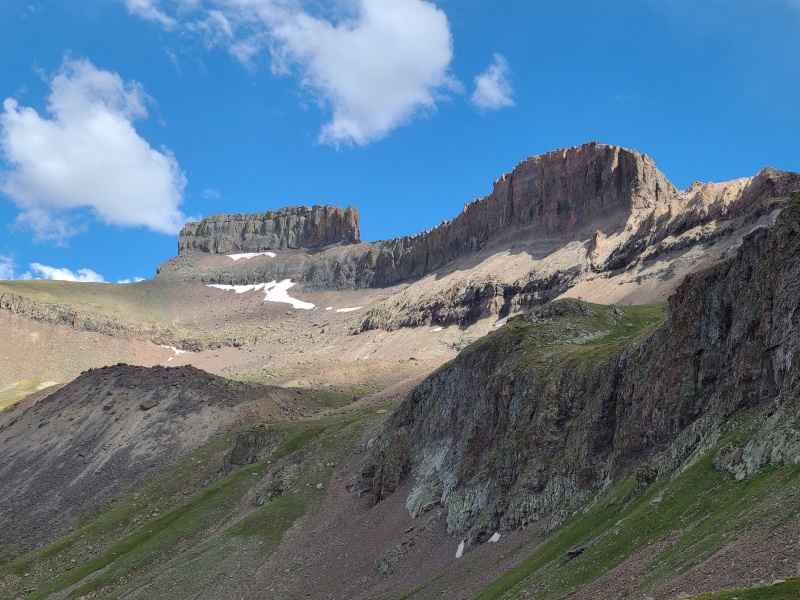
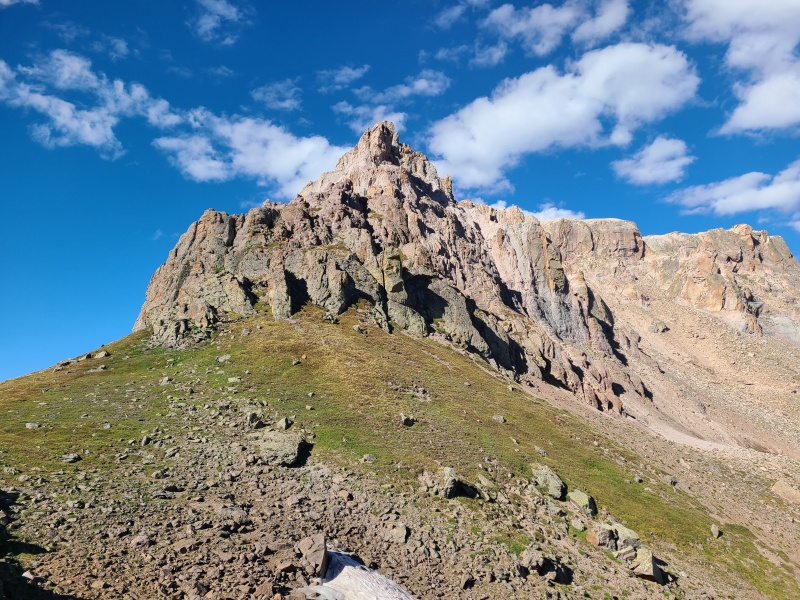
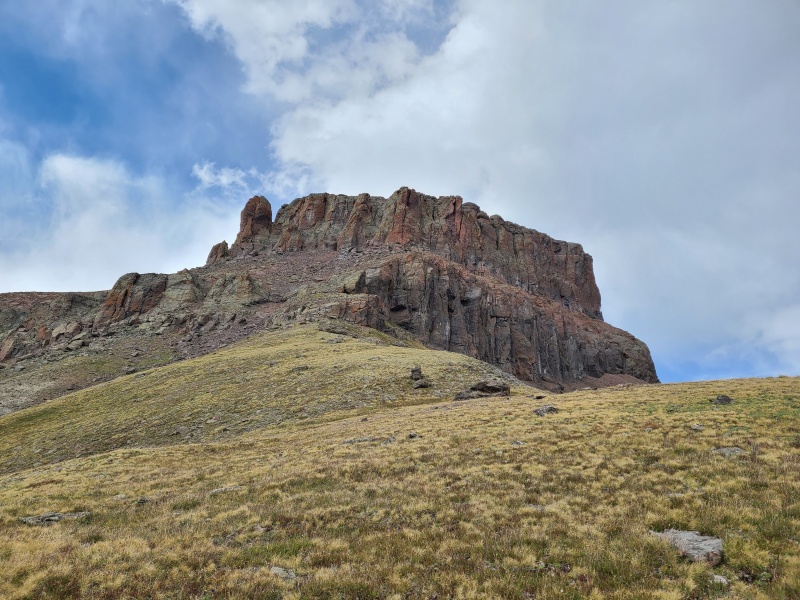
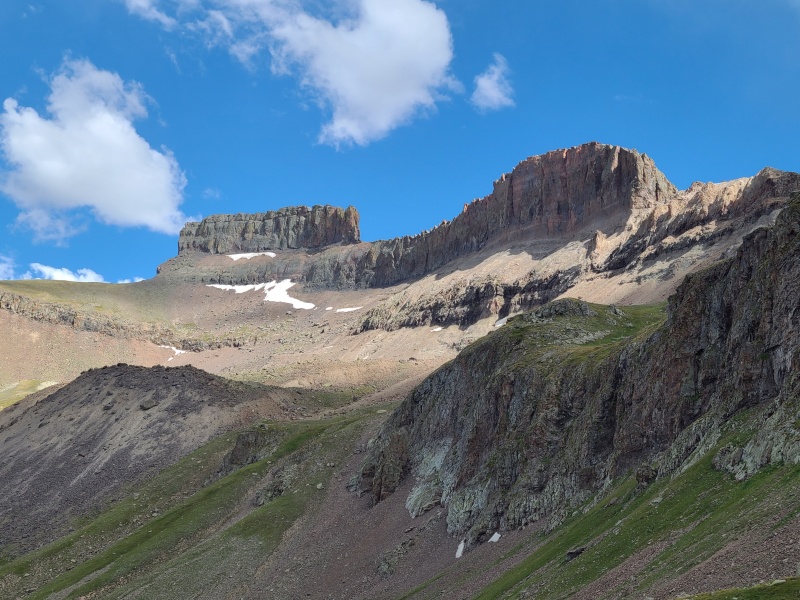
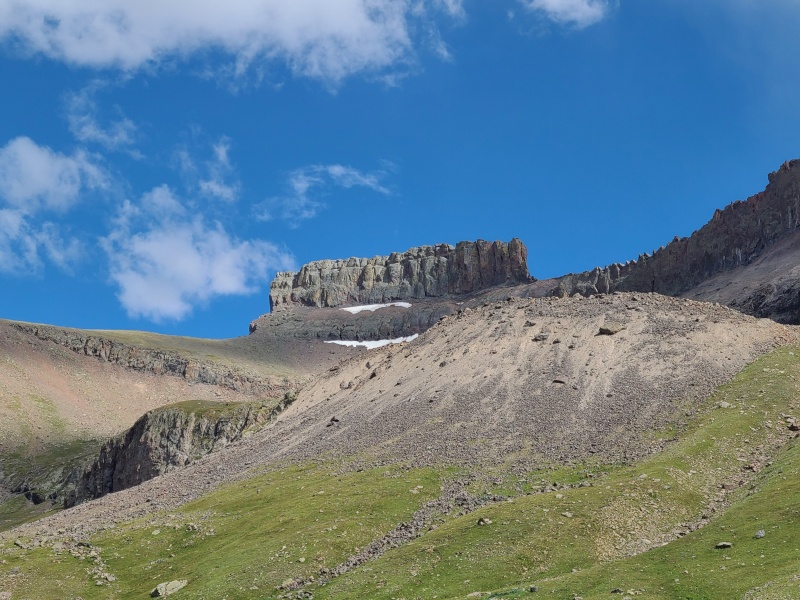
Coxcomb Peak (or simply Coxcomb) is one of Colorado's few Class 5 thirteeners. Sitting high in the Uncompahgre Wilderness, it makes for a fun and moderate day amongst the insanity of the other craggy peaks of the area. Surprisingly it is also home to relatively solid rock, unlike many of its neighbors. When Whiley's friend Stav came into town from Las Vegas we knew we had to pick some good peaks to climb. Coxcomb was one of them. We began the day before by driving up to the West Fork Cimarron River Basin, which is north of Wetterhorn Basin, and car camping at the trailhead there. Wetterhorn Basin lies to the west of Wetterhorn Peak and is not home to Wetterhorn's standard route, though the peak can be done from its namesake basin. In the morning we got our start just before 8am. Our team consisted of myself, Whiley, Stav, and Marisa. Normally I'd recommend both an earlier start and a smaller team (especially for a roped climb) but what the heck, we kind of threw this together at the last second and we'd see how things would go with four people on one rope. 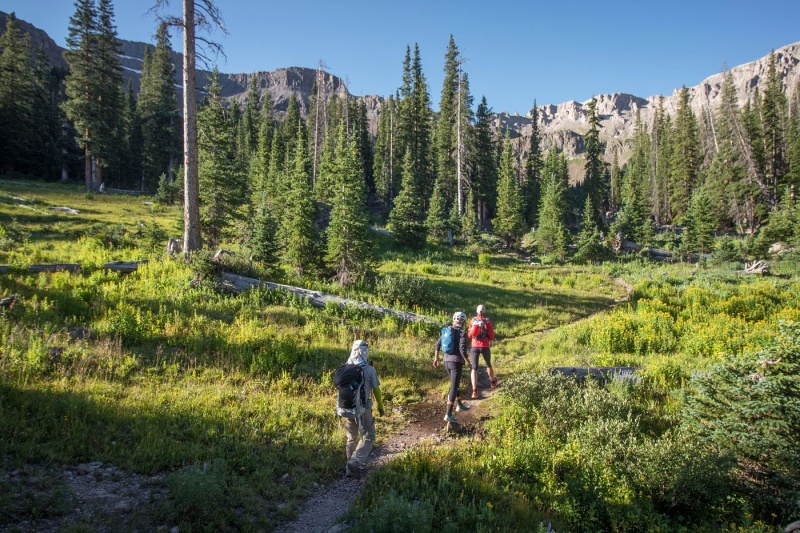
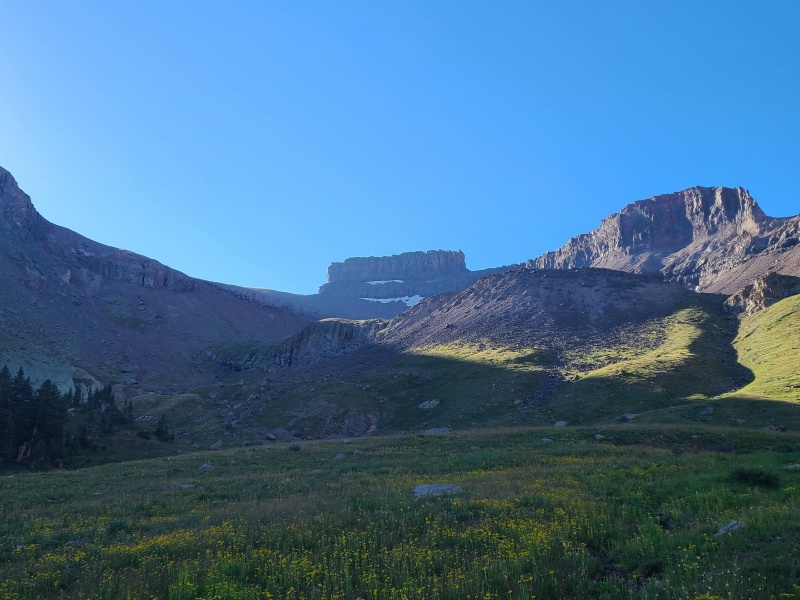
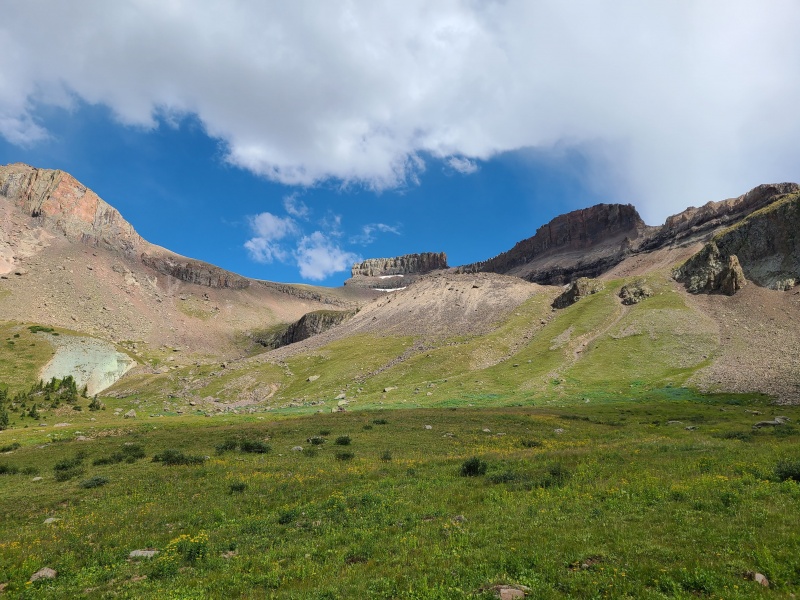
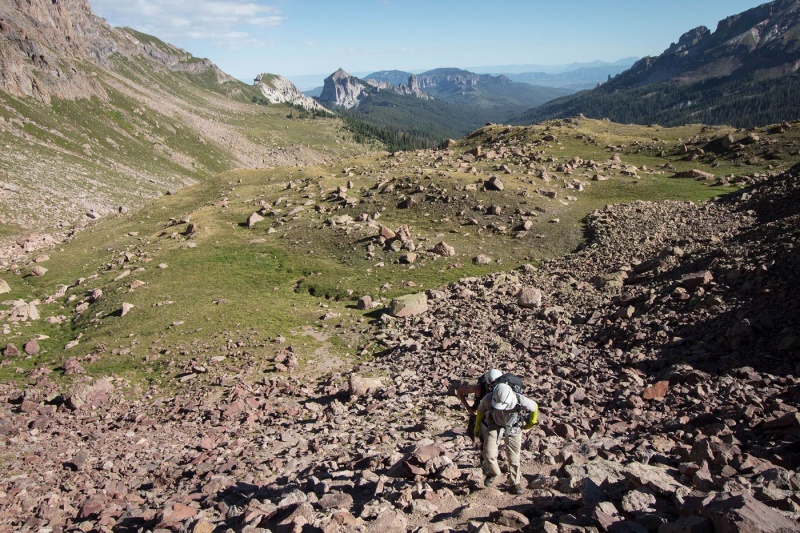
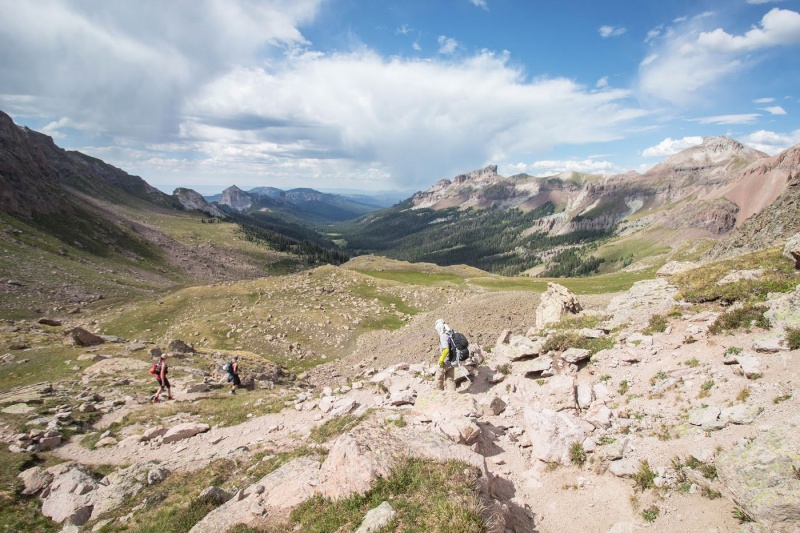
The trail through the basin was great and we made good time up to the pass. Only as it steeply ascended did the rock become loose, but it was still on a trail, so no real issue. 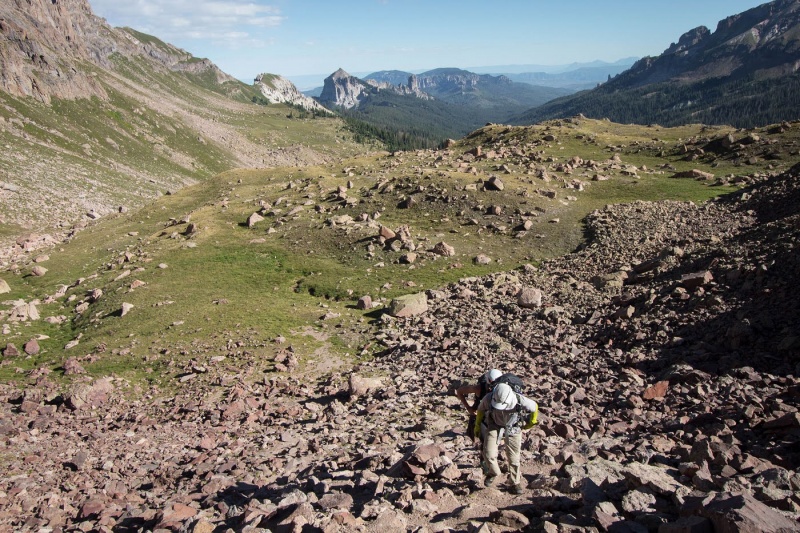
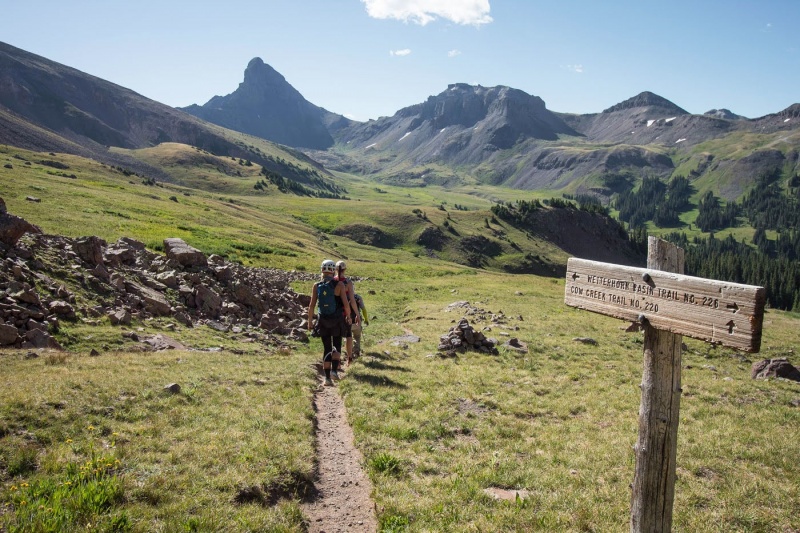
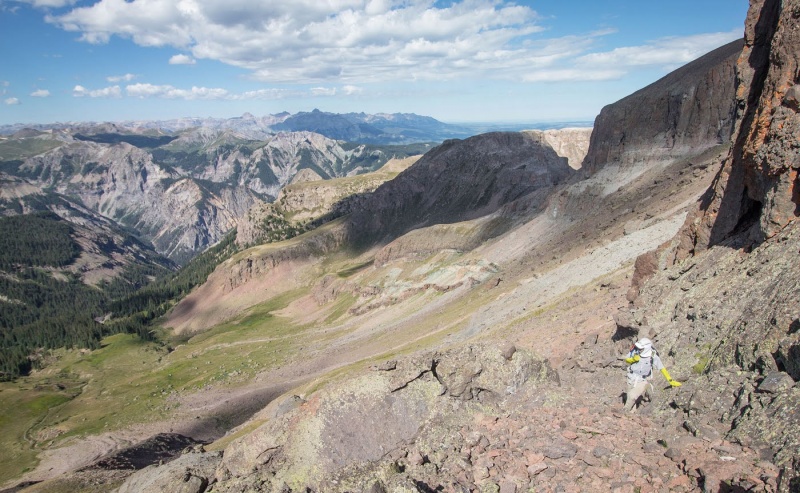
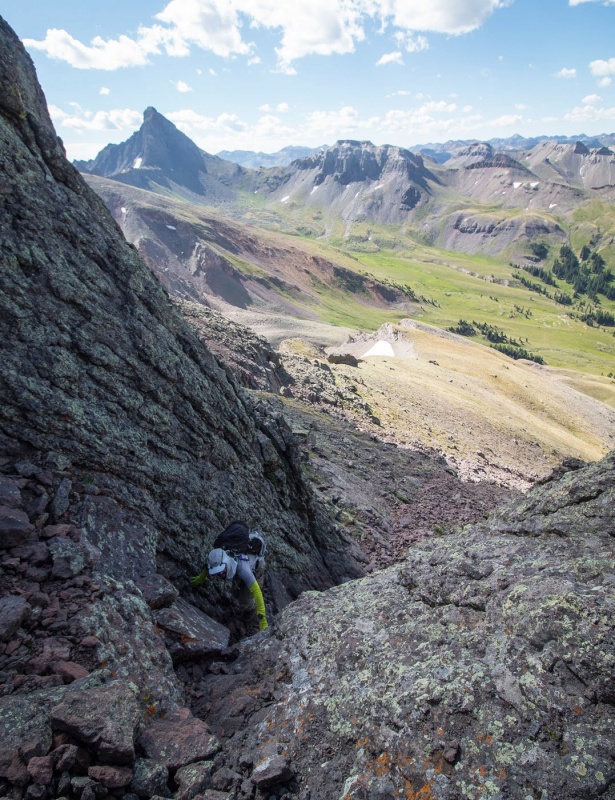
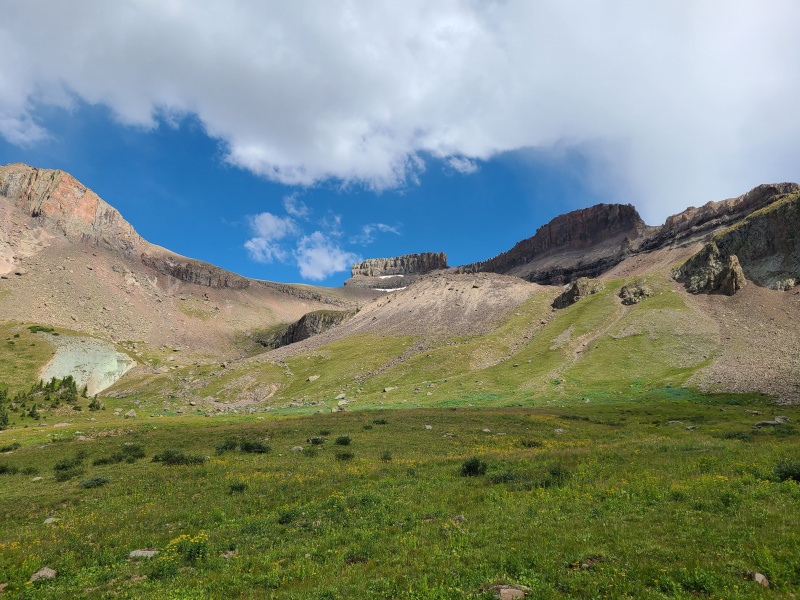
We quickly gained the pass and began dropping into Wetterhorn Basin. Wetterhorn Peak, a favorite of mine, kept a close watch on us as we hiked. 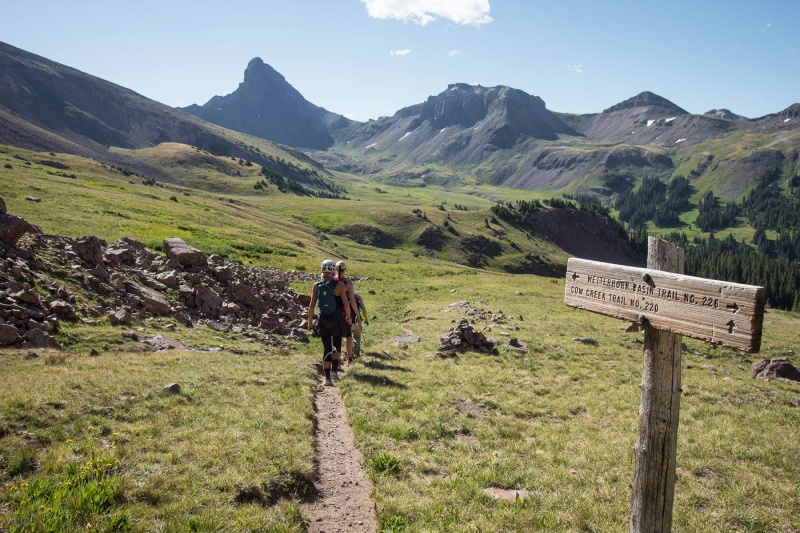
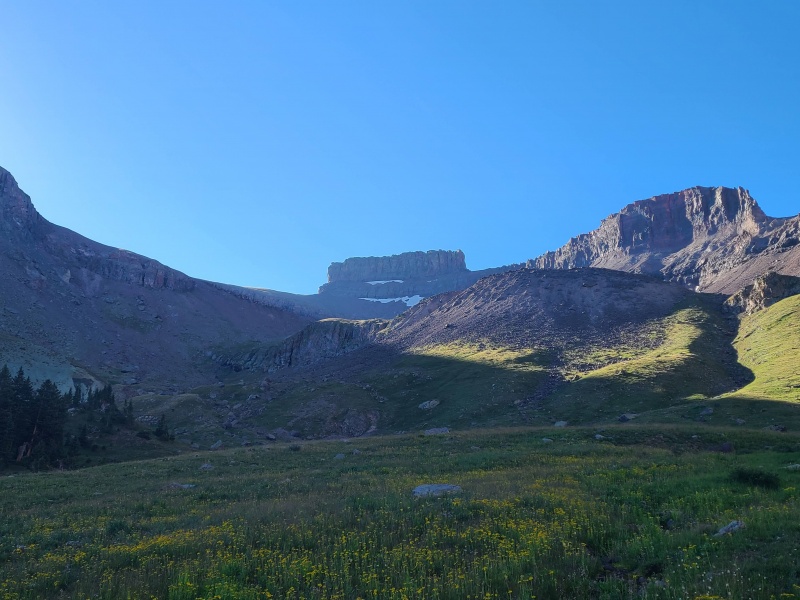
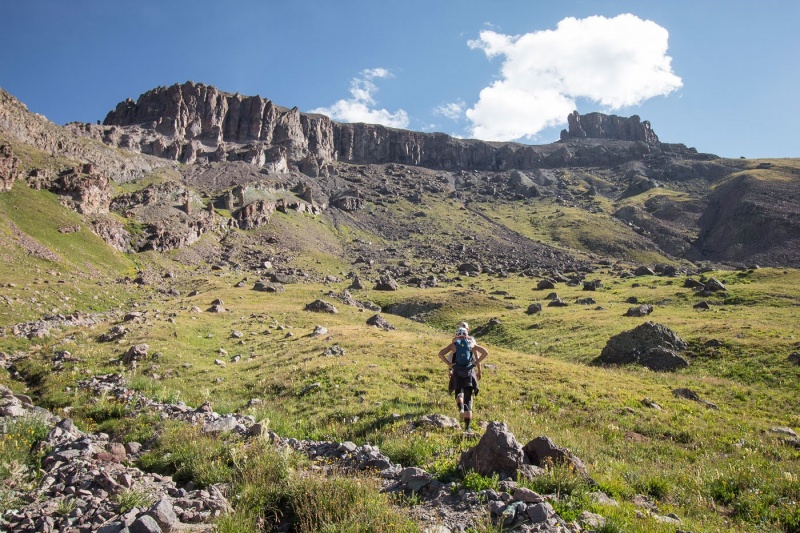
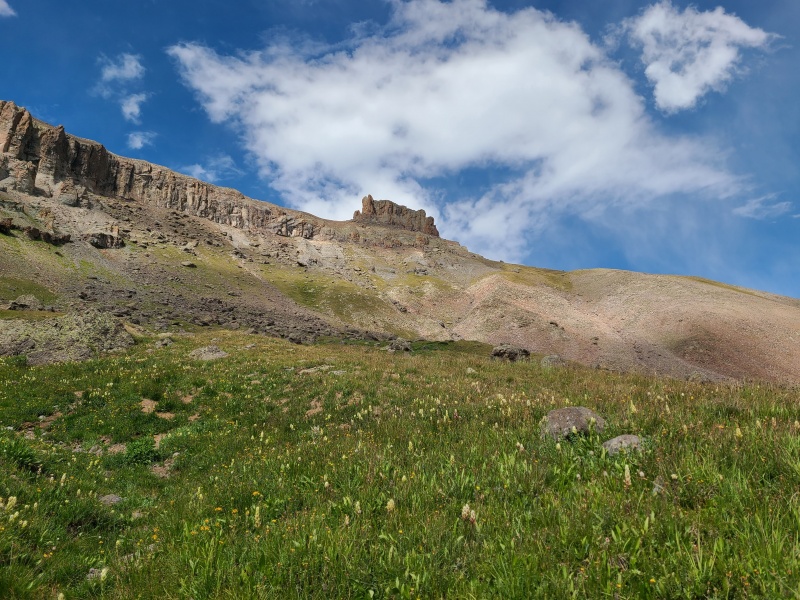
While we did have to lose some elevation en route to Coxcomb's southwest chimney, it wasn't much. When it made sense in order to avoid Coxcomb's far west and southwest cliffs we left the trail and began making our way to the east, which would bring us closer to the upper ramparts, or the comb. 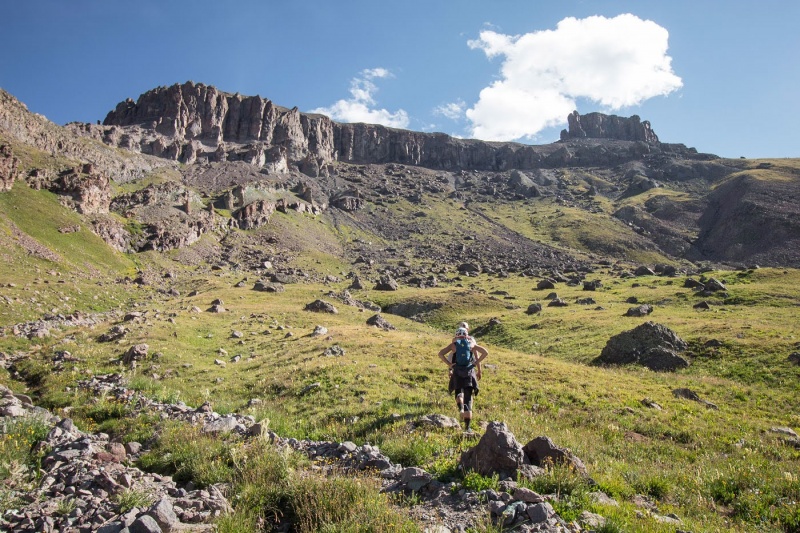
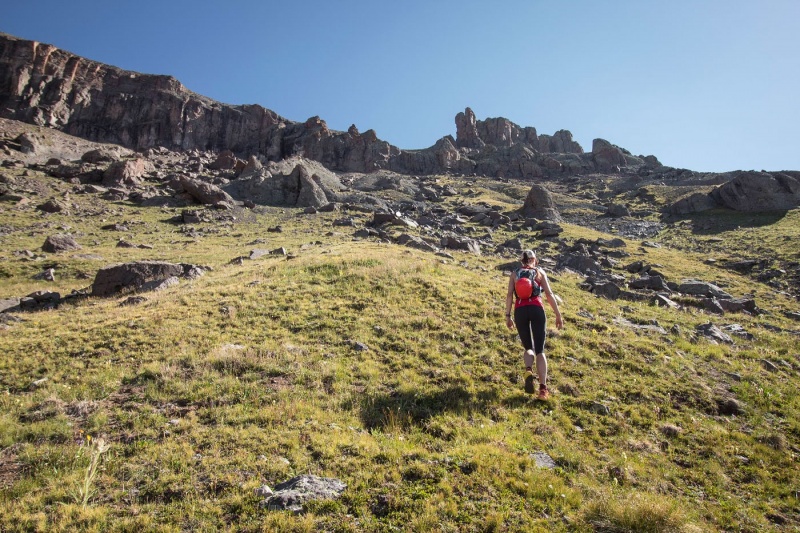
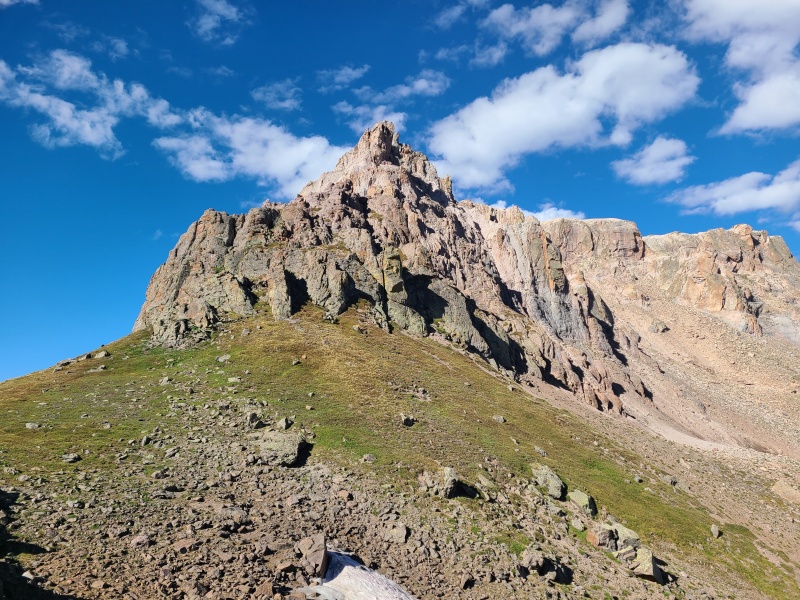
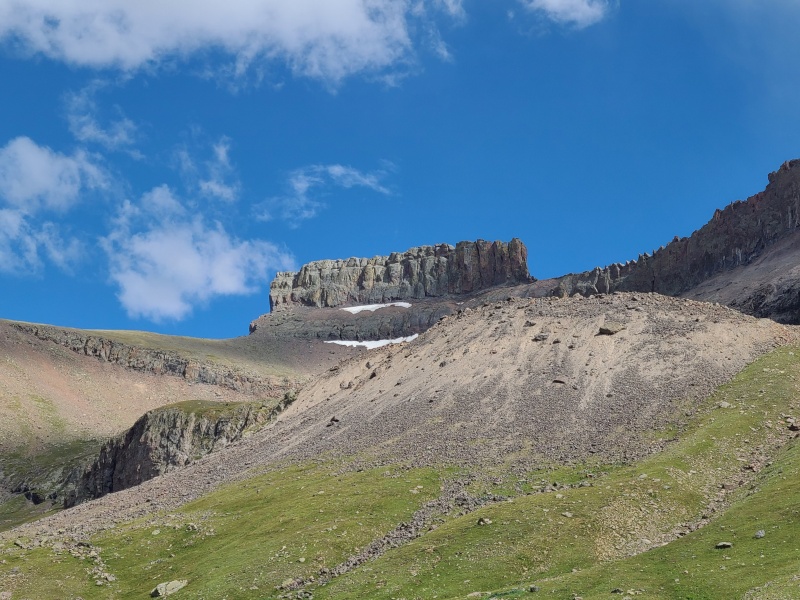
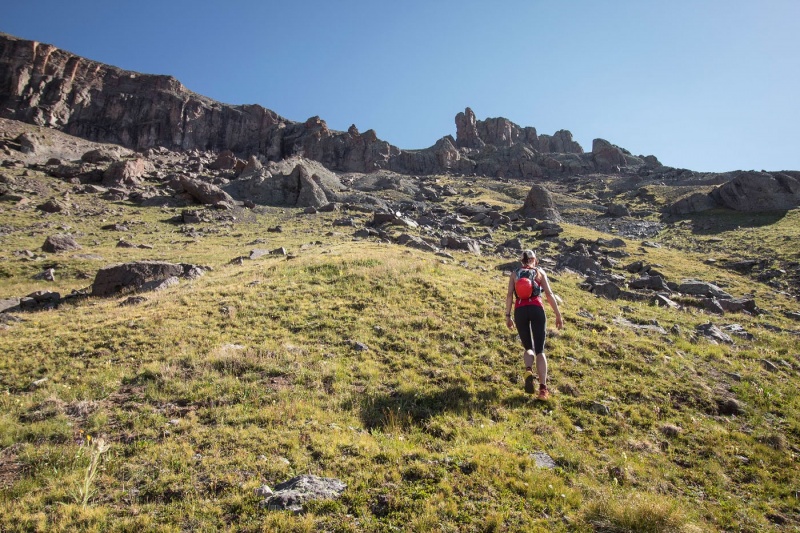
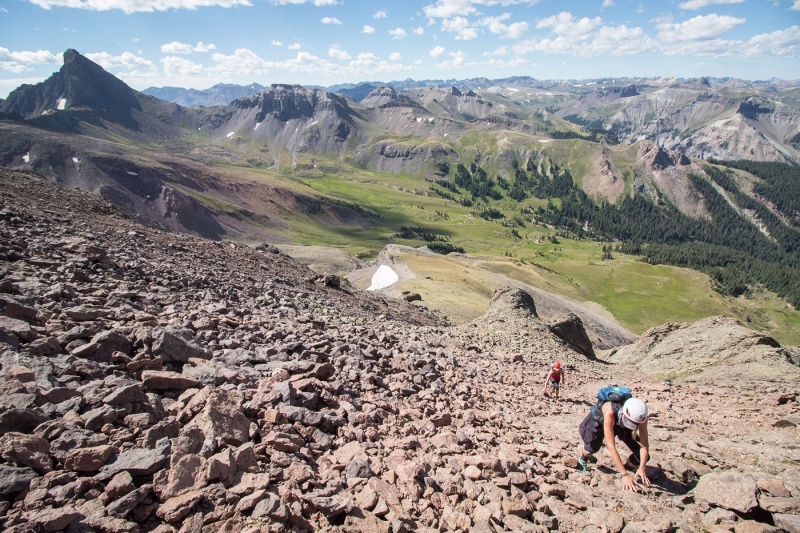
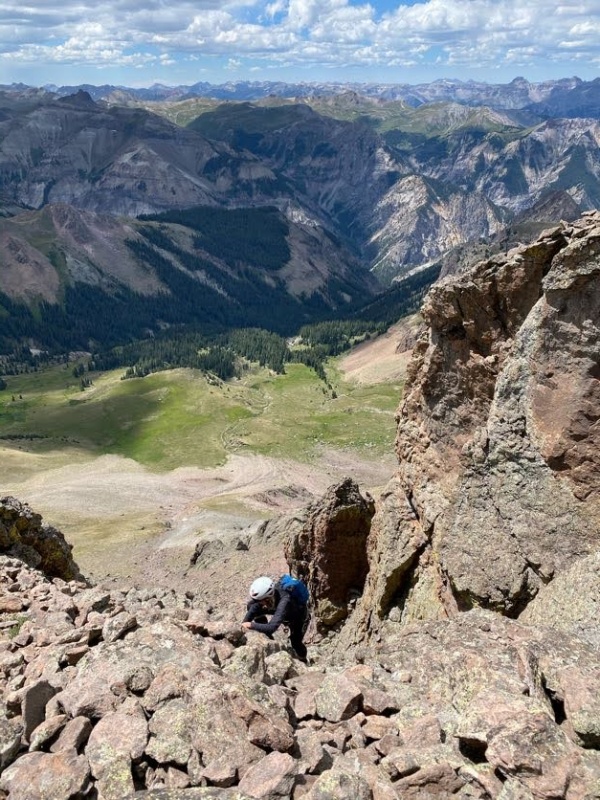
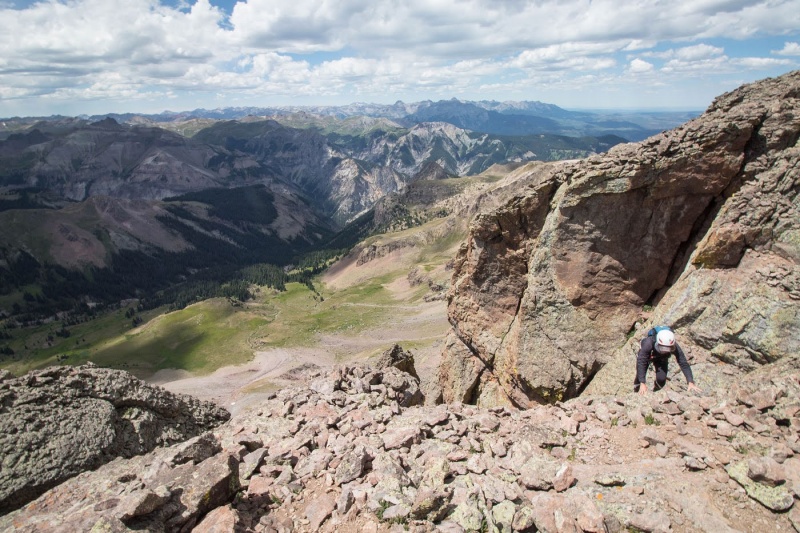
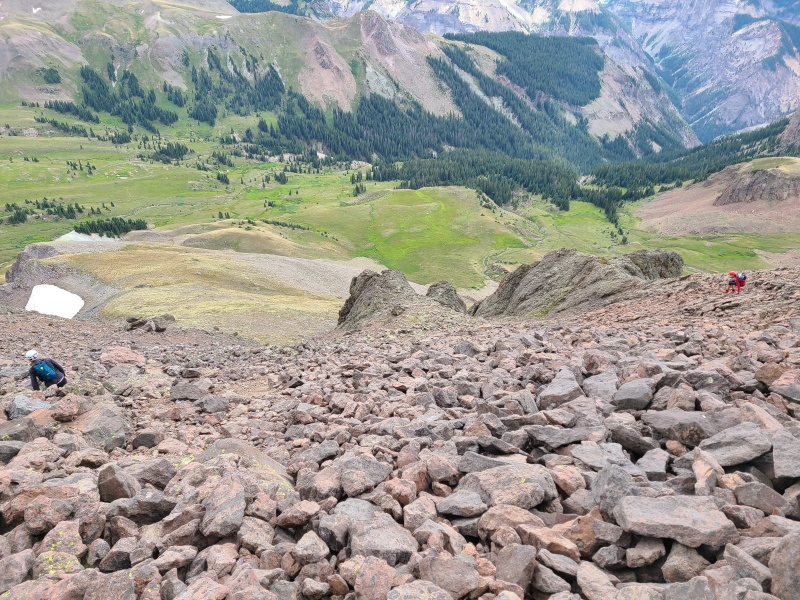
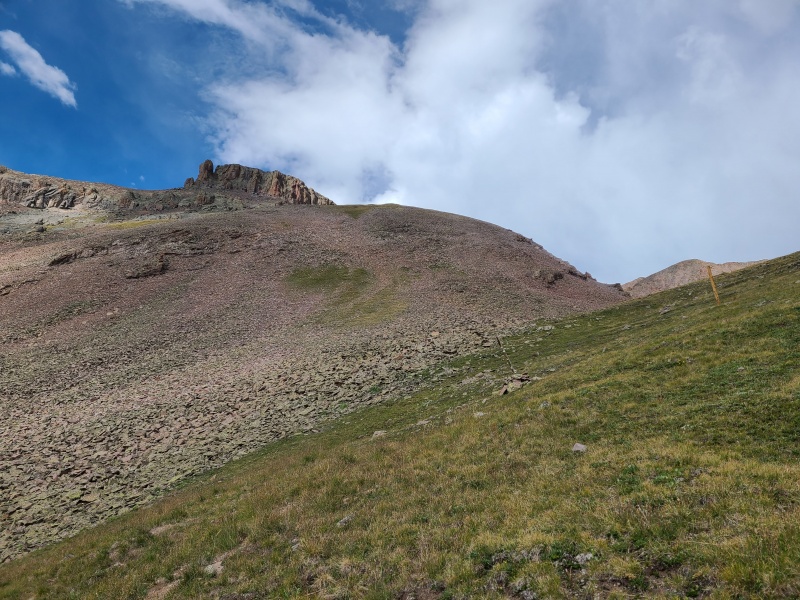
The tundra of the basin eventually gave way to loose and ever-steepening scree and talus. The rock appeared volcanic in origin but I couldn't be sure. We traversed below the lower cliffs and slowly made our way towards a short Class 3 dihedral directly below the start of the technical climbing. 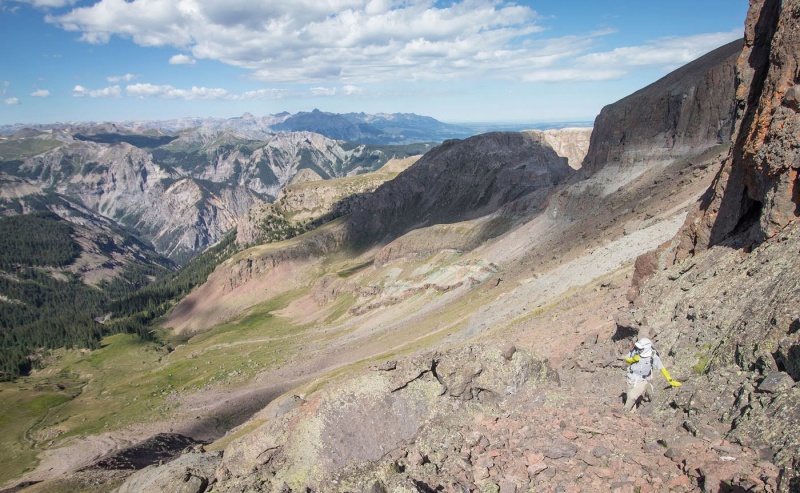
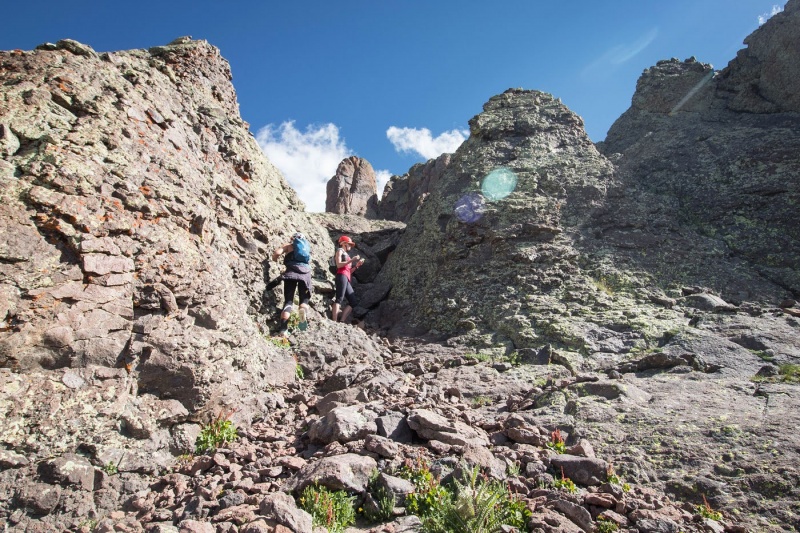
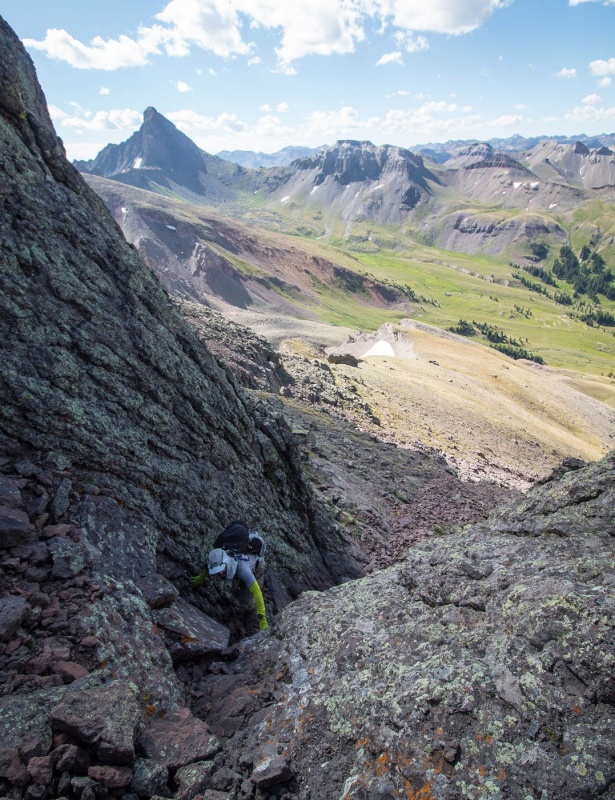
After about 20 feet of Class 3 we found ourselves on a large, steep talus field that leads to the base of the climb. 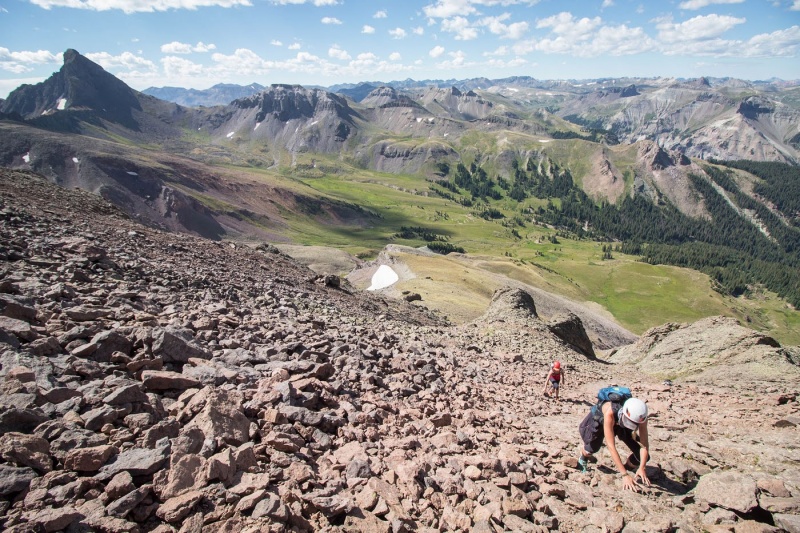
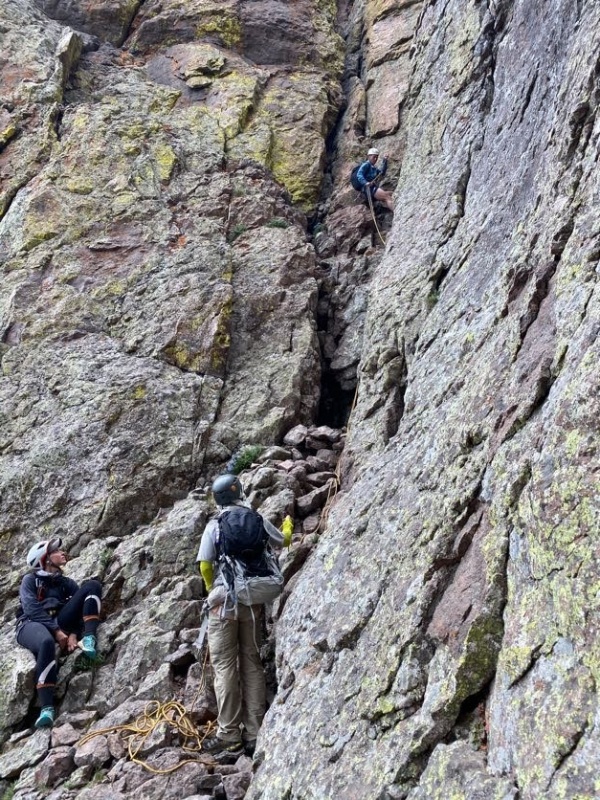
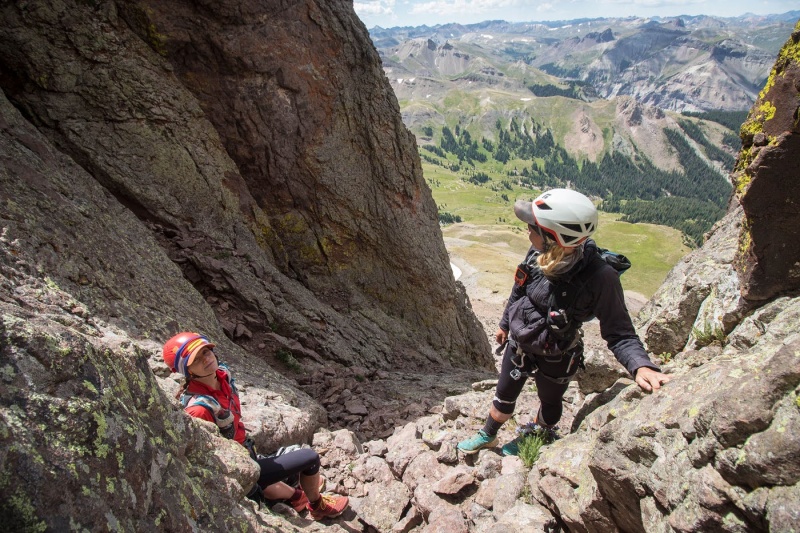
We could have avoided the scramble to climber's right but this was more direct. When we arrived at the base of the climb we got ready. I was going to lead everything but we had to figure out the order of climbers after me. Stav offered to belay, so he'd go last, with Whiley and Marisa making up the middle. I also spent some time figuring out the beginning moves of the climb, which were hardest right off the ground. 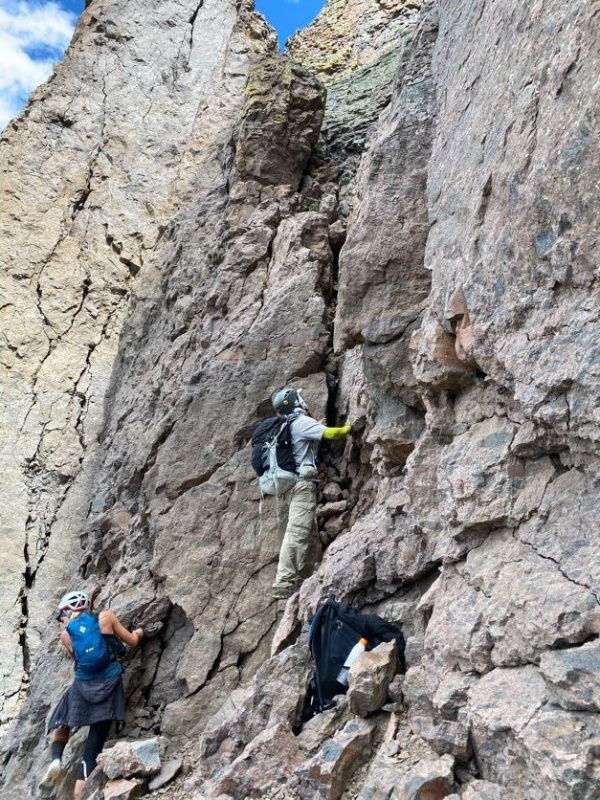
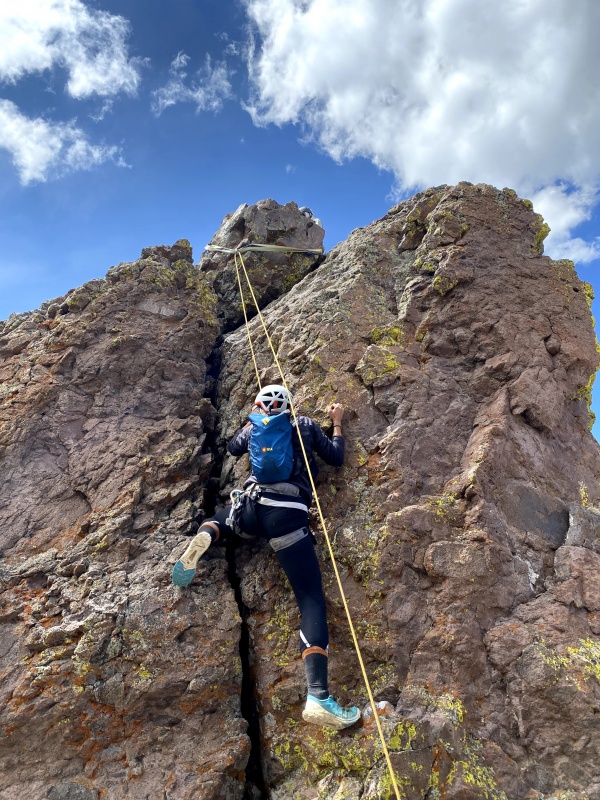
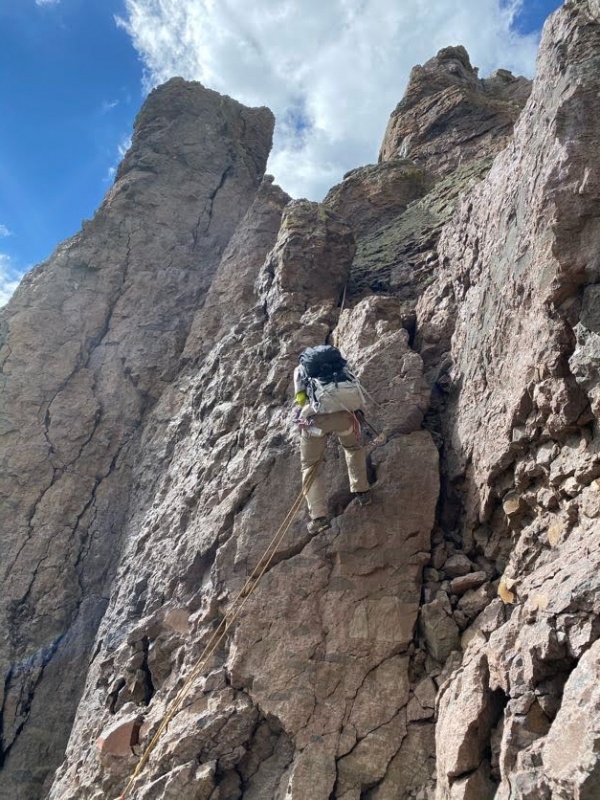
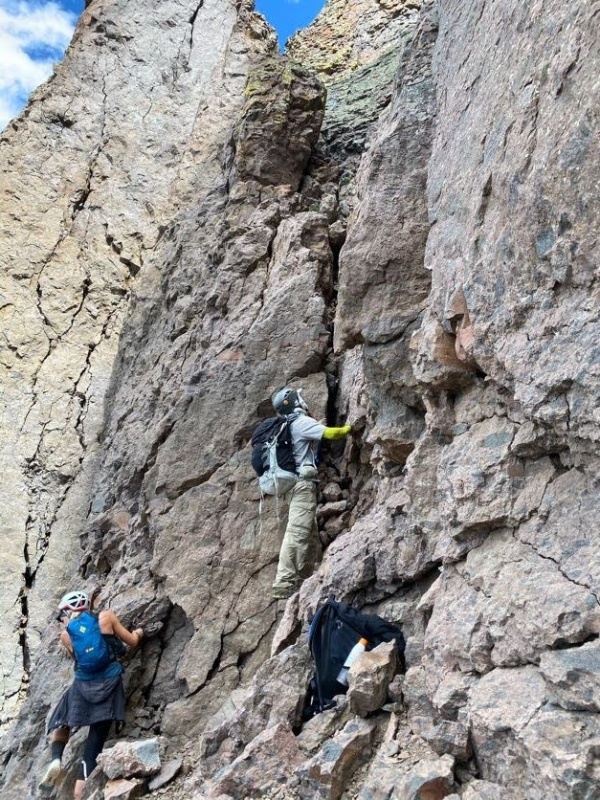
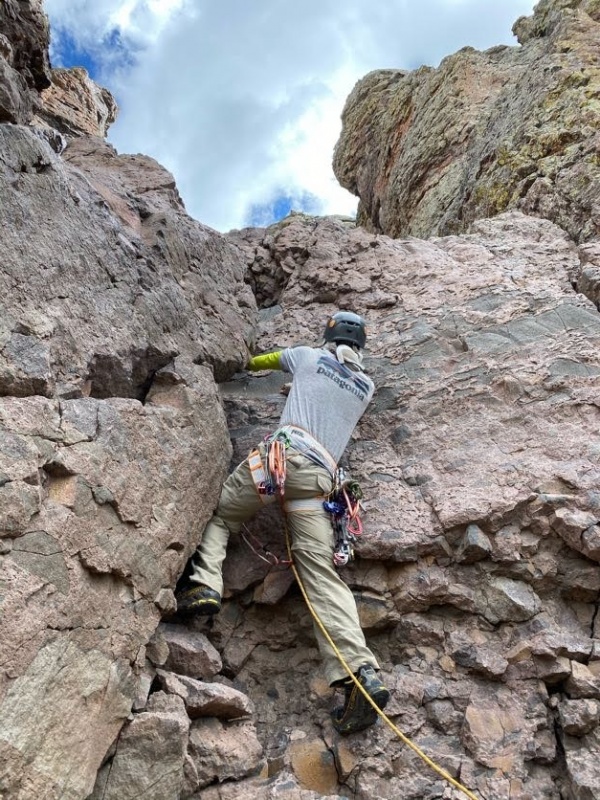
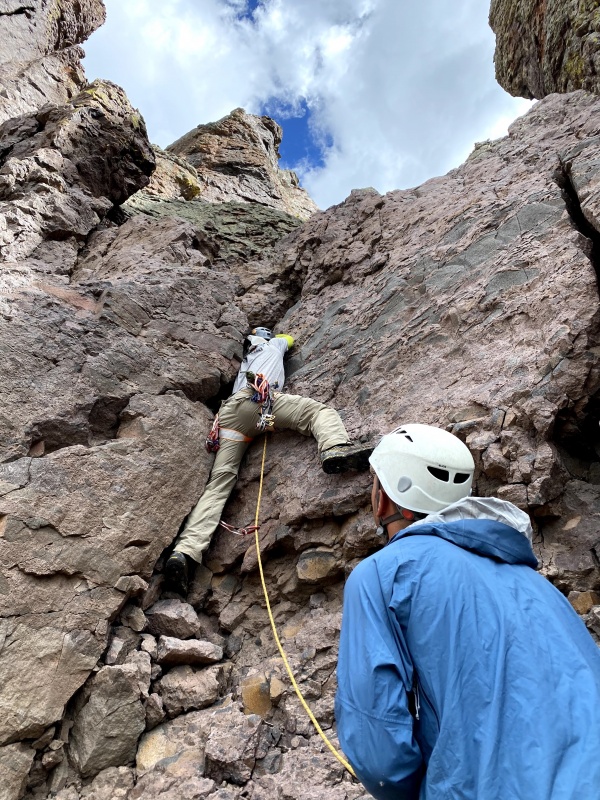
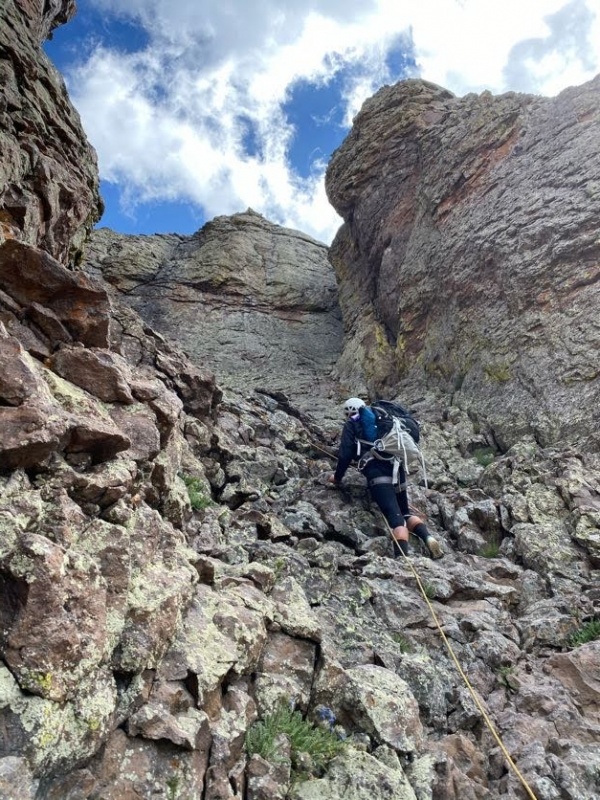
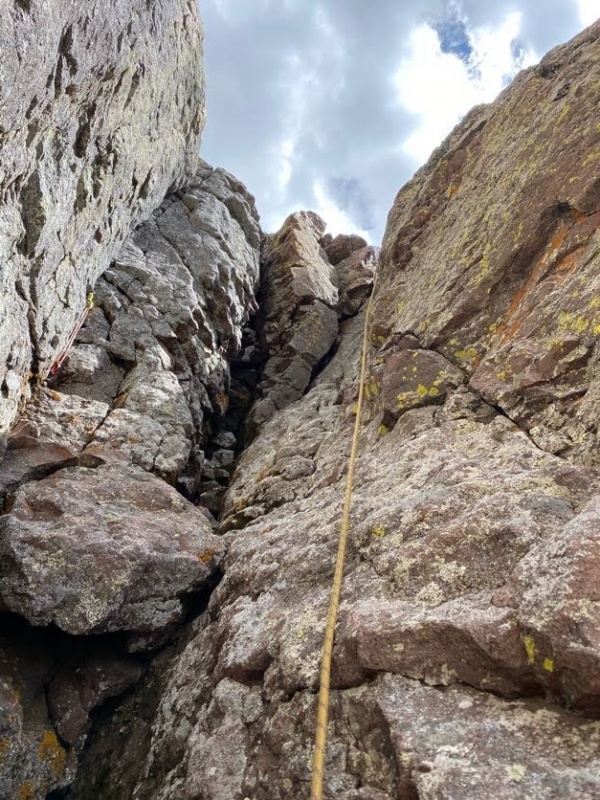
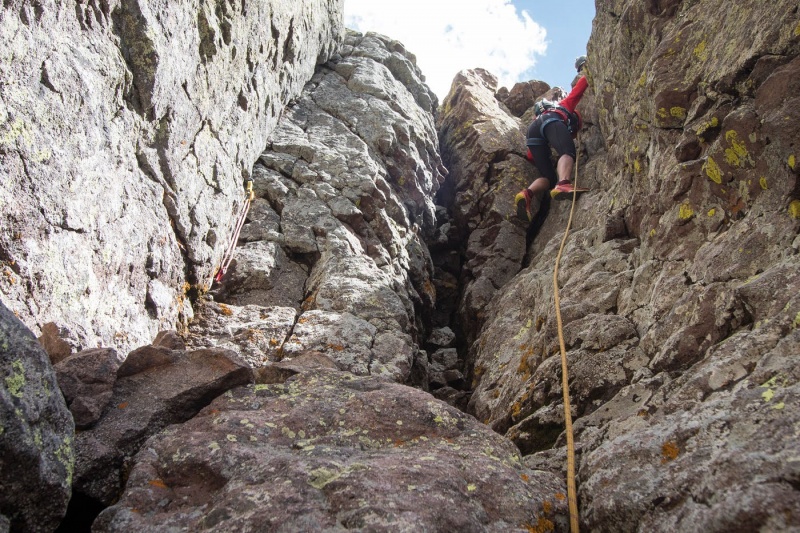
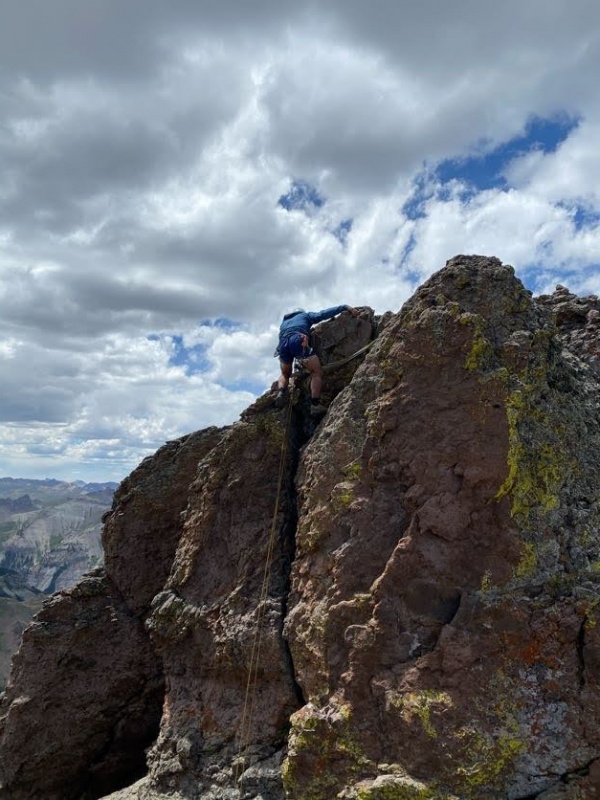
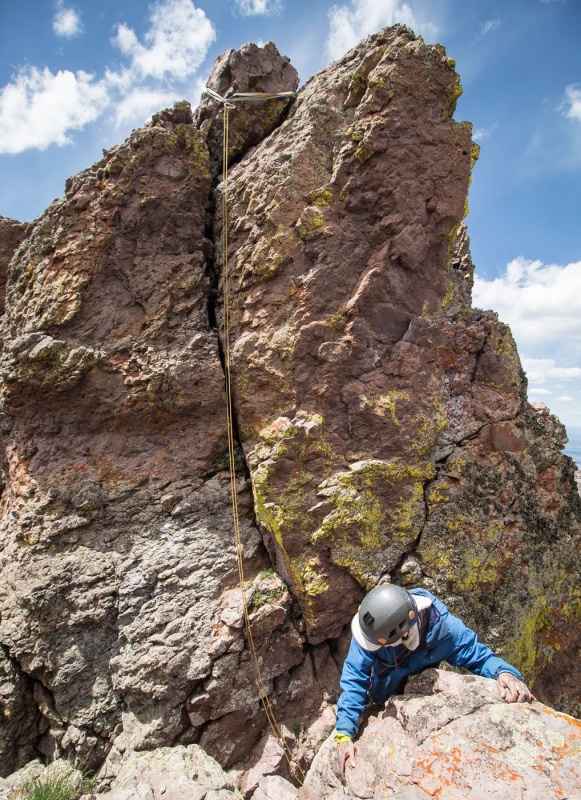
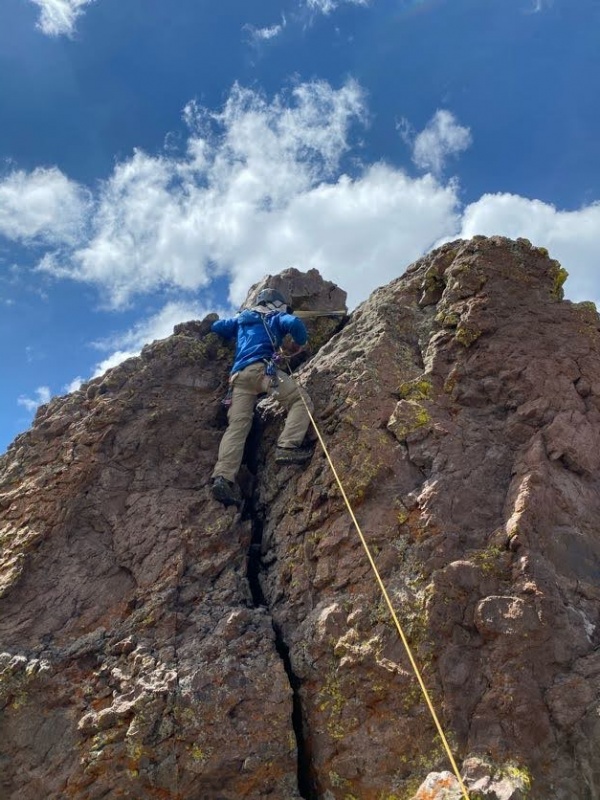
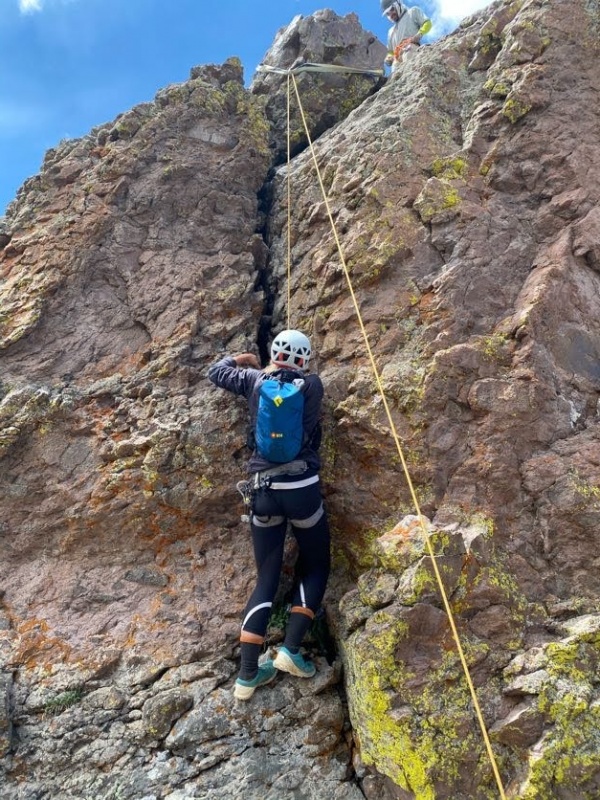
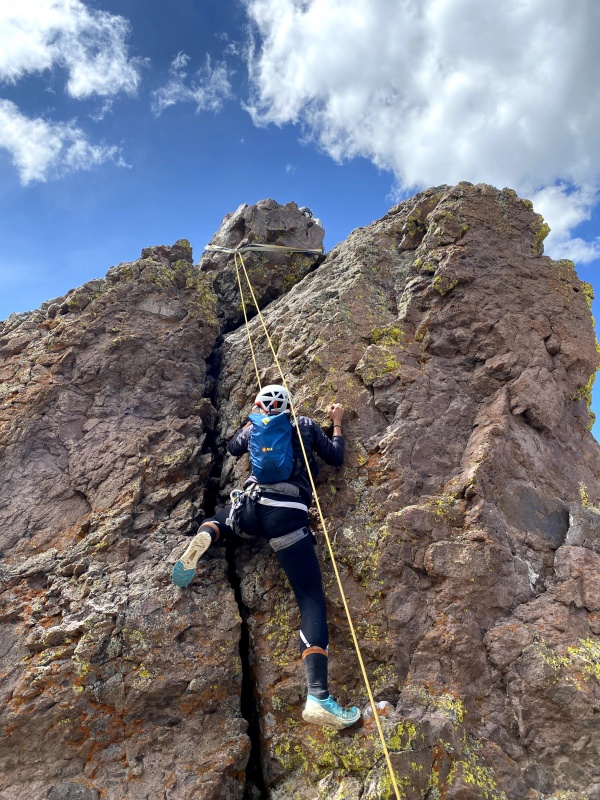
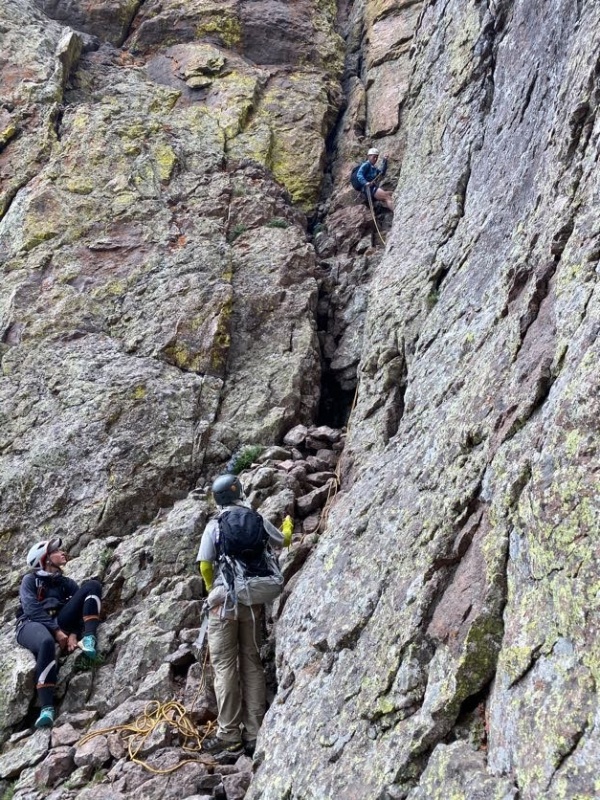
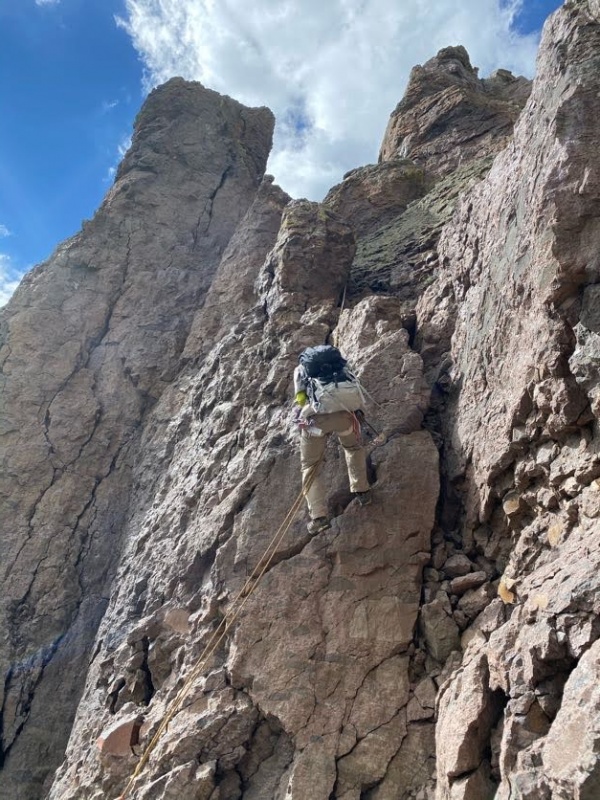
A detached flake was the key to getting up pitch one. The crack between it and the main wall was small enough that wearing a pack while trying to squeeze in just wouldn't work. I could barely get half my body into it even without a pack, so Whiley offered to carry it up. Stav and I tied into the ends of the rope, he put me on belay, we checked each other's setup, and off I went. A few moves of low to mid Class 5 involving awkward off-width climbing got me off the ground, where the crack was narrowest, and to a point where I could securely wedge enough of my body in to lower the difficulty. 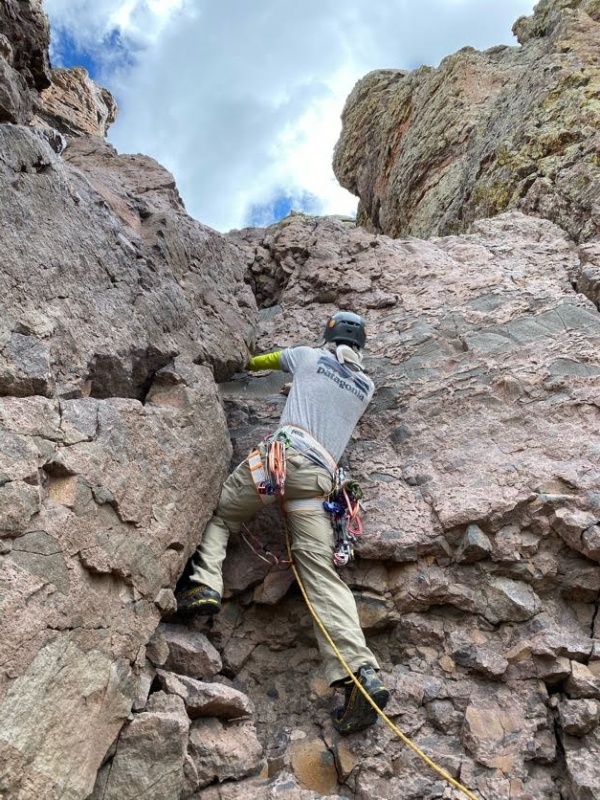
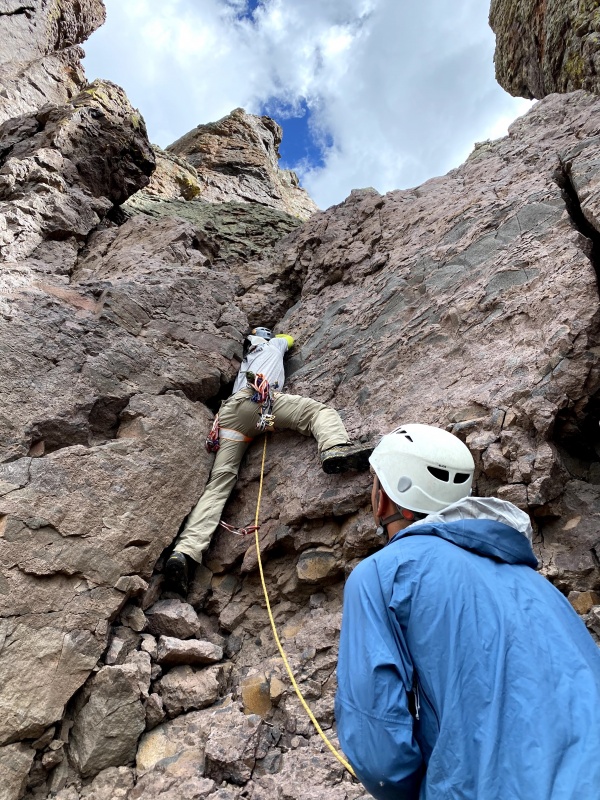
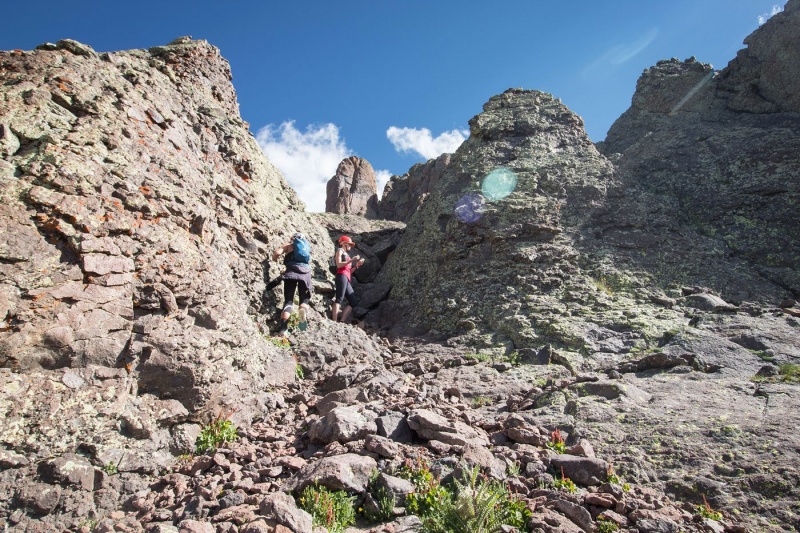
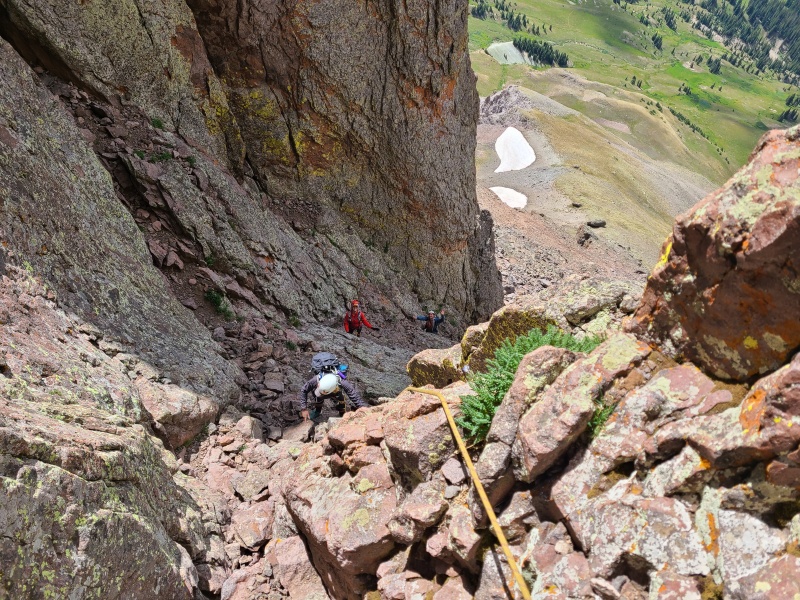
I wriggled up the crack and finished the short first pitch - about 20 feet worth of actual climbing - continuing onto pitch two, which consists of a series of ledges and slabs covered in loose rock. The climbing here isn't very difficult at Class 3, but one must take care with the loose rock all over the place, both for themselves and to not kick it onto the people below them. I placed one small nut on this pitch just in case, and continued up to the base of the Class 4 chimney that makes up the third pitch. In total the first two pitches combined were right around 30 meters. Secure anchorage was difficult, so I did my best, called off belay, and setup for top belaying, bringing up my three companions in simul-climbing fashion. 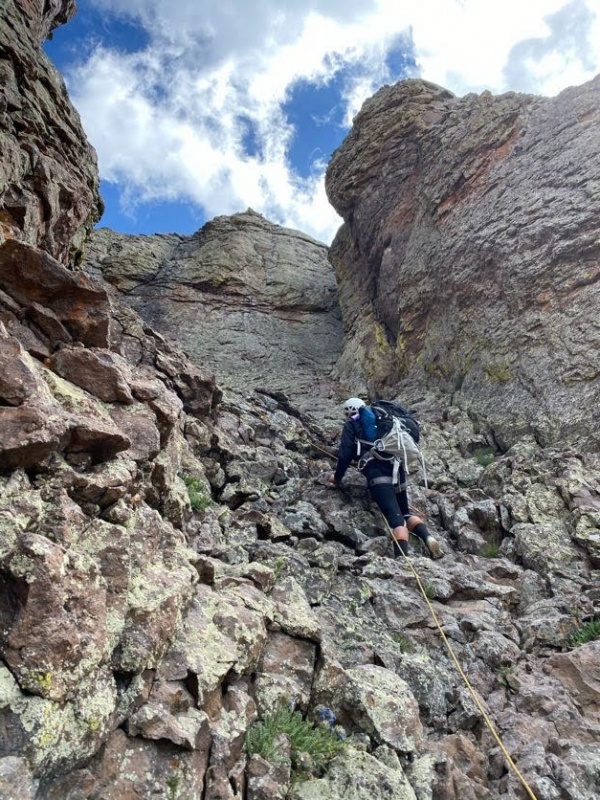
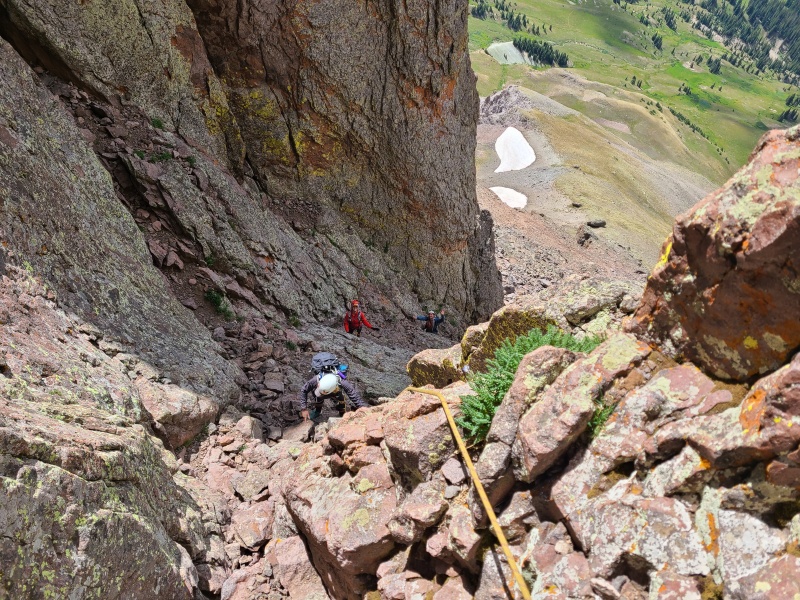
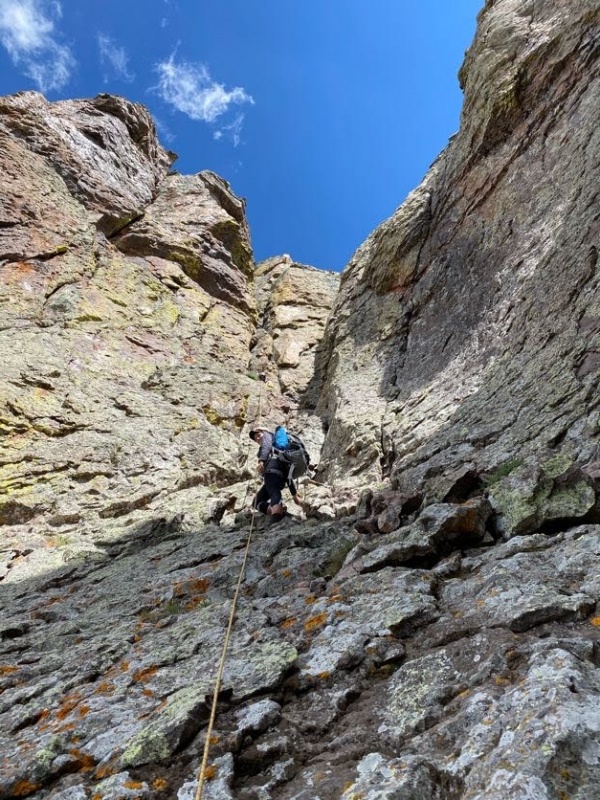
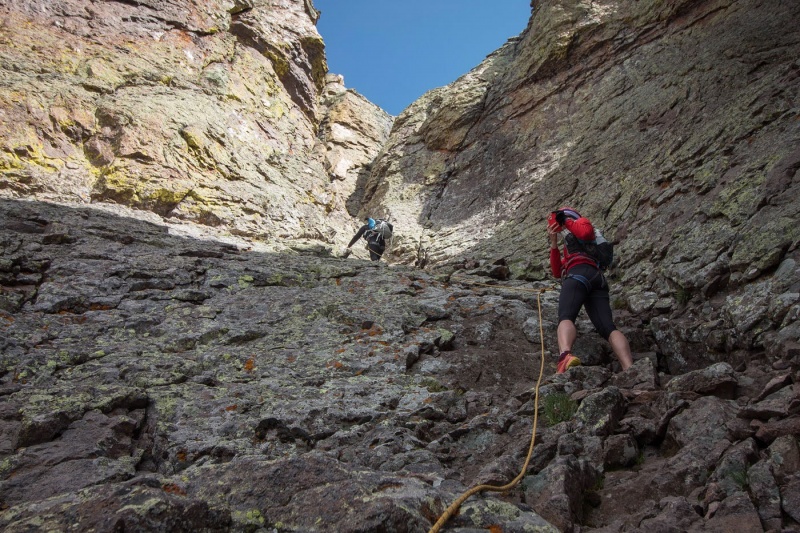
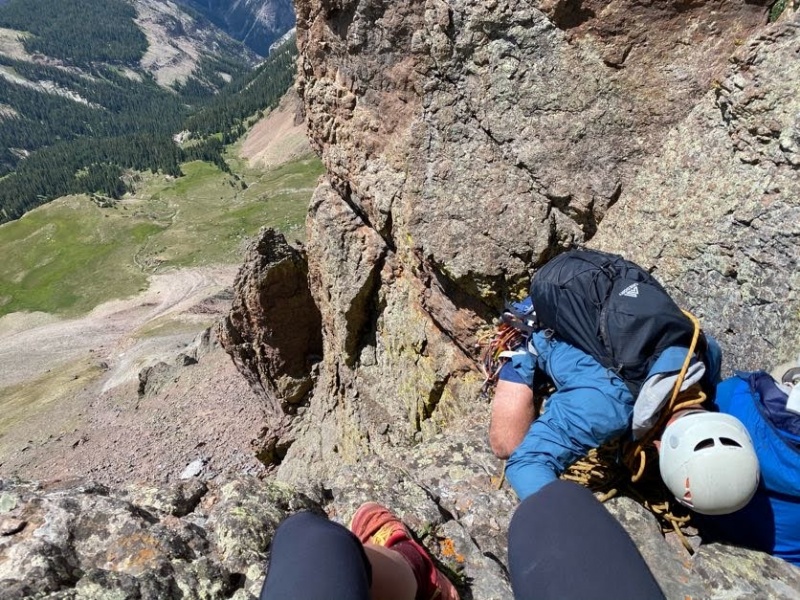
At the top of the second pitch Whiley and Marisa untied and hung out; the ledges there, while not exactly safe, are large and secure enough to sit and ponder life's many questions while waiting for your turn to climb. 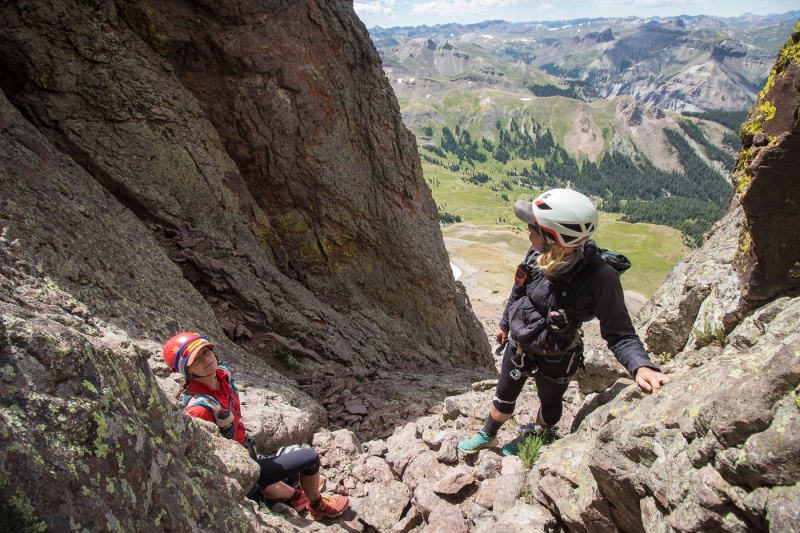
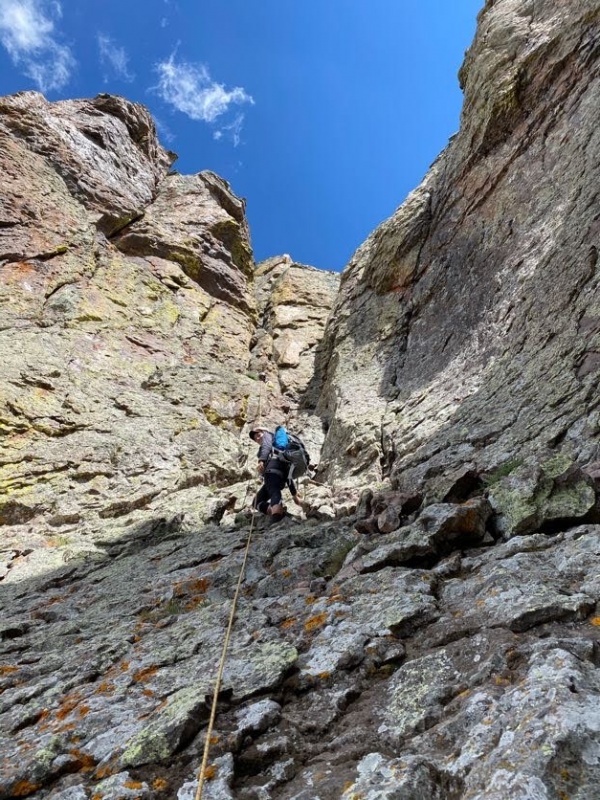
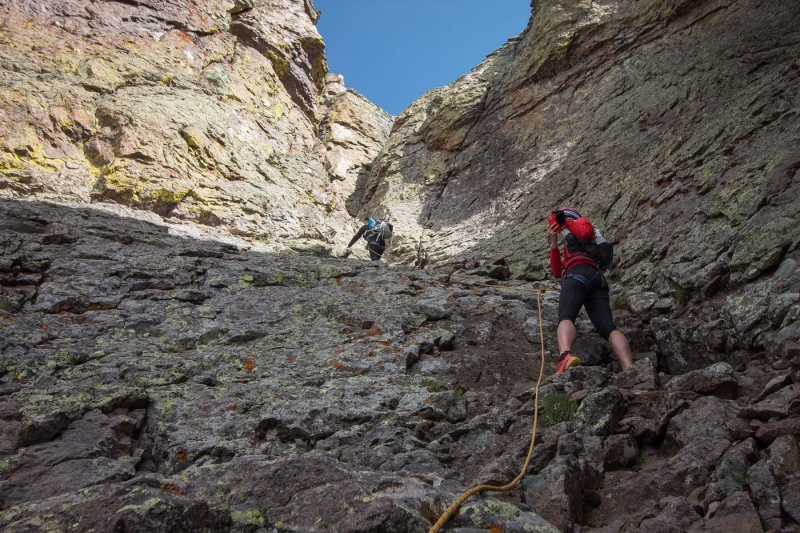
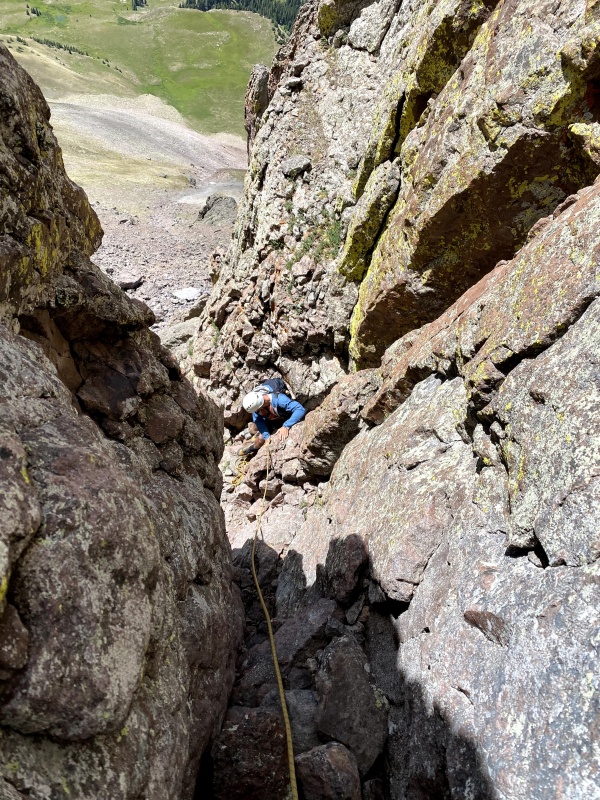
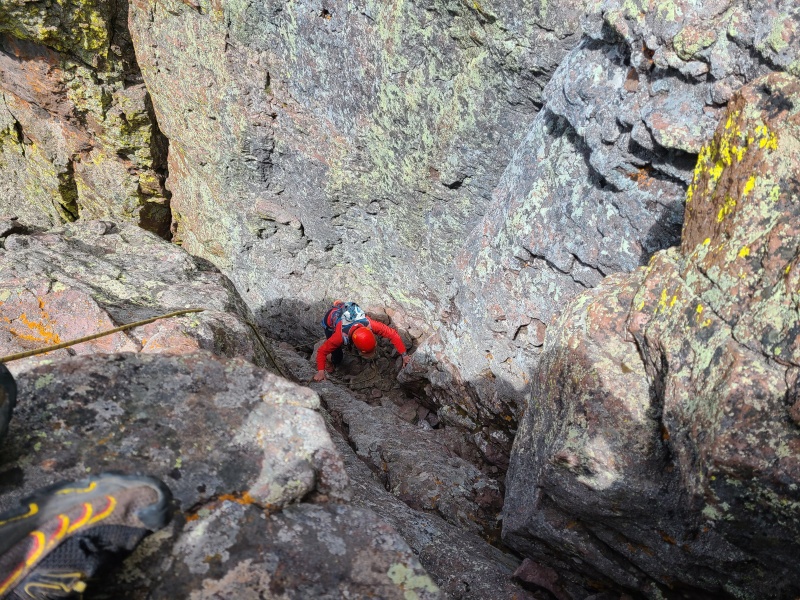
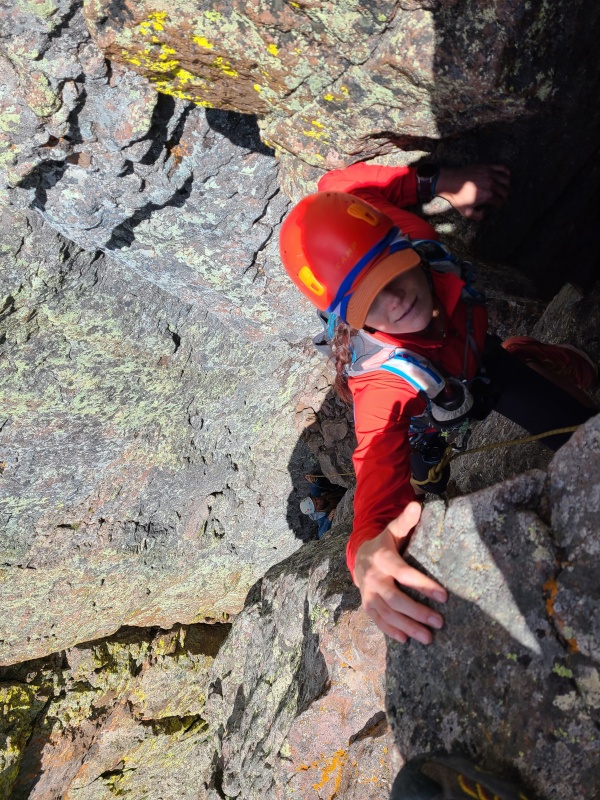
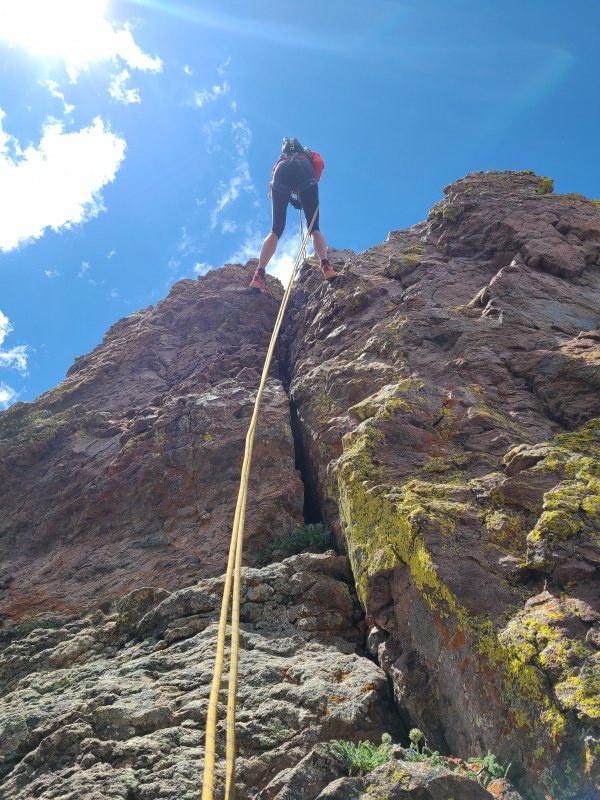
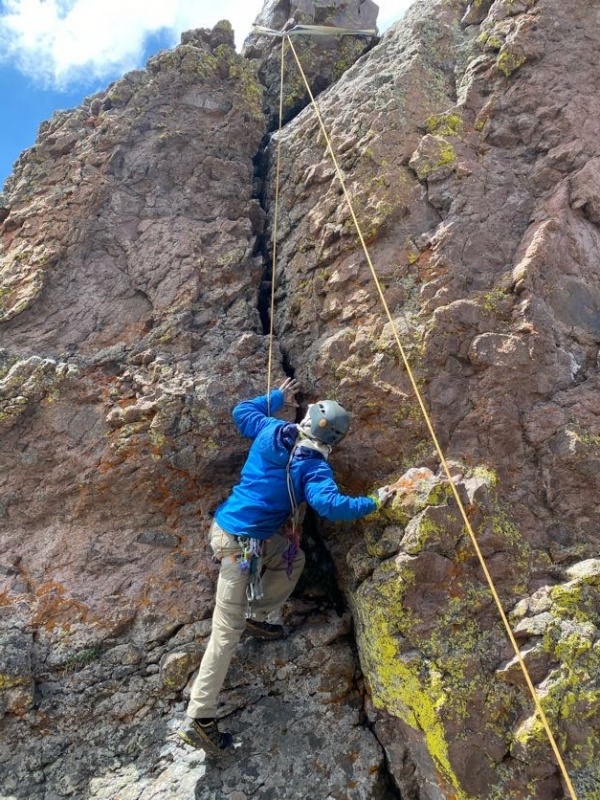
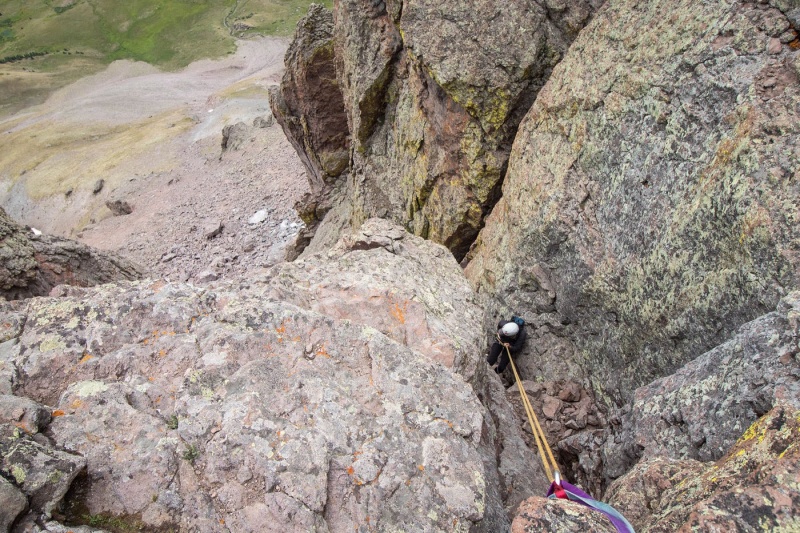
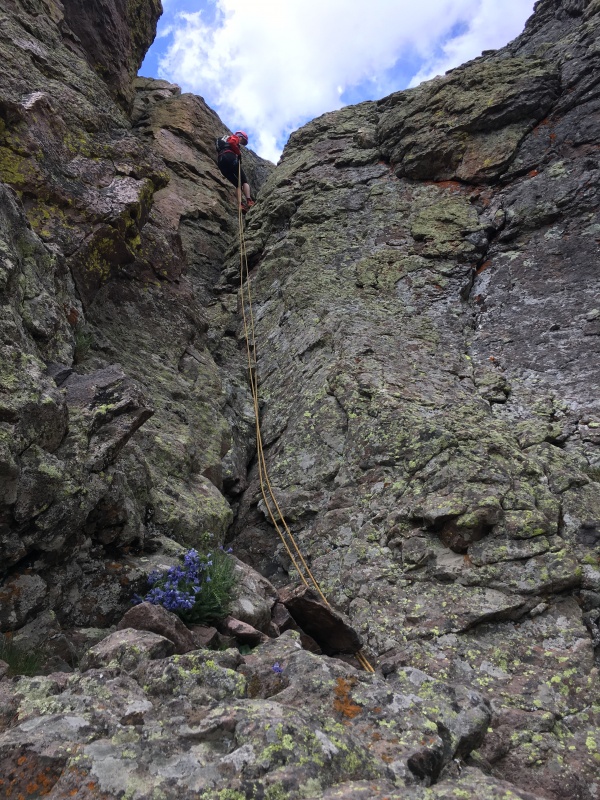
I used the anchor as my first and only piece (really several pieces, but equalized into one) and climbed the chimney, not using any additional protection. It was easy to wedge securely into it and despite its Class 4 rating felt quite easy, easier than the first pitch in any case. I also thought it was the most enjoyable pitch of the whole climb, as the rock was solid, colorful, and with holds aplenty. When I got to the top I used the rappel anchor as my belay anchor, as there was even less in the way of gear placements there. 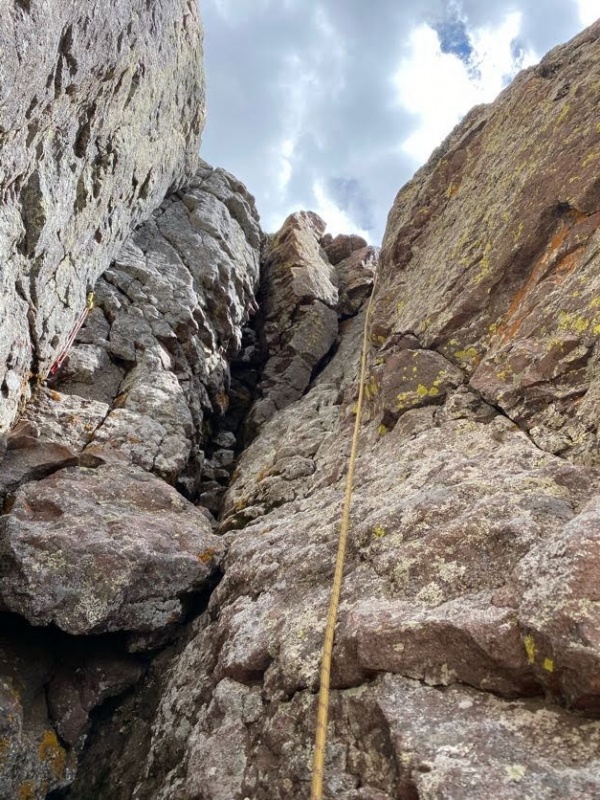
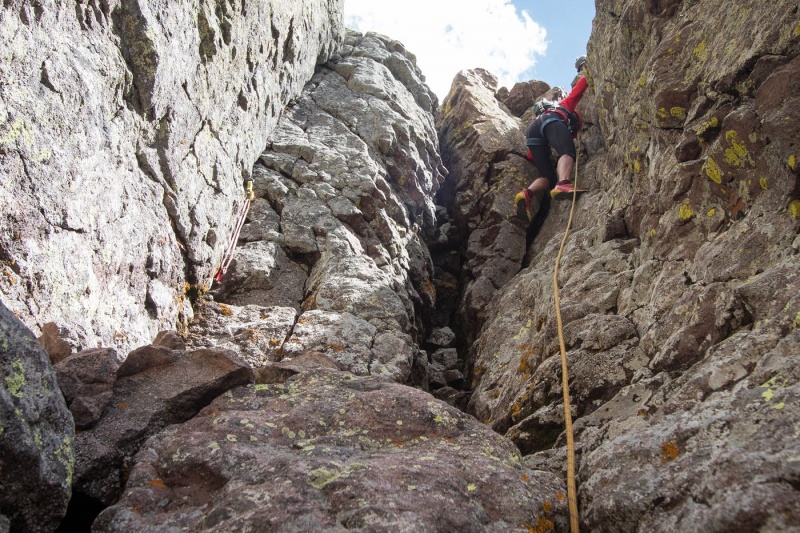
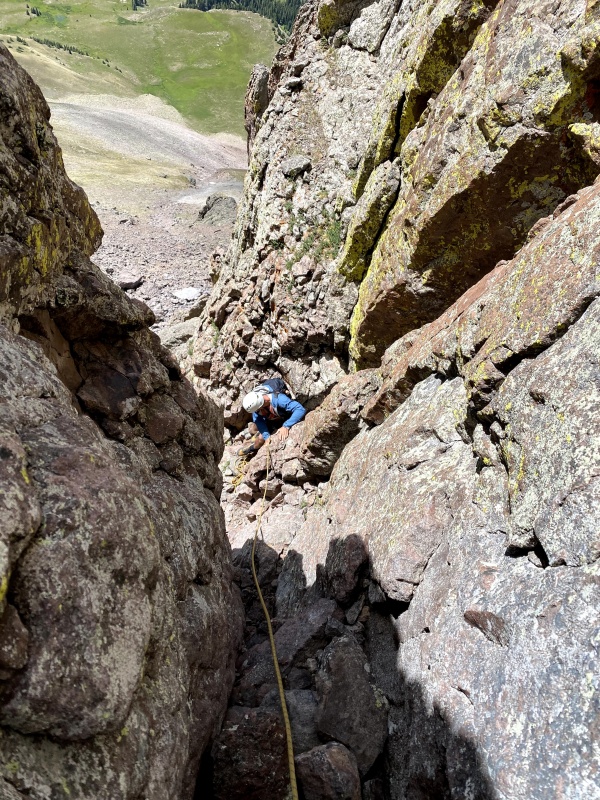
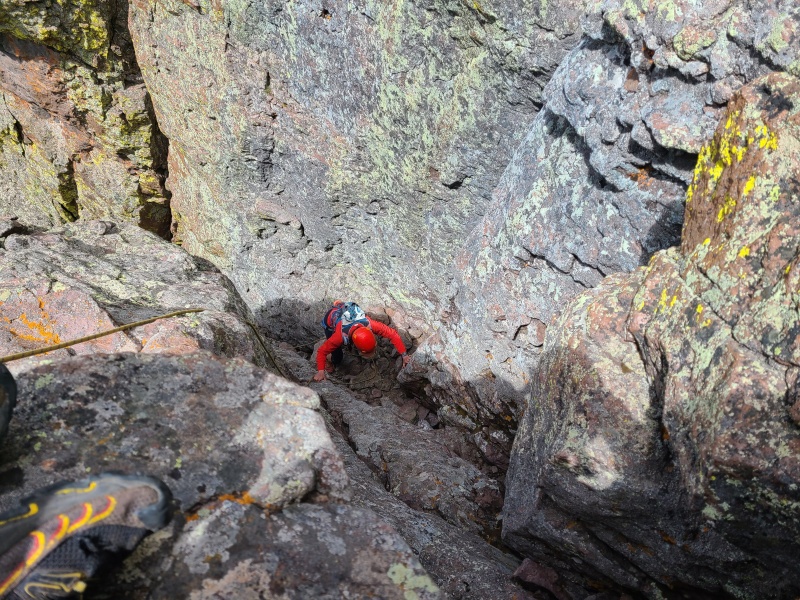
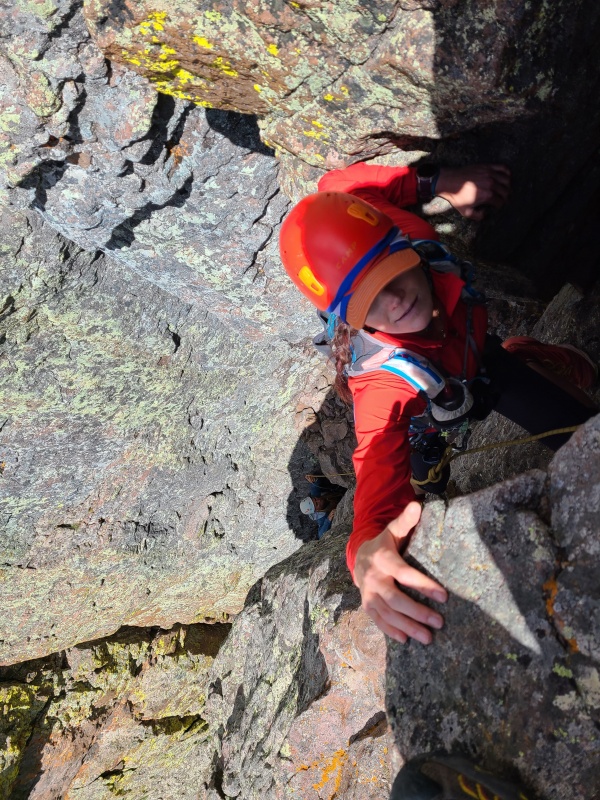
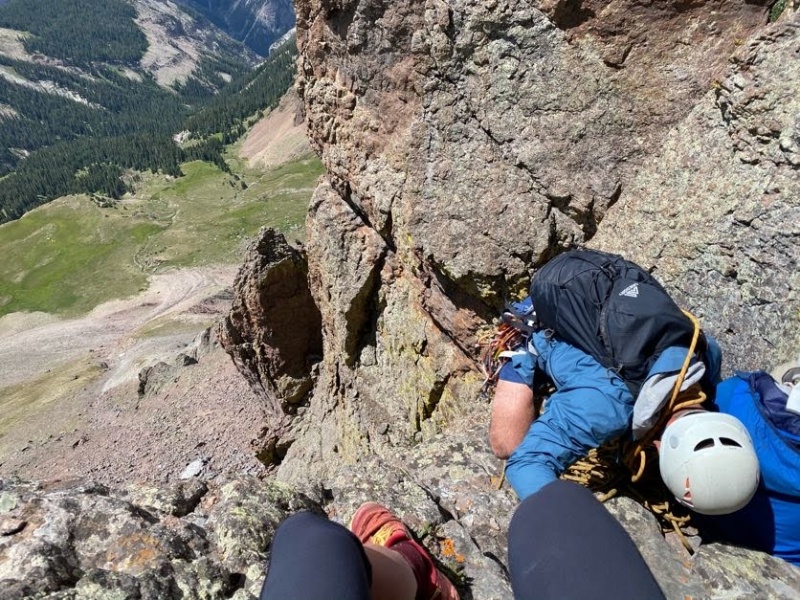
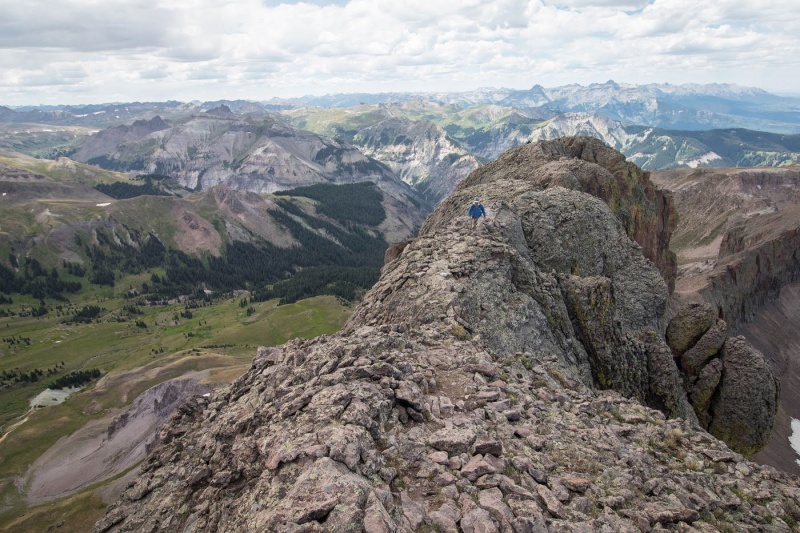
As each person reached the top they unclipped/untied from the rope and made the final, short scramble to the top of the comb. This consisted of something like 30 feet of Class 2+ scrambling on loose talus, so once again care needed to be taken. A rope wouldn't have done any good here anyway. 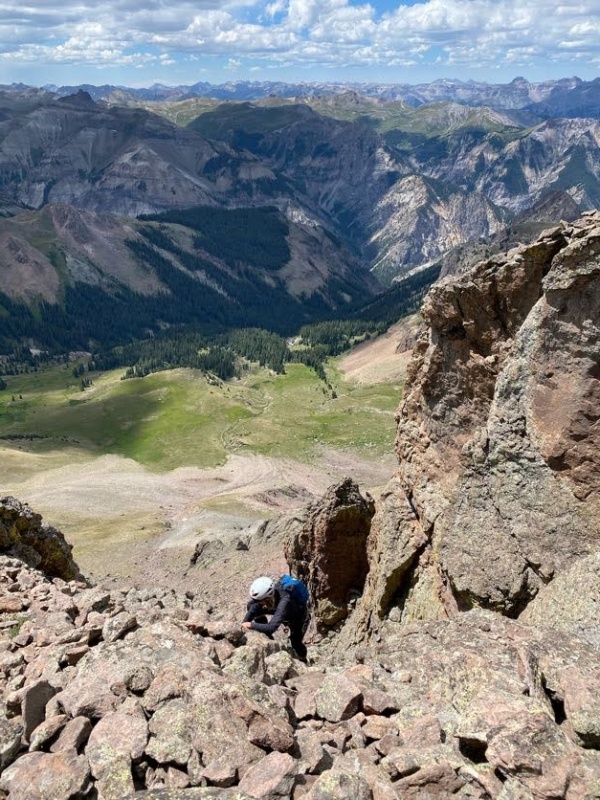
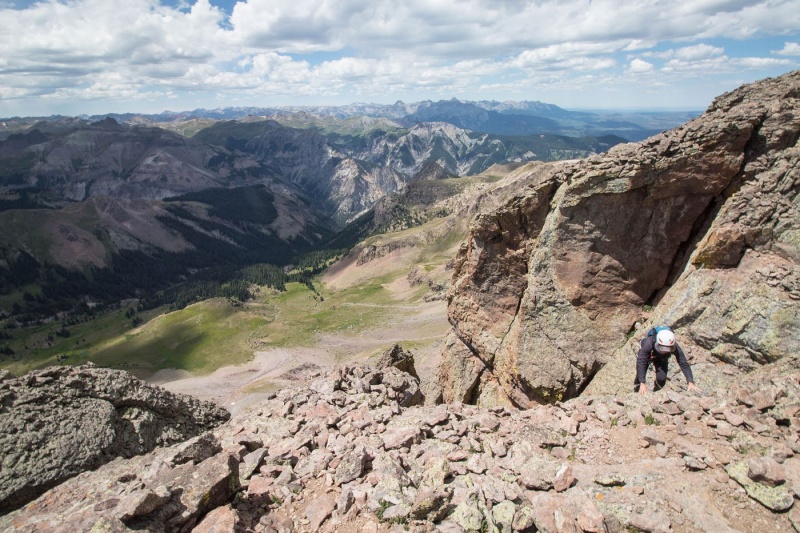
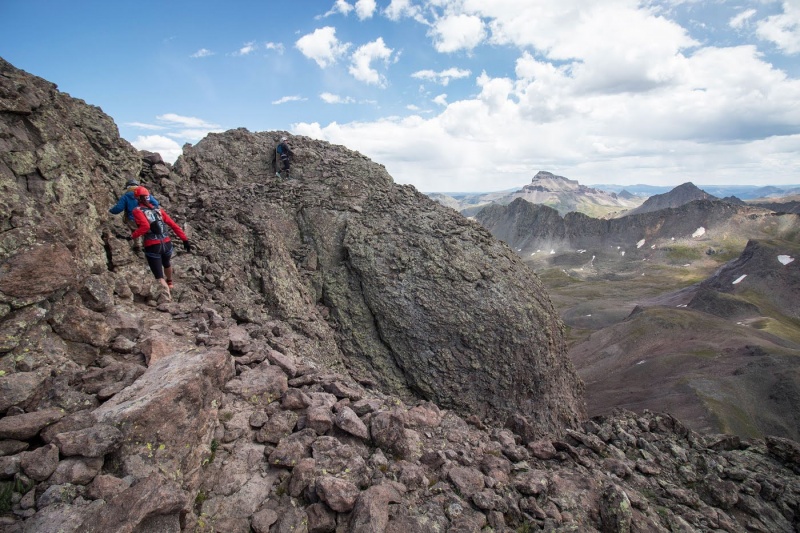
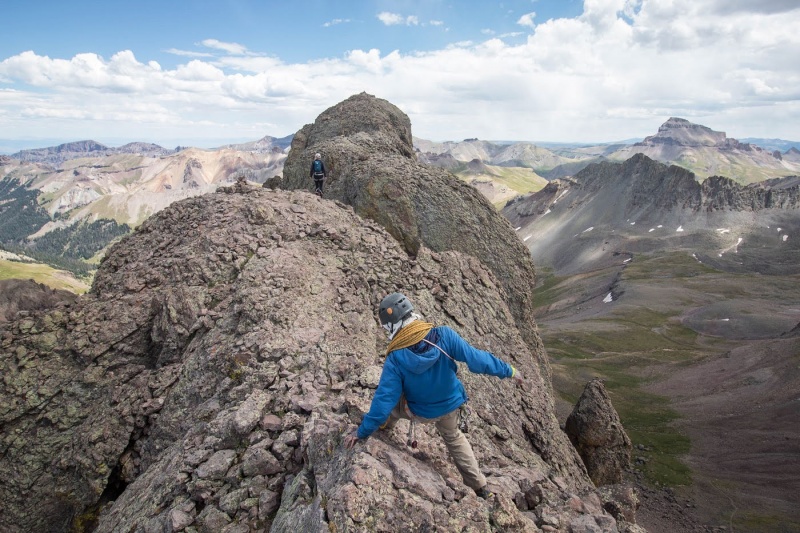
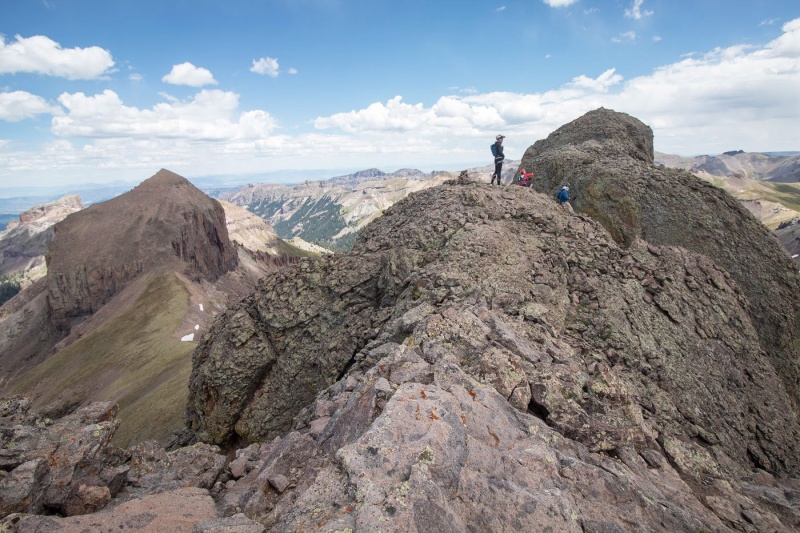
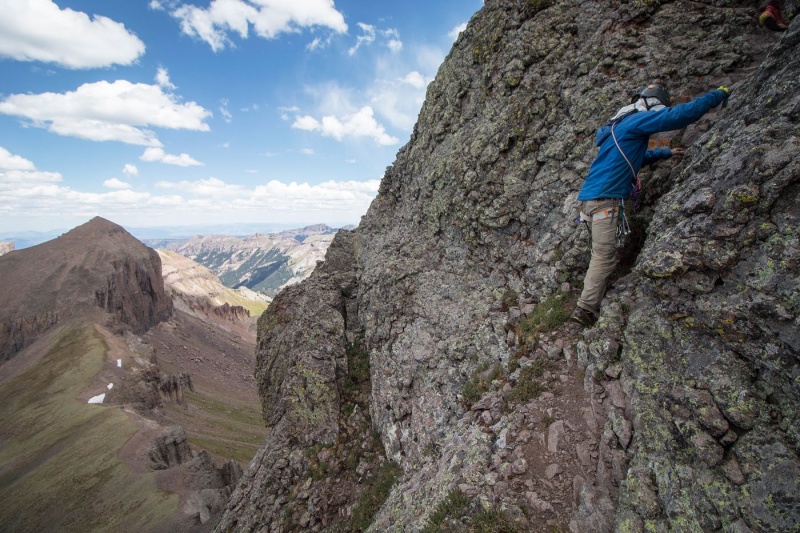
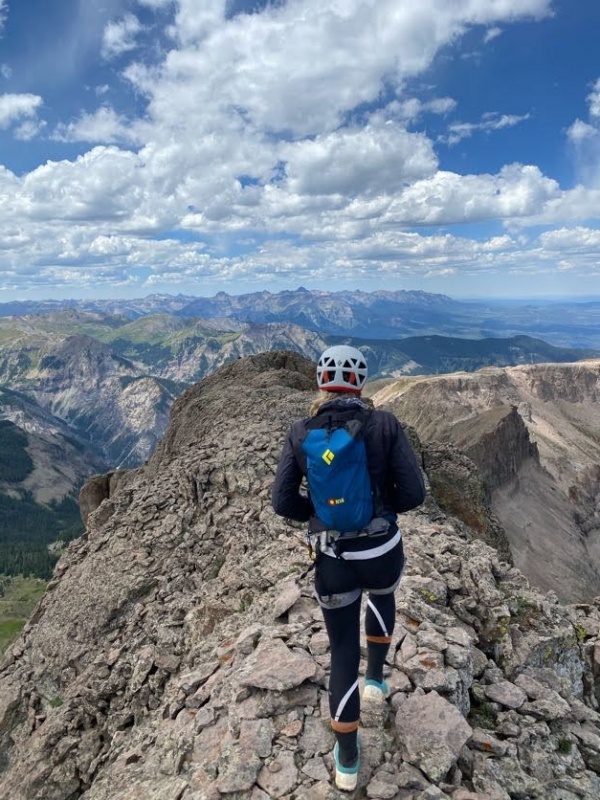
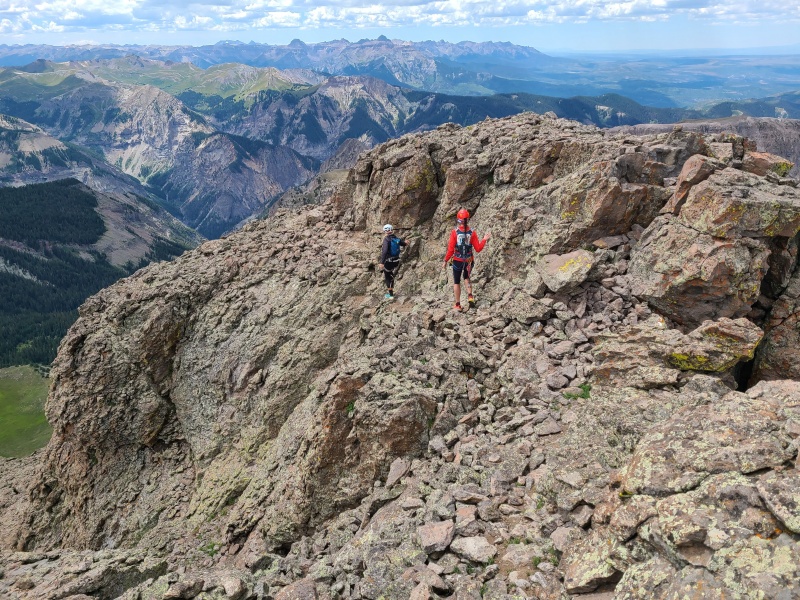
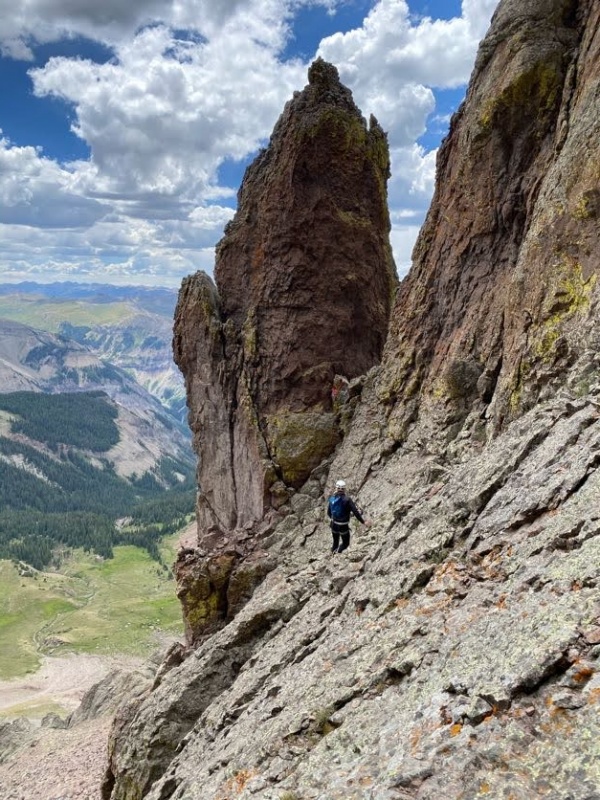
From the top of the comb there's a series of exposed ledges to be traversed en route to a large notch. The ledges are exposed but easy at Class 2. Still, it's best to hold onto the adjacent wall just in case. 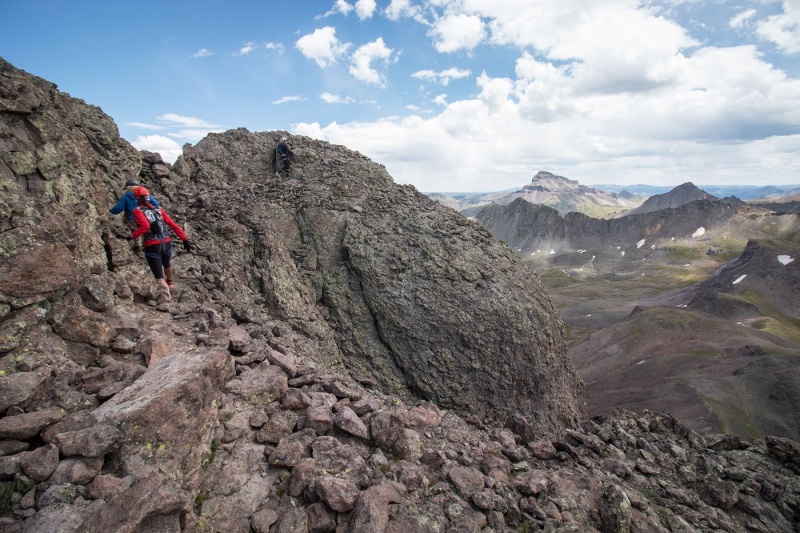
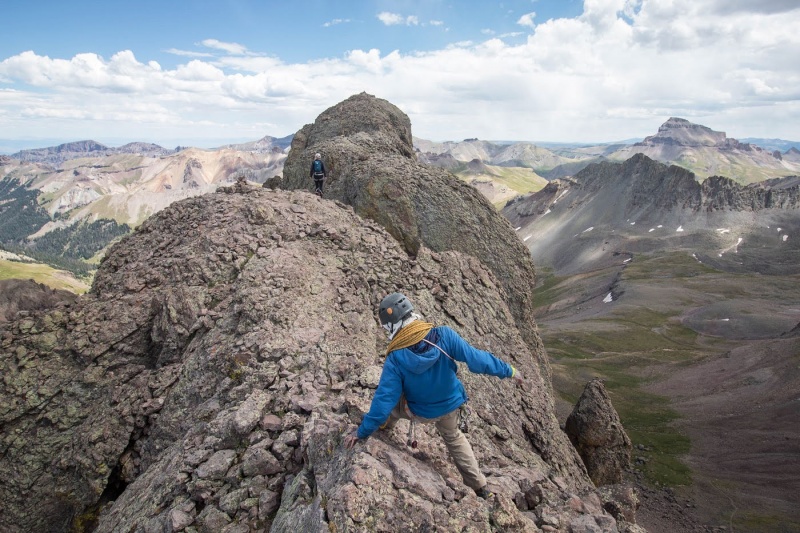
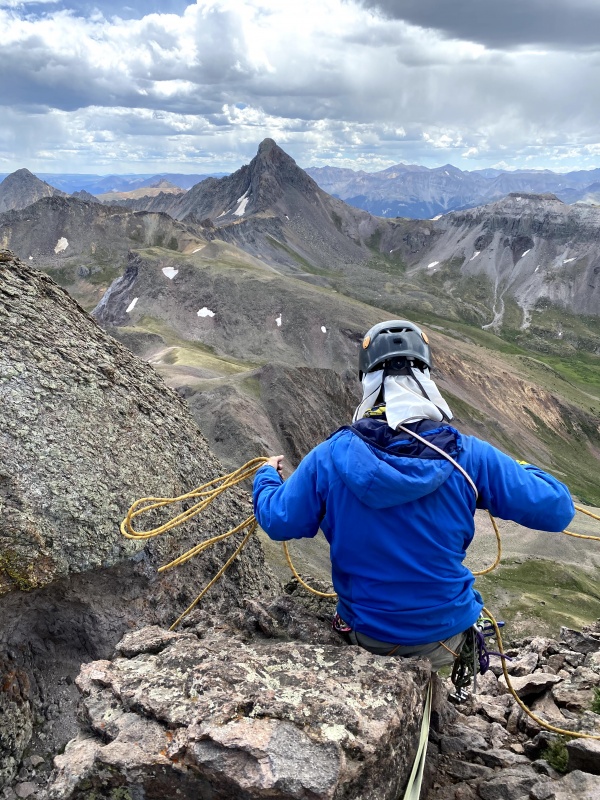
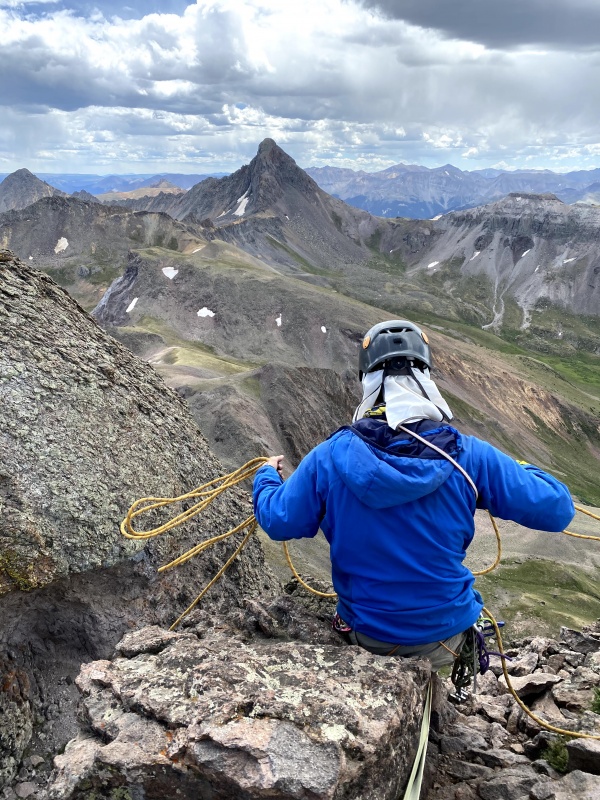
The notch is the final major obstacle on Coxcomb. At minimum there's a short rappel into it, then a Class 3 scramble to the summit. If reversing the ascent route one must also climb back out of the notch. The rappel anchor was in good shape so I set up for the rappel and went first to provide assistance from inside the notch. The rappel here is a bit more difficult than usual, since the anchor is actually slightly below a comfortable standing or even kneeling position, and also faces away from the climber, so to weight the rope safely one hand is needed on the brake strand(s) and one is needed to carefully down climb and get into position. It's probably 30 feet into the notch from there. 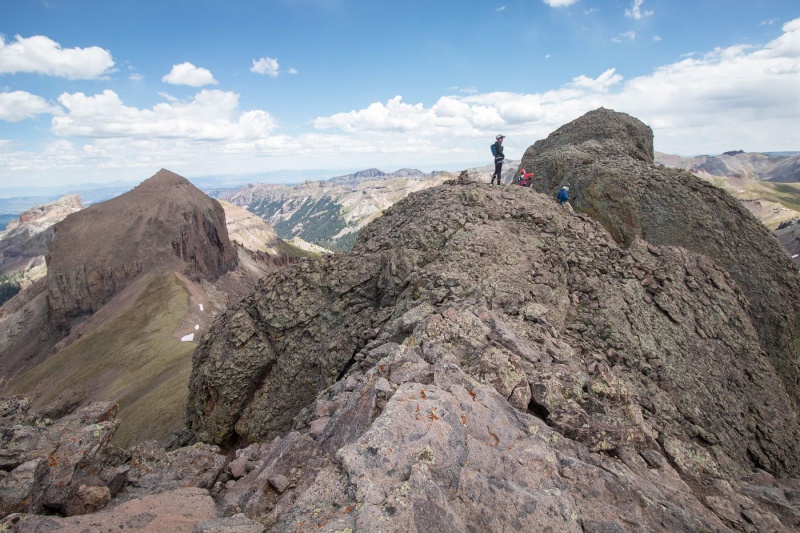
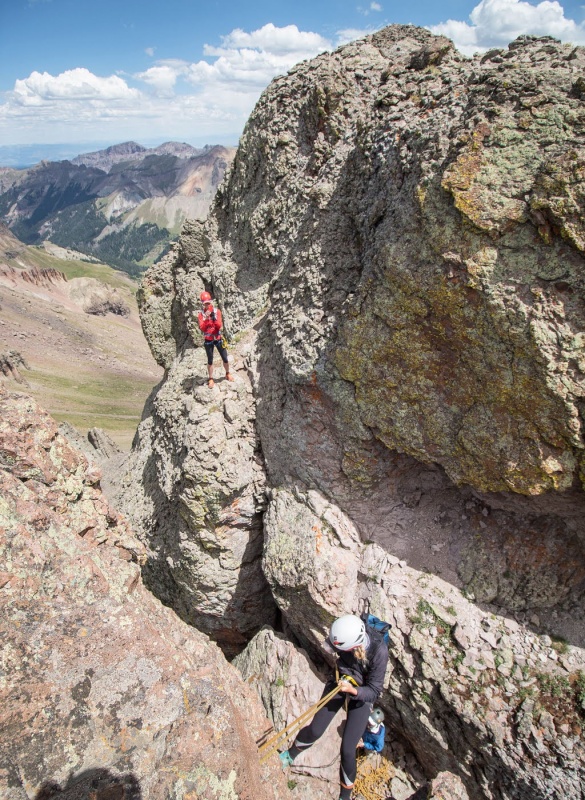
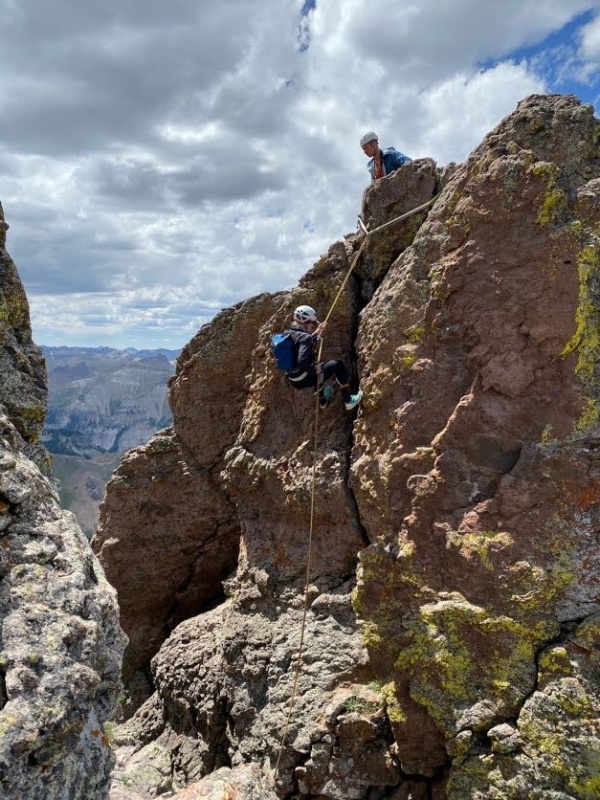
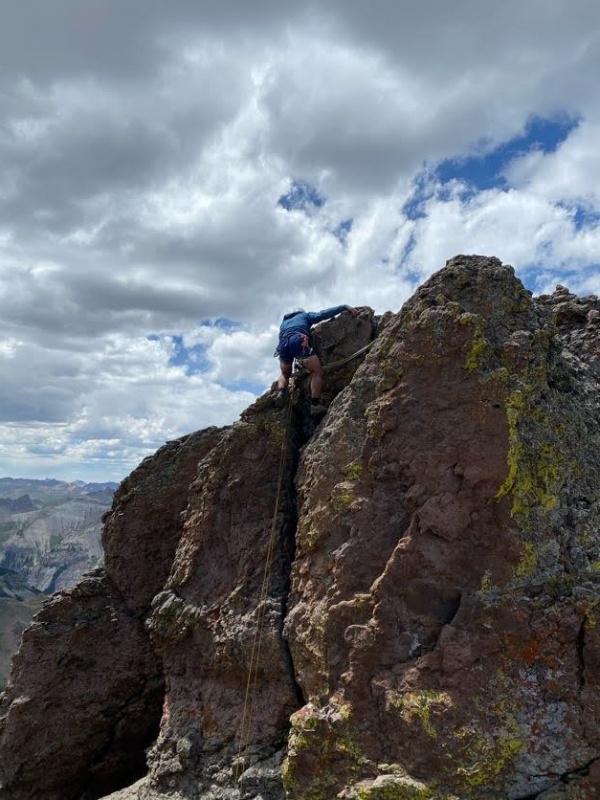
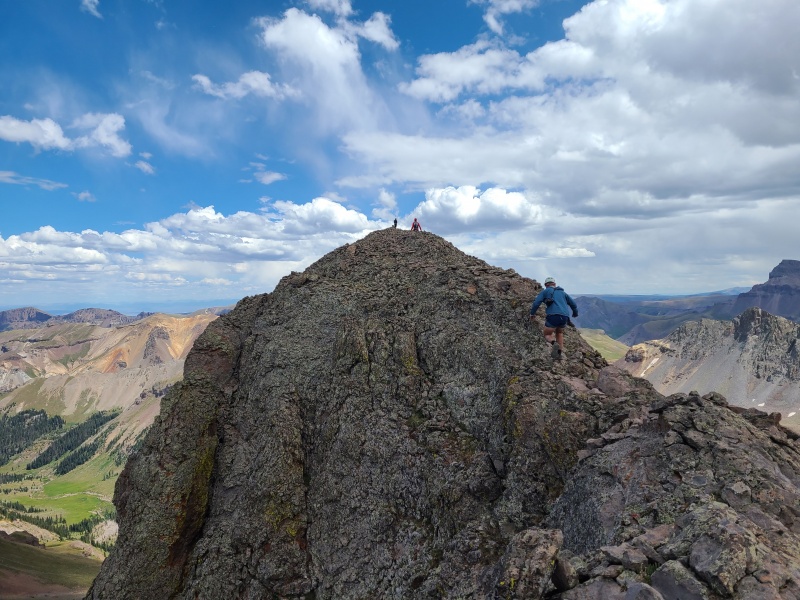
We left the rope hanging at the rappel (there were no parties behind us) and made a short, awkward, and exposed Class 3 scramble up voluminously knobbed rock and onto the final catwalk to the summit. 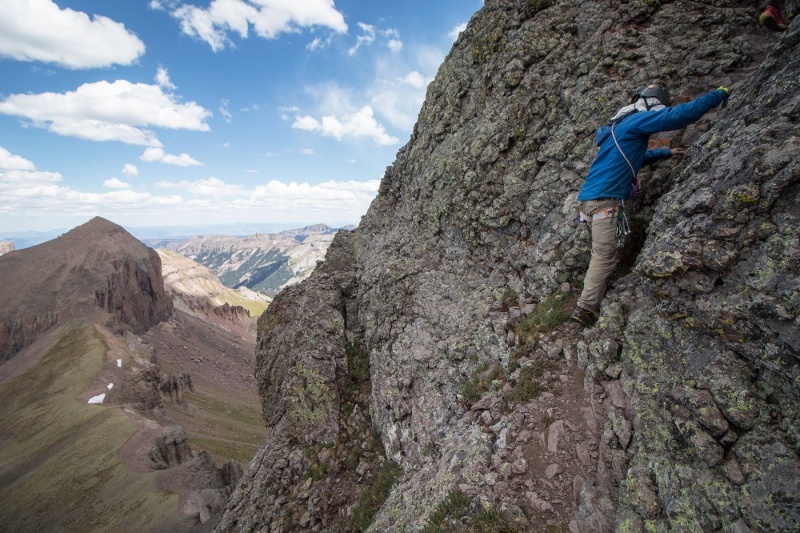
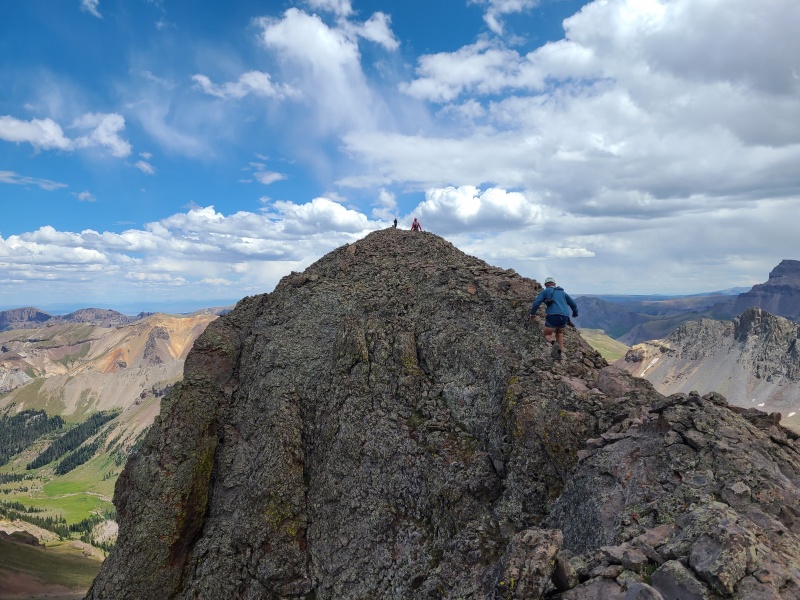
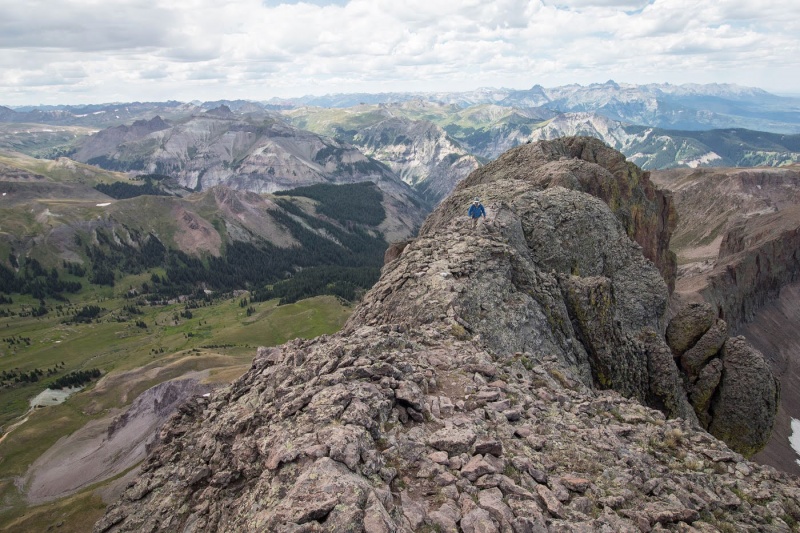
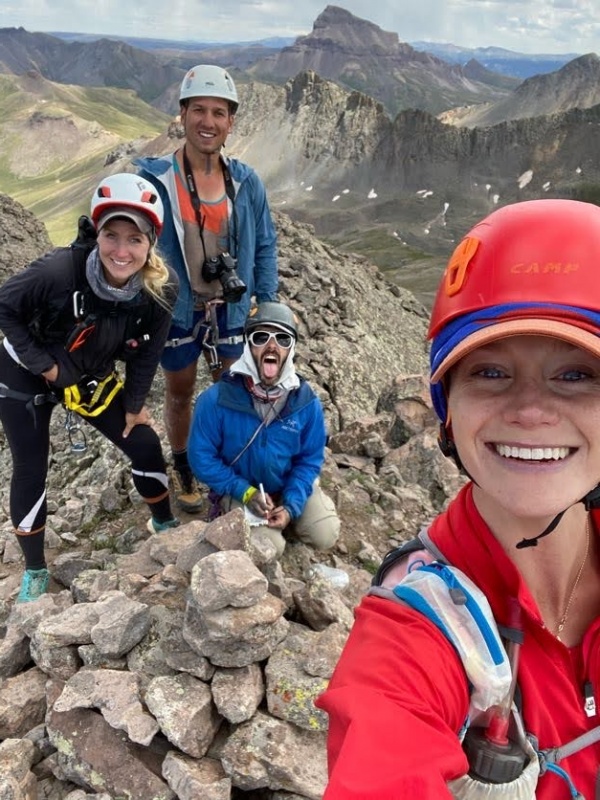
Five hours after leaving the trailhead, we all reached the summit of Coxcomb Peak! Hey, with four people that's only one and a quarter hours per person to summit. Yes, that is $110% how that math works. 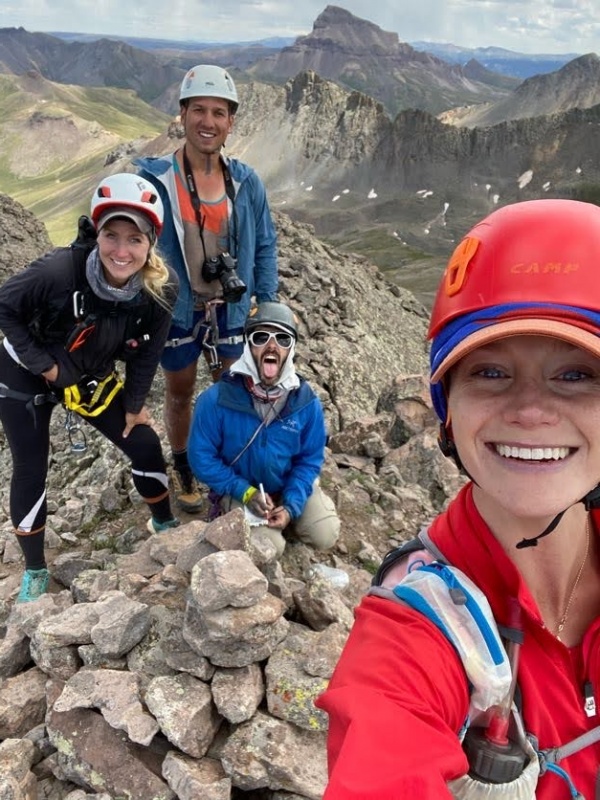
We hungout on the summit for a few minutes and then beat feet back to the notch. Afternoon storms were predicted and this was not a good place to be in case of rain and/or lightning. 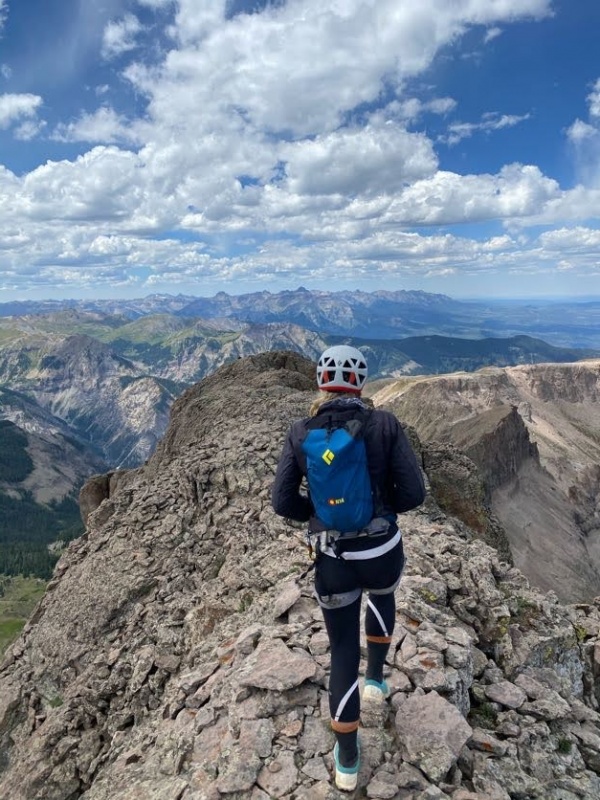
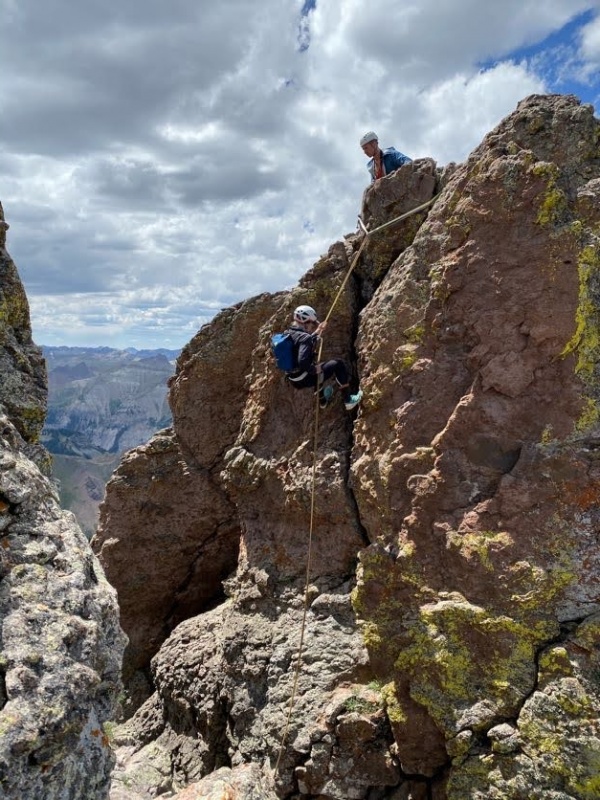
We scrambled back into the notch and I setup to climb out on top rope. No reason to pull the rope and lead this pitch when it's already setup, and this would be much quicker. 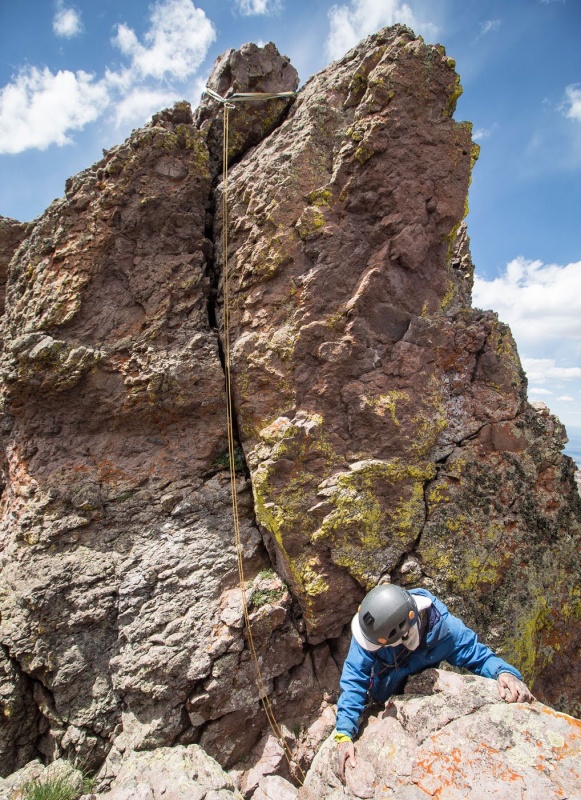
All in all this was another difficult pitch in the low-to-mid Class 5 range, and the rock here was pretty suspect. A slight overhang and nonsensical holds were the crux of this pitch. The crack would probably protect well, but there's really only enough climbing for one or two pieces anyway. 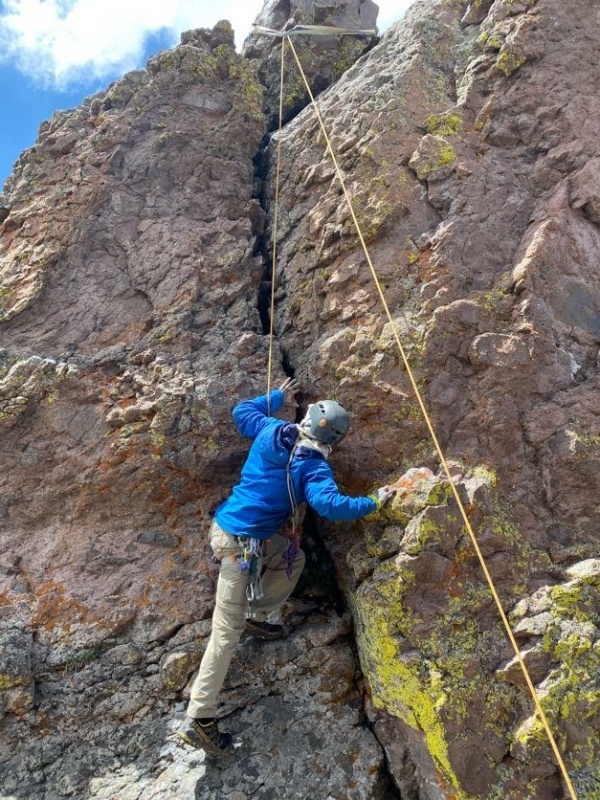
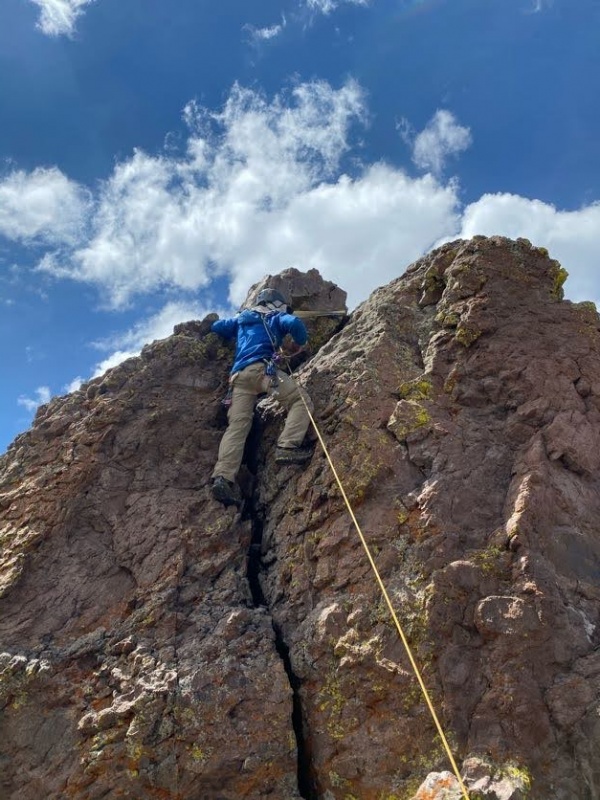
From here I untied and sent the rope back down for Whiley and Marisa to top rope out. I belayed Stav from above when it was his turn. 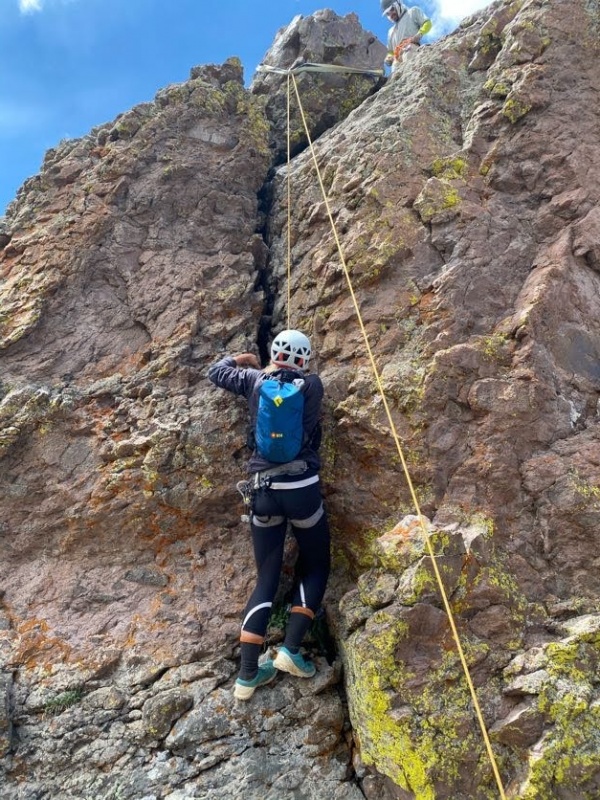
We traversed back across the upper ledge to the rappel station at the top of the chimney pitch, and went in our usual order once again. 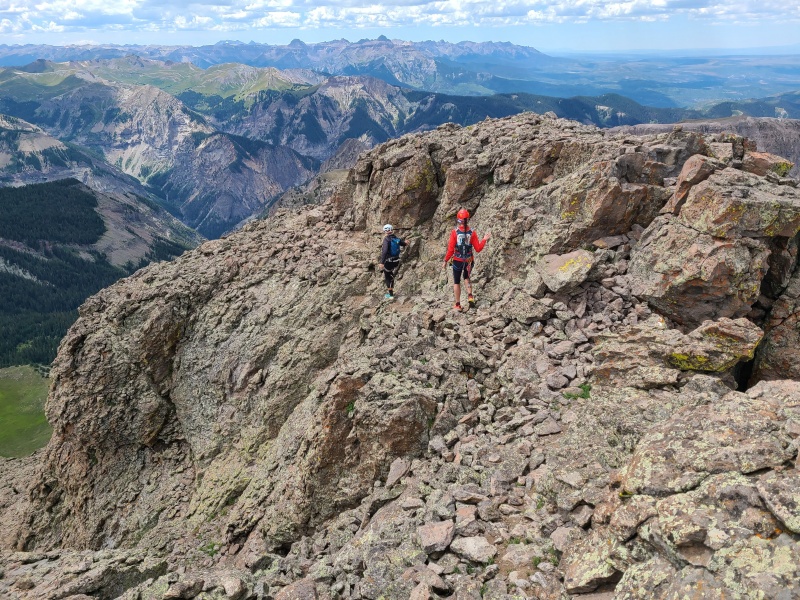
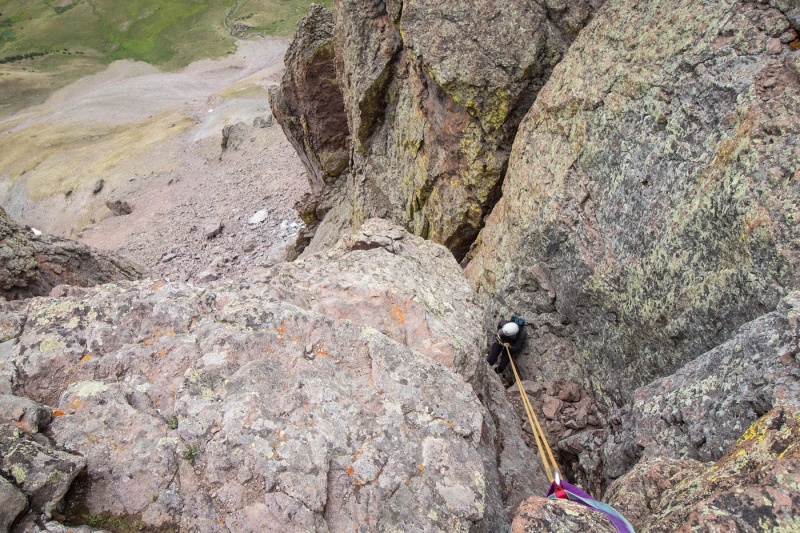
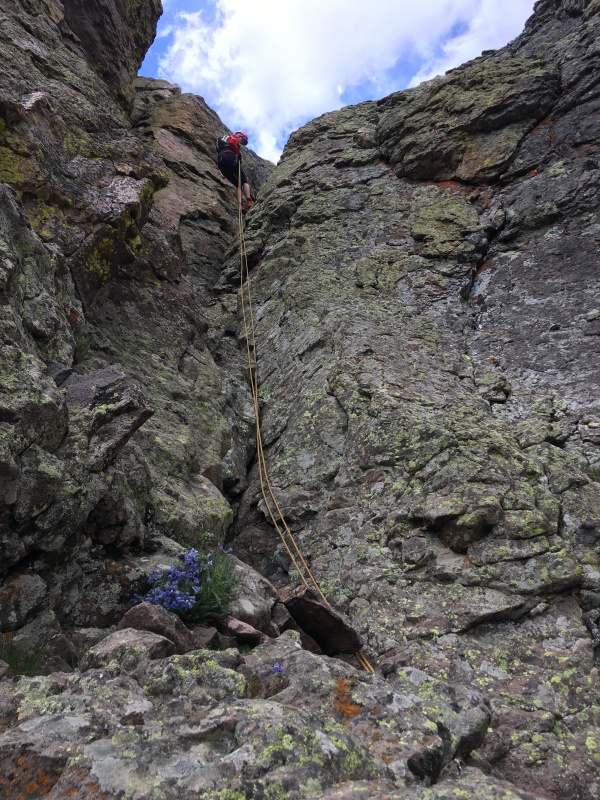
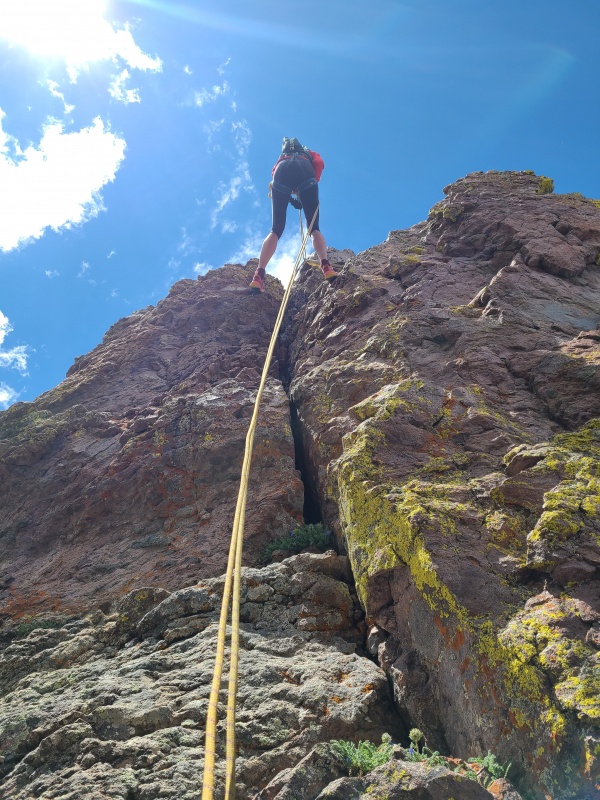
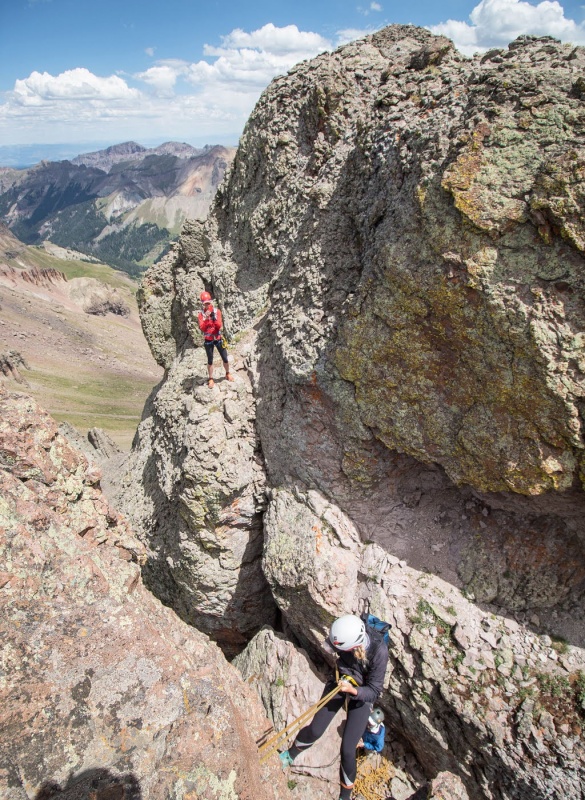
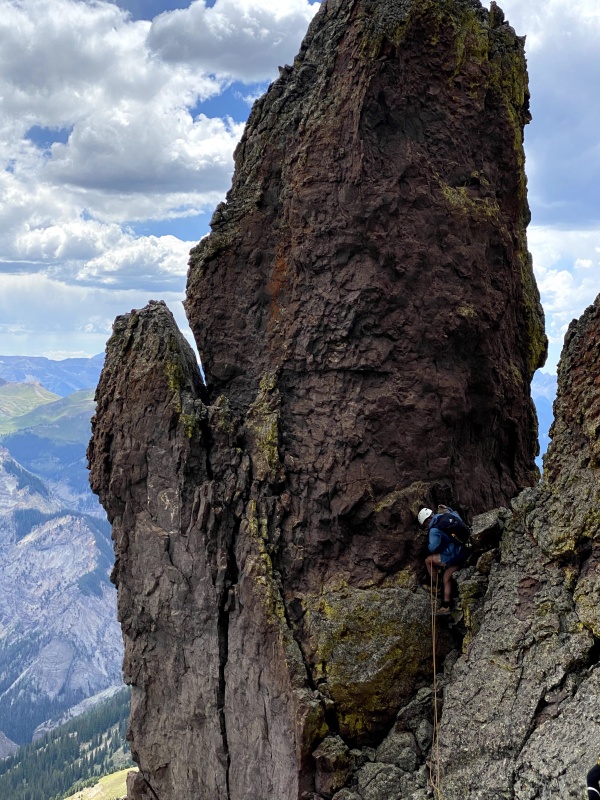
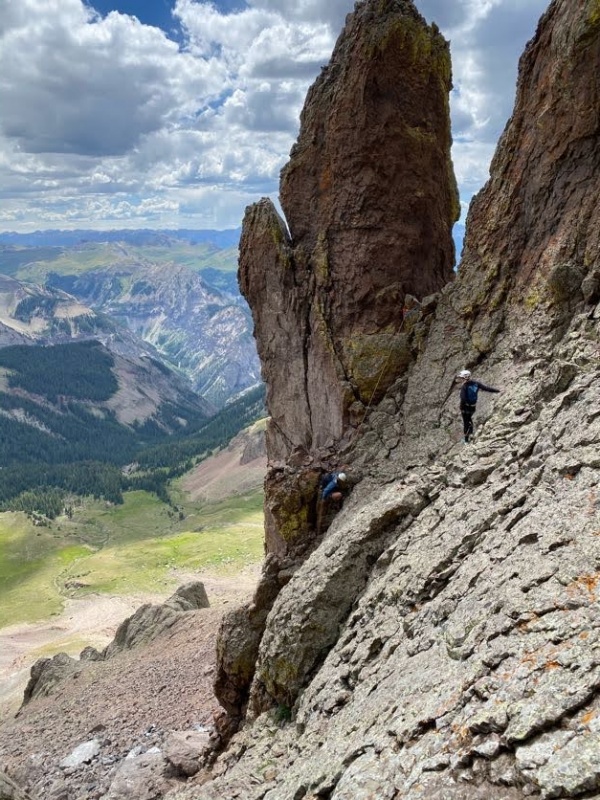
The final descent took us a minute to figure out. There was a rappel station nestled at the base of a freestanding tower and across a set of exposed slabs, or we could down climb the Class 3 second pitch and Class 5 first pitch, which might actually be easier going down than going up. Whiley found a sneakier way to get to the rappel anchor by down climbing to the middle between the two pitches, traversing across a ledge, and then climbing a Class 2+ dihedral to the base of the tower. She examined the anchor and it looked like it was in good shape, so we decided to all use that to get down. 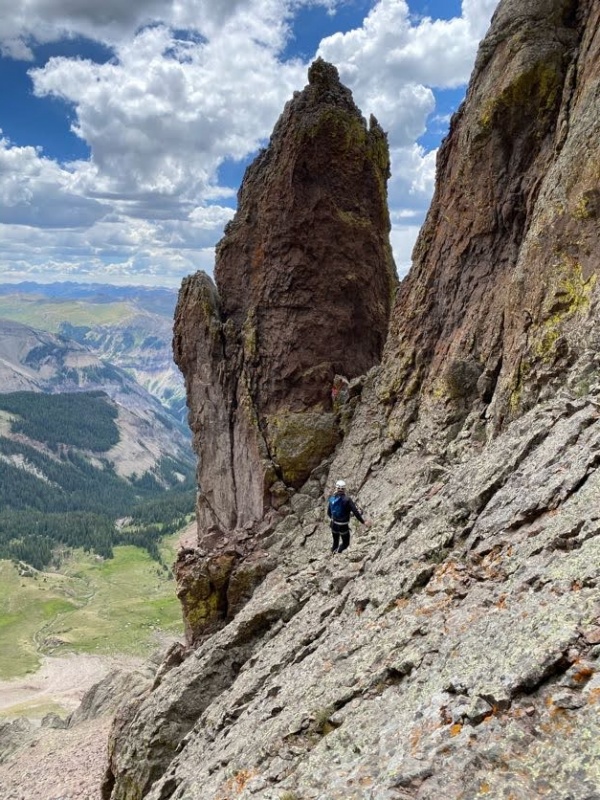
Getting high enough to reach the rappel anchor was a little odd since the rappel sling wasn't long enough to just simply reach, we had to climb up and wedge into position before going hands-free and getting set up. It wasn't difficult, but it was exposed and weird. 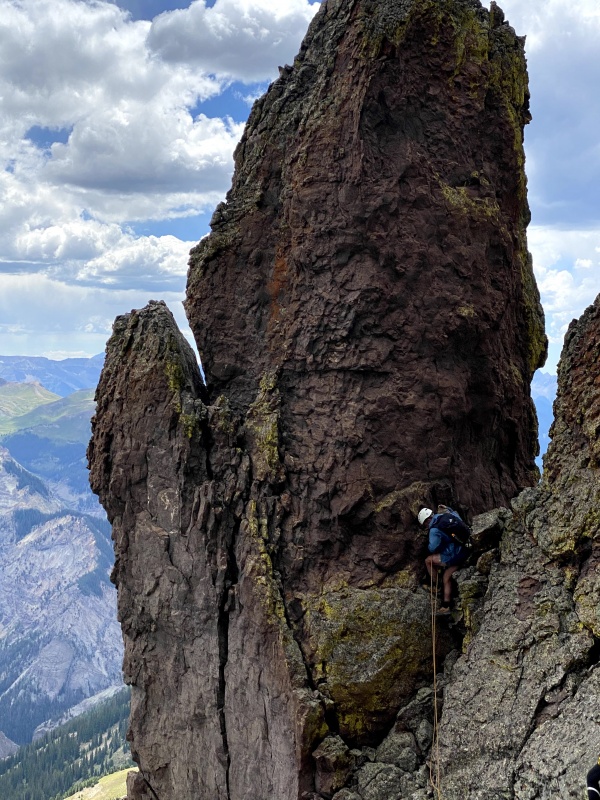
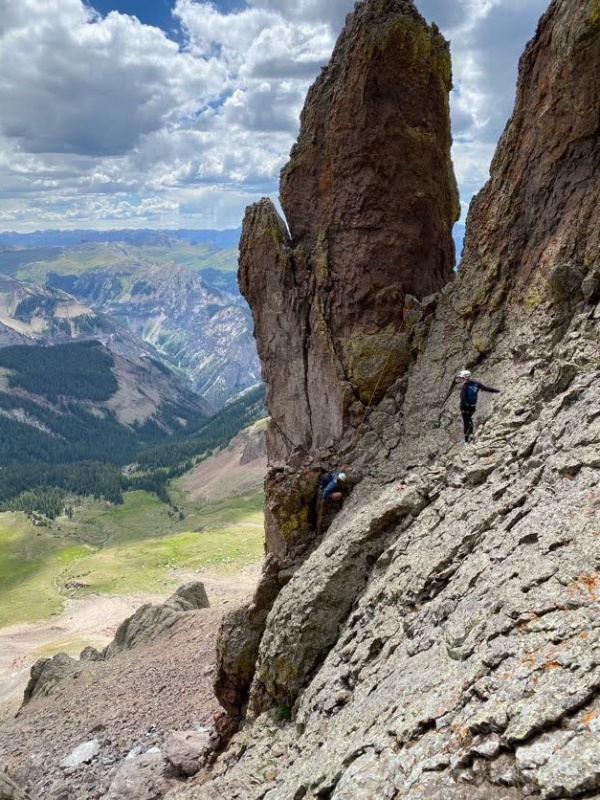
When we were all down and the rope had been coiled and packed, we began down to the trail. Unlike climbing up the talus earlier in the day, climbing down it sucked hard. Tipsy, wobbly, and prone to bouncing downhill, it was a slow and tedious affair getting down to the tundra. 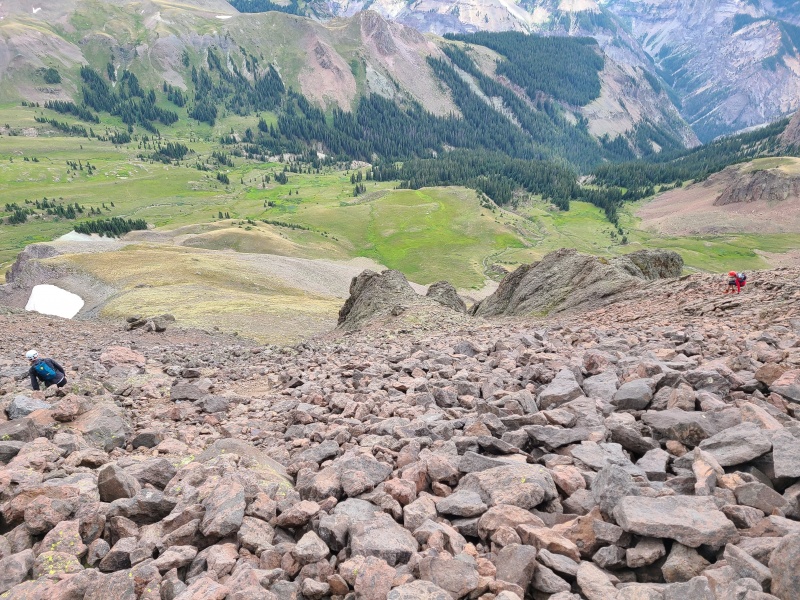
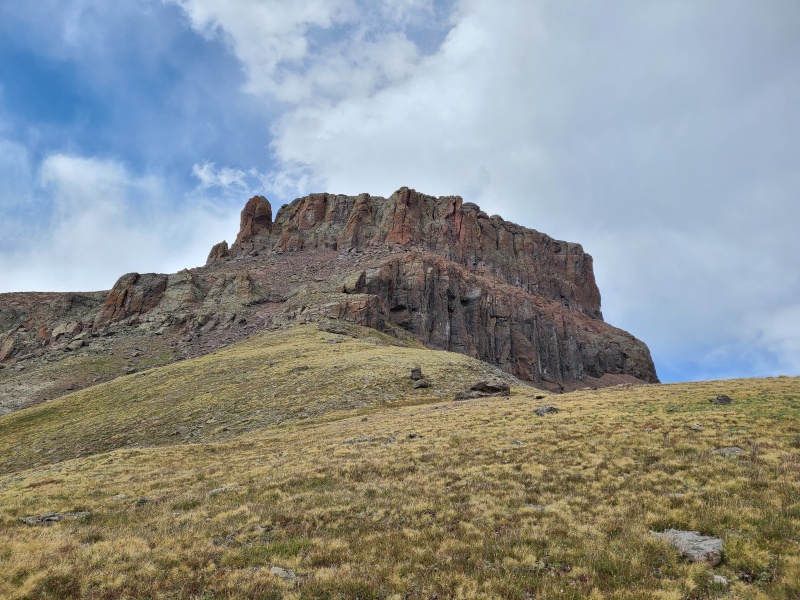
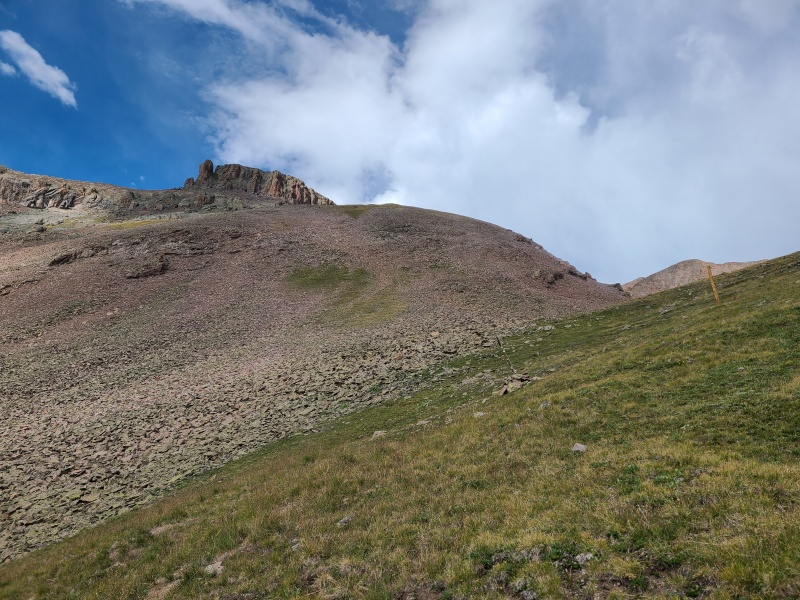
When we reached the trail our pace quickened and we knew that only the re-ascent to the pass would slow us down. 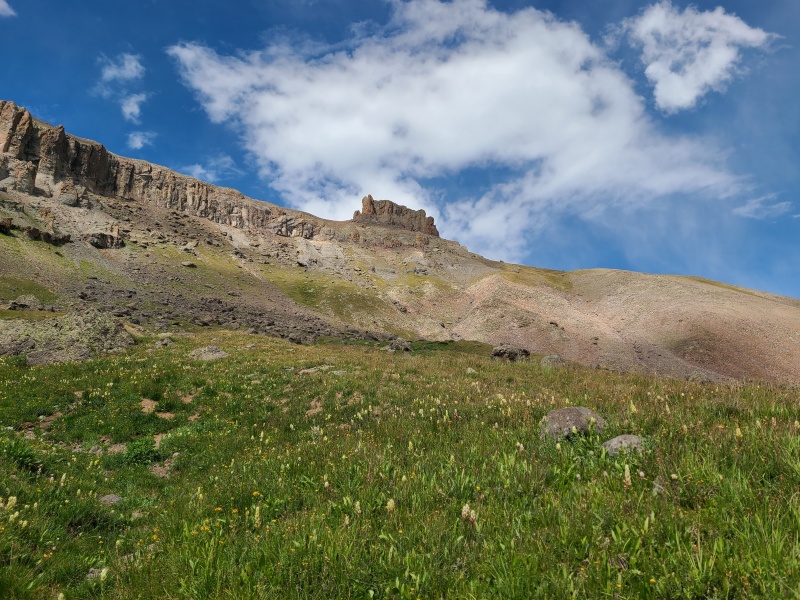
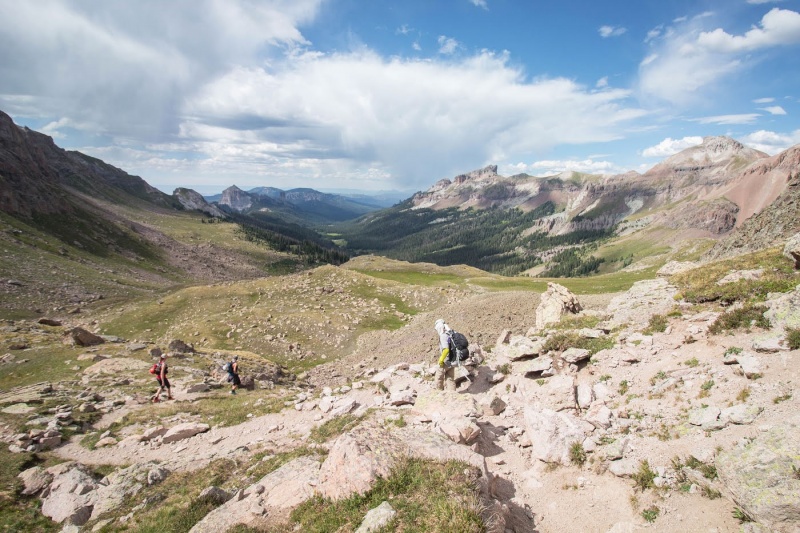
We made our way back to the trailhead and into town for some grub. Coxcomb was a total blast, and it was done in interesting style (four people? One rope? Unconventional for sure!) with good humans. Coxcomb is one of those rare thirteeners that I'd do again since it was fun and unique. There aren't too many technical thirteeners either, and the views from this one were superb. What's not to like about the Uncompahgre Wilderness? Until next time, thanks for the fun Coxcomb!
StatisticsClimbers: Ben Feinstein (myself), Whiley H., Marisa W., Stav B.
Splits:
¹Distance and elevation gain taken from my messy GPX track are 12.81 and 4,848, respectively. These are too high so I pulled more accurate stats from climb13ers.com. For additional information on this climb please see the report that Stav wrote on his website, Stav is Lost. Thumbnails for uploaded photos (click to open slideshow): 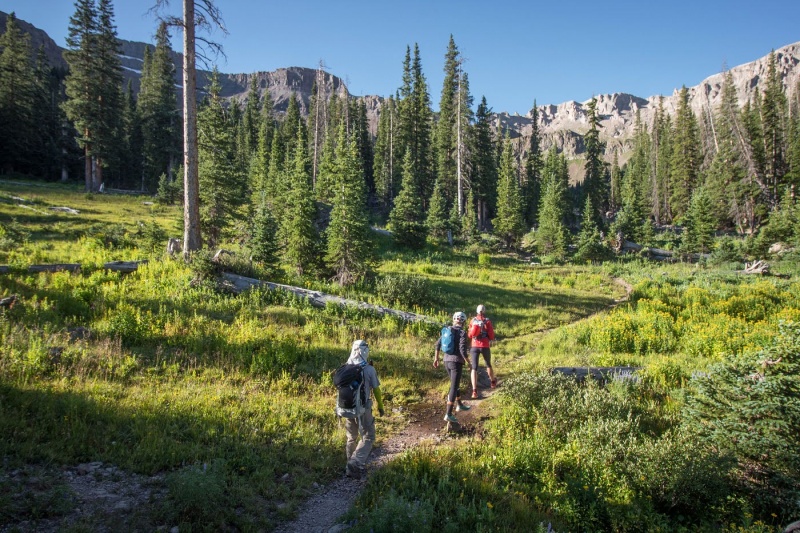
|
| Comments or Questions | ||||||
|---|---|---|---|---|---|---|
|
Caution: The information contained in this report may not be accurate and should not be the only resource used in preparation for your climb. Failure to have the necessary experience, physical conditioning, supplies or equipment can result in injury or death. 14ers.com and the author(s) of this report provide no warranties, either express or implied, that the information provided is accurate or reliable. By using the information provided, you agree to indemnify and hold harmless 14ers.com and the report author(s) with respect to any claims and demands against them, including any attorney fees and expenses. Please read the 14ers.com Safety and Disclaimer pages for more information.
Please respect private property: 14ers.com supports the rights of private landowners to determine how and by whom their land will be used. In Colorado, it is your responsibility to determine if land is private and to obtain the appropriate permission before entering the property.